
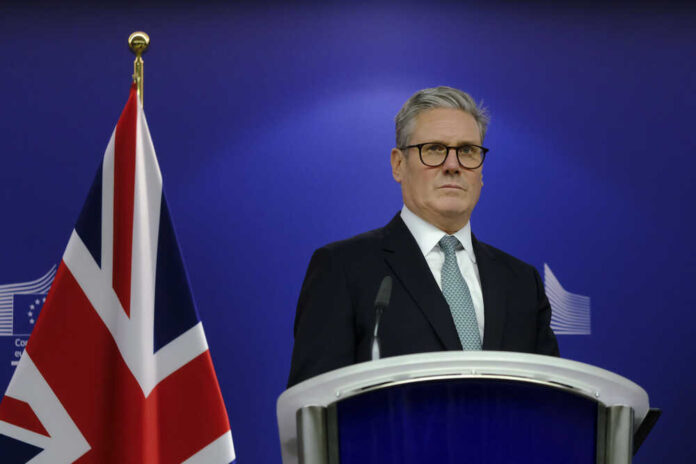
Prime Minister Keir Starmer personally voted to block a popular regional mayor from returning to Parliament, exposing deep fractures within Labour’s ranks and raising concerns about leadership control over democratic party processes.
Story Snapshot
- Labour’s National Executive Committee voted 8-1 to block Greater Manchester Mayor Andy Burnham from standing in the Gorton and Denton by-election, with PM Starmer personally voting against him
- Burnham expressed disappointment and concern that the decision could hand the seat to Reform UK, undermining Labour’s position ahead of critical May 2026 elections
- Labour MPs criticized the move as a “stitch-up” prioritizing factional control over electoral strategy, with warnings it could hasten a leadership challenge against Starmer
- The decision saves taxpayers the cost of a mayoral by-election but exposes internal party divisions reminiscent of authoritarian leadership tactics
Starmer’s Personal Intervention Blocks Popular Mayor
Prime Minister Sir Keir Starmer personally cast a vote against Andy Burnham’s candidacy in the Gorton and Denton by-election on January 25, 2026. Labour’s National Executive Committee ruled 8-1 to reject Burnham’s request to stand for Parliament, with only Deputy Leader Lucy Powell supporting the Greater Manchester Mayor. The rare personal intervention by a sitting Prime Minister against a high-profile regional figure signals an unprecedented level of leadership control over candidate selection processes, raising questions about democratic norms within the party’s internal governance structure.
🚨 Labour has BLOCKED Andy Burnham from standing in the Gorton & Denton by-election.
NEC vote: ✅1 ❌8
Starmer won’t even let his own party choose freely. Burnham was a threat to Keir’s grip on power.
Control. Panic. Stitch ups.
Labour are imploding. 👇🏼🇬🇧 pic.twitter.com/YvaLDMYTzj
— Joseph Boam (@Joseph_Boam) January 25, 2026
Reform UK Threat and Electoral Consequences
Burnham framed his parliamentary bid as necessary to counter the growing threat from Reform UK in the Greater Manchester constituency. The former MP served in Westminster from 2005 to 2017 and has built a strong regional base since becoming mayor in 2017, often positioning himself at odds with Starmer’s national leadership. Labour justified the NEC decision by citing concerns about triggering an “unnecessary” mayoral by-election that would divert resources during cost-of-living pressures. However, critics within the party warn that blocking a popular local figure could actually hand the seat to Reform UK, undermining Labour’s position ahead of crucial May 2026 local, Welsh, and Scottish elections.
Internal Party Revolt and Leadership Concerns
Labour MPs John McDonnell and Neil Duncan-Jordan sharply criticized the decision, with McDonnell warning it “hastens Starmer’s demise” and Duncan-Jordan labeling it a “stitch-up” that prioritizes factional control over the country’s interests. Sky News analyst Beth Rigby reported that Starmer allies “emphatically” shut down Burnham to protect the Prime Minister’s survival amid declining poll numbers. The BBC’s Newscast program suggested the decision could spark a leadership challenge after May if viewed as excessive factional maneuvering. This authoritarian approach to internal party democracy mirrors concerns conservatives have long voiced about leftist leadership structures that prioritize control over representative governance and grassroots input.
Burnham’s Response and Future Plans
Burnham publicly expressed disappointment with the NEC decision and raised concerns about its impact on upcoming elections, while pledging to support whichever candidate Labour selects. He criticized the party for leaking the decision to the media before notifying him personally, though Labour sources claimed they attempted contact via phone and email. Burnham will continue serving as Greater Manchester Mayor until his term ends in 2028, with Cabinet member Steve Reed indicating the party would welcome his return to Parliament after completing his regional role. The episode highlights how party establishments often suppress popular figures who challenge leadership orthodoxy, a pattern that resonates with conservative concerns about centralized power overriding local representation and democratic choice.
The controversy exposes fundamental tensions between protecting institutional interests and respecting democratic processes within political parties. While Labour justified the decision on fiscal grounds to avoid dual election costs, the 8-1 vote with Starmer’s personal involvement suggests deeper factional motivations. For conservatives observing from across the Atlantic, this incident reinforces concerns about how progressive party structures can prioritize leadership preservation over constituent representation, potentially weakening electoral competitiveness when voters seek authentic local champions rather than centrally-approved candidates who pose no threat to established power hierarchies.
Sources:
Andy Burnham latest: Mayor ‘disappointed’ after bid to return as Labour MP in by-election is blocked
Sir Keir Starmer blocks Andy Burnham from by-election race
Andy Burnham says he will stand in Gorton and Denton by-election