
As Iran toys with choking off a vital oil passage, Secretary of State Marco Rubio is quietly building a coalition that undercuts Moscow, pressures Tehran, and opens the door for a pro‑American “Trump Route” through Armenia’s mineral‑rich corridor.
Story Snapshot
- Rubio is rallying allies against Iran’s bid to “toll” the Strait of Hormuz, signaling coordinated action instead of surrendering global trade to a radical regime.[2][3]
- By inviting partners to share the load, Rubio’s strategy blunts Russian leverage over energy routes and sets up alternatives that could run through Armenia.[2][3]
- Stronger ties with Armenia and new mineral access can help secure Western supply chains and reduce dependence on hostile powers like Russia and China.
- The deal is still in a preliminary phase, but it marks a clear shift away from the appeasement and globalist drift of past administrations.[3]
Rubio Draws a Red Line at the Strait of Hormuz
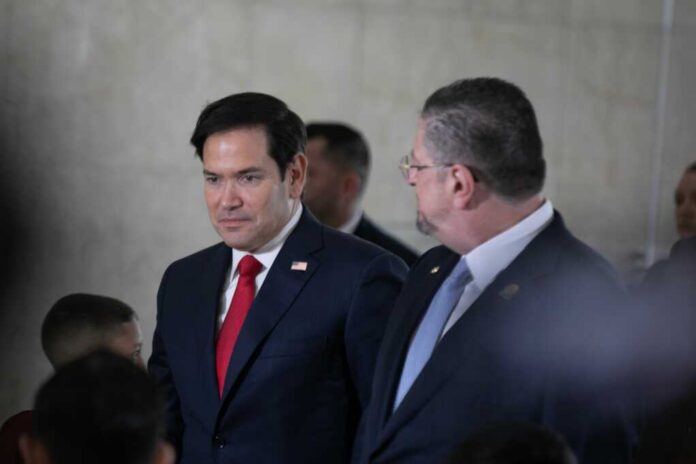
Secretary of State Marco Rubio has made it unmistakably clear that Iran will not be allowed to weaponize the Strait of Hormuz, the sea choke point that carries a massive share of the world’s oil shipments.[2][3] Rubio warned that Tehran’s push to impose a tolling system on ships transiting the strait is “illegal,” “unacceptable,” and “dangerous to the world,” language that firmly rejects any attempt to turn global commerce into a cash machine for a radical clerical regime.[2]
Rubio told reporters that the strait “has to be open” and will be open “one way or the other,” underscoring that the United States and its allies will not tolerate a blockade or extortion scheme on one of the world’s critical energy arteries.[3] He stressed that the shipping lane must remain “unimpeded without tolls” and called Iran’s actions “unsustainable for the world,” framing this not as a narrow dispute but as a direct threat to global stability and energy affordability that hits American families at the pump.[3]
From Crisis Response to a Wider “Trump Route” Strategy
Rubio’s language during meetings with Group of Seven foreign ministers went beyond simple warnings and pointed toward an emerging game plan.[2] He said it is “important that the world have a plan to confront” any Iranian tolling system and declared that the United States “is prepared to be a part of that plan,” while noting America does not have to “lead that plan” alone.[2] That approach invites energy‑dependent partners in Europe and Asia to step up, signaling a burden‑sharing model that fits President Trump’s long‑stated demand that allies pull their weight.
In practical terms, that coalition logic lines up with a broader effort to blunt Russian and Iranian leverage by diversifying routes for energy and critical minerals, including overland corridors that could run through Armenia and the South Caucasus.
Armenia Minerals and the Push to Sideline Moscow
Russia has long used its control over regional logistics, pipelines, and security arrangements to keep countries like Armenia dependent and to maintain leverage over Western markets. Rubio’s emphasis on united opposition to any single nation controlling or tolling global waterways directly challenges that model.[2] He warned that “neither the Strait of Hormuz or frankly any international waterways should ever be something that’s controlled or tolled by a nation‑state or by a terroristic government like the one that exists in Iran today.”[2]
That same principle applies on land. As Washington looks to Armenia’s mineral wealth and transit potential, a pro‑American “Trump Route”—a corridor that moves minerals and goods without Russian or Iranian choke points—would diminish Moscow’s economic grip and give Yerevan an alternative future anchored to Western markets and rule of law. For conservatives wary of globalist dependency on hostile regimes, such diversification directly advances energy security and national sovereignty.
Progress, But Not a Finished Deal
Despite the strong rhetoric, Rubio has been candid that the Hormuz diplomacy remains a work in progress rather than a signed, sealed, and delivered treaty.[3] Reporting on his private briefings notes that he described “strong alignment and agreement on what a preliminary draft should look like,” while acknowledging that talks with Iran and consultations with allies are ongoing and fragile.[3] That honesty undercuts any claim that Washington has already locked in a final, detailed plan or secured concrete Armenia‑specific deliverables.
Rubio also signaled that a deal with Iran is still possible “despite new American strikes” tied to self‑defense and enforcement of red lines, highlighting how kinetic action and diplomacy are moving in parallel. For readers tired of the empty photo‑ops of the past, the key point is that this administration is willing to use pressure while still seeking terms that keep the strait open without capitulating to Tehran’s toll demands. At the same time, conservatives should recognize that until ink hits paper, any Armenia minerals framework and “Trump Route” corridor remain strategic objectives, not completed victories.
Balancing Deterrence, Peace, and Prosperity
Rubio’s repeated emphasis that Iran’s scheme is opposed by virtually every major power—including Russia and China—reveals a rare point of consensus that Washington can leverage.[3] By aligning free passage in Hormuz with a wider effort to keep international waterways free from control by any one hostile regime, the administration is laying the groundwork for a more resilient trading system that resists blackmail and supports stable energy prices for American workers, families, and retirees living on fixed incomes.[2][3]
Secretary of State Marco Rubio told reporters Tuesday that the Strait of Hormuz will remain open “one way or the other” if the U.S. reaches an agreement with Iran.https://t.co/AHoMH8ZLeo
— KATV News (@KATVNews) May 26, 2026
For conservatives, the stakes are clear. A successful Hormuz coalition and an Armenia‑centered “Trump Route” would weaken Moscow’s stranglehold, deny Tehran a new revenue stream for terror sponsorship, and reinforce a rules‑based order that protects American prosperity without surrendering control to unelected globalist bureaucrats. The path forward is not guaranteed, and the current documents are still preliminary, but the direction marks a decisive break from the appeasement and energy vulnerability that defined the pre‑Trump years.[3]
Sources:
[2] YouTube – Strait Of Hormuz Will Be Open ‘One Way Or The Other’
[3] Web – Secretary of State Marco Rubio Remarks to Press