
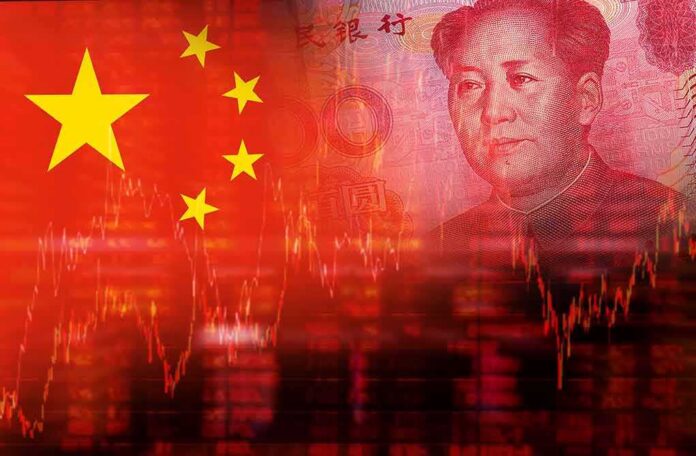
China’s state-led credit binge has curdled into a slow-motion crash that is now producing debt-laden “zombie” firms and a fragile property sector, with Beijing boxed in by its own policy choices.
Story Highlights
- China’s 2008–2010 stimulus used massive bank lending and fueled today’s debt overhang.
- Analysts say the financial system cannot repeat that credit surge without worsening the damage.
- Property excess and hidden local debts are dragging growth and creating more “zombie” firms.
- Beijing’s deleveraging push shows the problem is structural, not a brief dip.
How a Crisis Fix Became a Debt Trap
Chinese leaders answered the global financial crisis with orders to banks. They told lenders to fund local projects fast, rather than wait on normal budgets. That choice flooded the economy with cheap credit and drove a surge in property and infrastructure building. Researchers say this bank-led push, tied to a four trillion renminbi plan, planted the seeds of today’s slowdown by expanding debt far faster than income or cash flows could support.
World Bank and policy studies detail how overall credit jumped as local government financing channels grew outside normal checks. Credit stock rose sharply after 2008, reflecting public investment programs that propped up growth but swelled balance sheets. This path helped avoid a hard hit then, but it also wired the system to need more and more debt to maintain momentum. Once the property market cooled, many borrowers lacked enough cash to service loans without new lending.
Beijing’s Limits: Why the Old Playbook No Longer Works
Rhodium Group reports that policymakers now face an impaired financial system that cannot deliver another wave of easy credit at past scale. Much of any new lending would only roll old debts, not fund real growth. That means the classic “open the spigot” move risks deeper damage with less payoff. Even advocates of looser policy concede the core issue is how credit gets used, not just how much gets pumped in.
Official and think tank timelines show that by late 2016, Beijing launched a deleveraging campaign. Leaders admitted credit had grown far too fast and tried to rein in risky shadow products, slow bank asset growth, and curb speculative lending. Cutting credit growth in half reduced some excess, but it also exposed how much demand depended on leverage. This confirms the slowdown is a drawn-out balance sheet fix, not a quick pause.
Property Bust and the Rise of “Zombie” Companies
Analysts argue the property-and-debt supercycle reached extreme size after 2008, leaving developers and local governments hooked on land sales and presales. When buyers pulled back and projects stalled, the cash chain broke. The Dallas Federal Reserve notes that the share of assets held by “zombie” non-financial firms rose from 5 percent to 16 percent between 2018 and 2024, signaling deadweight companies that survive on credit rather than profits. That drags on jobs, wages, and future investment.
Carnegie’s review explains why this boom differed from normal cycles. The surge was a deliberate, state-driven response, run through banks and local channels, and it overshot. That left opaque local debts and a housing bubble that distorted where capital flowed. Cleaning that up is slow and costly because losses sit across provinces, developers, and lenders. Without transparent books and hard restructurings, capital stays stuck in weak firms while stronger private ventures fight for funds.
What It Means for America’s Economy and Security
China’s weak domestic demand can push more exports into global markets. That risks price dumping, factory closures abroad, and new pressure on critical industries. The United States must defend supply chains, stop predatory pricing, and keep strategic sectors strong. Clear rules, fair trade enforcement, and energy independence protect American workers and reduce leverage by a rival whose state banks can undercut prices to keep zombie capacity alive.
Conservatives should watch for three threats. First, a hidden-debt shock in China could roil markets, pensions, and commodity prices here. Second, cheap state-backed exports can hollow out U.S. industry. Third, global bodies may push “cooperation” that ties our hands while Beijing shields its firms. America should stand firm on tariffs when needed, push reshoring, and back transparent capital markets that punish bad debts instead of bailing them out forever.
Bottom Line: A Slow Grind, Not a Quick Fix
Evidence across independent studies points to the same story. A crisis-era credit blast saved growth in the short term but built a heavy debt burden. China’s leaders admit the system grew too fast and are now unwinding risk. With more zombies, a wounded property sector, and limited room to lend, the path forward is slow. America should prepare for discount exports, financial tremors, and tougher competition—and safeguard our jobs, energy, and industry first.
Sources:
youtube.com, rhg.com, piie.com, carnegieendowment.org, myfinanceprocess.com, orca.cardiff.ac.uk, s3.amazonaws.com, iberchina.org, nber.org