

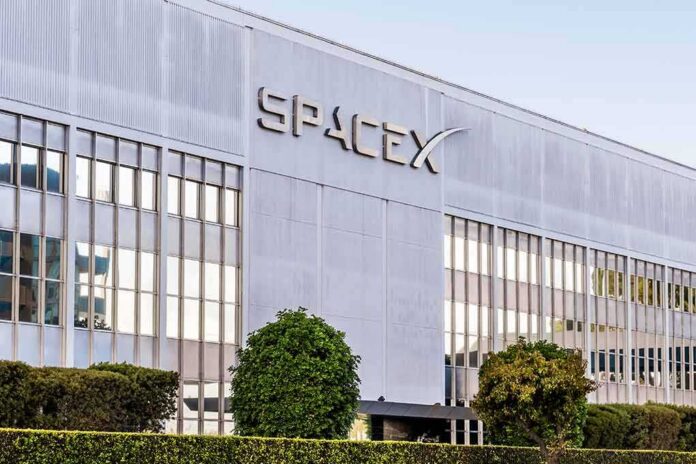
SpaceX just landed a $1.6 billion Pentagon-backed launch deal to put America’s next wave of threat-tracking satellites into orbit by 2027, sharpening U.S. eyes on the skies while China and Russia race to weaponize space.
Story Snapshot
- SpaceX will fly 18 Falcon 9 rocket missions for the Space Force’s Space Based Sensing and Targeting program through 2027.
- All launches will lift off from Vandenberg Space Force Base in California, focused on spotting and tracking airborne threats from space.
- The missions come under the National Security Space Launch Phase 3 Lane 1 program, which keeps competition among U.S. launch providers.
- The $1.6 billion award reflects a Trump-era push to harden missile warning and targeting without bloated legacy costs.
SpaceX Scores 18 Missions To Boost America’s Space Warning Network
The United States Space Force says SpaceX will launch 18 Falcon 9 missions under two task orders worth $1.6 billion, all aimed at lifting new military sensing and targeting satellites into orbit by the end of 2027. These satellites belong to the Space Based Sensing and Targeting program, which is designed to detect airborne threats and feed targeting data to U.S. forces in near real time. Every one of these launches will fly from Vandenberg Space Force Base in California.
Space Systems Command explains that these awards sit inside the National Security Space Launch Phase 3 Lane 1 program, the main way the Space Force buys launch services from private companies. Under Lane 1, SpaceX competes with United Launch Alliance, Blue Origin, Rocket Lab, Stoke Space, and new startups for mission orders, which helps avoid a single, cozy monopoly. For conservative readers, this structure matters because it keeps pressure on cost and performance instead of feeding old defense giants.
What The Space Based Sensing And Targeting Satellites Will Do
The new satellites launched on these Falcon 9 rockets will act as space-based “eyes,” spotting airborne threats and passing targeting information to American forces far faster than legacy systems. Reporting on the program says these orbital sensors are meant to track airborne objects and threats from space, then move that data quickly to missile warning sensors and interceptors. That speed is vital in a world where hypersonic weapons and stealthy platforms can shrink warning times to minutes.
Space Force officials have already highlighted that earlier SpaceX awards in 2026 support satellite constellations for tracking airborne targets and linking missile warning sensors with interceptors. This new $1.6 billion package builds on that effort by adding a large batch of launches specifically tied to the Space Based Sensing and Targeting portfolio. For patriots worried about America’s edge, this network is about staying ahead of near-peer enemies without waiting on slow, overpriced legacy programs that never seem to leave the drawing board.
Lane 1: Competitive Launch Contracts Instead Of Blank Checks
The National Security Space Launch Phase 3 Lane 1 setup is a multiple-award, indefinite-delivery, indefinite-quantity contract, which means the Space Force locks in a pool of trusted companies and then issues task orders as missions are ready. SpaceX’s latest award is just one set of orders inside a larger launch budget that has grown as the Space Force shifts more missions to flexible, commercial rockets. Lane 1 is designed to bring in new providers through regular on-ramps and to accept slightly higher risk on some missions in exchange for lower cost and more innovation.
For conservative readers who have watched Washington waste trillions, this model is a clear break from old-school, single-vendor programs that often run over budget and past deadline. SpaceX has already secured other Lane 1 orders this year, including earlier taskings worth hundreds of millions of dollars, but it must still win each mission in competition. That competition matters: it means the Trump administration’s Pentagon is leaning on private-sector pressure, not bureaucratic favoritism, to keep launch prices down and capability up.
Cost, Speed, And What It Means For Taxpayers
Analysts say the $1.6 billion award works out to roughly $89 million per Falcon 9 launch, a figure that undercuts what many older heavy rockets charged the government just a few years ago. For taxpayers who care about both strength and thrift, that per-mission cost is one sign that commercial reusable rockets can deliver serious savings over time compared with legacy expendable systems. Reports also note that SpaceX’s broader launch segment logged about $4.1 billion in sales in 2025, so this award is a major but not dominating piece of its business.
Space Systems Command has described recent SpaceX sensing-and-targeting awards as moving on an “unprecedented” timeline of about two months from requirement to contract, showing that the Space Force can act quickly when it needs to. Faster awards mean U.S. forces do not wait years for basic tools while threats grow more complex. For a Trump-supporting audience that has long demanded that the Pentagon cut red tape and focus on real defense, this kind of timetable is a welcome change from the slow, bloated processes of past decades.
Sources:
insidedefense.com, ssc.spaceforce.mil, satellitetoday.com, spaceforce.mil, app.govly.com, govconwire.com, sam.gov, spacenews.com