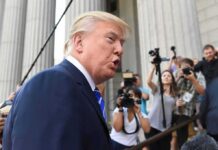


A fierce new fight over federal worker nondisclosure agreements is forcing Americans to ask whether stopping dangerous leaks can be done without muzzling the very people who keep Washington honest.
Story Snapshot
- The Trump administration has proposed a government-wide nondisclosure agreement for new and existing federal employees to curb damaging leaks of confidential information.[2][4]
- The draft agreement would cover broad categories of “non-public” and “confidential” information, raising alarm among unions and liberal legal scholars about free speech and whistleblower rights.[1][2]
- The form would be optional for agencies, creating a patchwork of rules and potential inconsistency across the federal workforce.[1]
- Supporters say the plan protects national interests and reinforces existing law, while critics claim it echoes past efforts like Schedule F to pressure nonpartisan civil servants.[3][4]
Trump Team Targets Leaks With Government-Wide NDAs
The Trump administration has moved to tighten the lid on leaks by proposing a new, government-wide nondisclosure agreement for all current and future federal employees, explicitly linking the policy to recent unauthorized disclosures of internal deliberations.[2][4] The draft form is intended to restrict sharing of “confidential” and “non-public” government information, extending beyond traditional classified material to include internal communications and other sensitive details not yet available to the public.[2][4] Officials frame the measure as a necessary modernization of confidentiality rules to protect national interests in a media environment that rewards partisan leaking.[2][4]
According to coverage of the draft, the nondisclosure agreement would apply across the executive branch but function as an optional template, leaving each agency to decide whether and how to adopt it for its workforce.[1] That structure signals an attempt to create a strong policy signal from the White House while relying on department-level management to tailor implementation to their missions.[1] Supporters argue this respect for agency discretion, combined with explicit references to existing whistleblower protections in federal law, means the form does not create new substantive restrictions on lawful disclosures.[1][4] For conservatives angry about years of politically motivated leaks, the proposal reflects a long-overdue effort to restore basic discipline inside the bureaucracy.
How Broad Is “Confidential”? Concerns Over Speech And Whistleblowers
Critics of the proposal, including major federal employee unions and left-leaning policy groups, argue that the language described in reporting goes well beyond what is needed to stop genuinely harmful leaks.[1][3] They point to phrases such as “non-public, confidential, or proprietary information” and “sensitive, pre-decisional or deliberative material,” categories that can sweep in policy debates, draft memos, and internal disagreements that historically have informed watchdogs, Congress, and the press.[1][2] A detailed legal white paper on similar Trump-era White House nondisclosure agreements concluded that overly vague and broad terms risk violating the First Amendment when applied to public employees.
Those legal analysts warn that when an agreement’s scope is not tightly tied to clearly defined national security or privacy interests, it can chill constitutionally protected speech about government misconduct or mismanagement. The white paper emphasizes that public workers and journalists both have important First Amendment stakes when gag rules apply to matters of significant public concern. While the new federal-worker form reportedly says it will not override whistleblower statutes, skeptics argue that broad wording plus the threat of discipline or litigation can still deter employees from coming forward, especially in agencies where leadership leans heavily on loyalty rhetoric.[1][3] From that perspective, the proposed nondisclosure agreement looks less like a simple anti-leak tool and more like another front in the long-running struggle over the independence of the civil service.[3][4]
Balancing Leak Control, Bureaucratic Power, And Conservative Priorities
For conservative readers, the fight over these nondisclosure agreements sits at the crossroads of two core priorities: securing the nation and reining in a politicized bureaucracy, while also defending the Constitution and the right of citizens to know what their government is doing. The White House is responding to real damage caused by leaks that exposed internal conversations, disrupted negotiations, and undercut elected leadership’s ability to execute its agenda on behalf of voters.[2][4] At the same time, history shows that every administration’s secrecy tools must operate within clear constitutional guardrails to avoid becoming weapons used to hide incompetence, waste, or ideological projects that could never survive public scrutiny.
Trump Administration Proposes Government-Wide NDAs for Federal Workers to Curb Leaks https://t.co/Wm019OtMZH
— LittleAfrica News (@LittleAfricaUS) May 26, 2026
Analysis of earlier Trump White House nondisclosure agreements by scholars at New York University and Cornell underscores that the government does have legitimate interests in confidentiality, but warns that restrictions “far exceed the generally accepted bounds” once they start sweeping in broad categories of internal speech without precise limits. The new proposal’s optional, agency-by-agency adoption model and explicit nods to whistleblower law show that past legal critiques have shaped current drafting.[1][4] Yet the lack of publicly available final text and the breadth described in reports mean citizens, watchdogs, and especially constitutional conservatives will need to watch closely to ensure this tool targets genuine leaks of sensitive information, not good-faith disclosures about wrongdoing or policy failures.[1][2]
Sources:
[1] Web – Trump administration proposes NDA requirement for federal workers …
[2] Web – To stop leaks, the Trump administration wants federal workers to …
[3] Web – Proposed NDA Rule Is Yet Another Attack on Non-Partisan Federal …
[4] Web – OPM Establishes Safeguards Against Schedule F – NTEU