
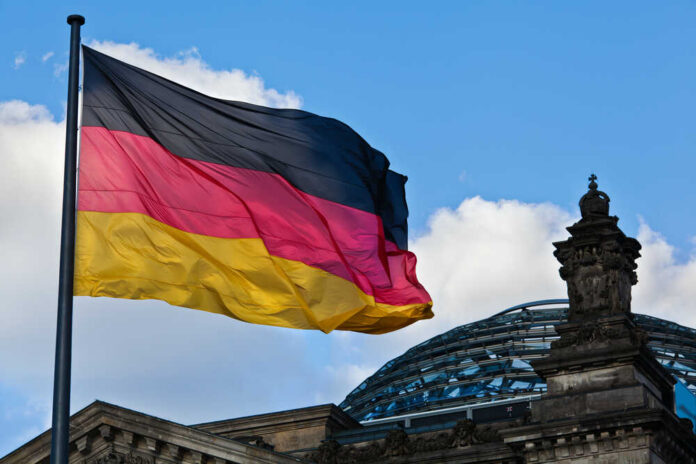
Germany’s foreign investment slump hits a 17-year low, underscoring how high taxes, soaring energy and labor costs, and red tape are driving capital elsewhere and weakening a key U.S. ally’s industrial base [1].
Story Snapshot
- EY counts just 548 foreign investment projects in Germany for 2025, the lowest since 2009 [1].
- Consultancy cites high taxes, costly energy and labor, and rigid bureaucracy as core drags [1].
- Europe also slumped, but Germany’s competitiveness warning is explicit and urgent [1].
- Official U.S. materials long described Germany as open to investors, highlighting a sharp turn [6].
Germany’s Project Count Falls To Post‑Crisis Low
Ernst & Young reported that foreign investors announced 548 projects in Germany in 2025, down 10 percent year over year and the eighth straight annual decline, marking the weakest tally since 2009 [1]. The report tallies new or expanded sites and jobs rather than disclosed capital volumes, making it a clear signal on investor intent but not a measure of euros committed or jobs realized [1][2]. The multi‑year slide suggests mounting headwinds that are not merely a one‑off fluctuation [1].
Across Europe, Ernst & Young counted 5,026 projects in 2025, a 7 percent decline from the prior year, with France and the United Kingdom also suffering steep drops, indicating a wider regional slowdown [1]. That broader weakness does not erase Germany’s specific erosion, which is emphasized by the consultancy’s language on lost competitiveness. The data therefore point to both a continental demand chill and country‑level frictions that are discouraging investors from choosing Germany first [1].
Costs, Taxes, And Bureaucracy Undercut Competitiveness
Ernst & Young attributed Germany’s decline to high taxes, elevated energy and labor costs, and rigid, bureaucratic administration that has not undergone needed reforms [1]. The head of Ernst & Young Germany warned that the country is losing ground to European peers that modernized digital public services and simplified taxes, weakening Germany’s draw as a production and innovation hub [1]. These findings align with long‑standing concerns about permitting and public contracting bottlenecks referenced in U.S. government investment‑climate materials [6].
Henrik Ahlers of Ernst & Young stated that Germany had largely lost its reputation as a high‑quality business location and economic safe haven, urging corrective measures to restore competitiveness [1]. This reputational hit matters because multinational boards weigh predictability, cost, and speed when allocating factories, research centers, and supply‑chain nodes. When administrative delays, energy price uncertainty, and tax complexity stack up, project sponsors redirect capital to more agile jurisdictions that deliver faster groundbreakings and clearer returns [1].
Why The Metric Matters—And Its Limits
Ernst & Young’s series tracks announcements, not realized investment volumes, so the count cannot quantify how much capital or how many jobs were lost or delayed in 2025 [1][2]. Announcement timing, classification changes, or financing windows can sway annual totals. Still, eight consecutive yearly declines point to a persistent pattern rather than noise, especially when paired with explicit cost and bureaucracy critiques from a major investor‑facing consultancy [1]. Policymakers should therefore treat the trend as a warning light, even as they seek fuller capital‑flow data.
🇩🇪 Foreign Investment in Germany Just Hit a 17-Year Low. The 8th Straight Year of Decline.
EY's annual FDI survey:
🔹 Foreign-funded projects in 2025: 548 – lowest since 2008.
🔹 Down 10% YoY, 8 consecutive years of decline.
🔹 Germany slipped to #3 in Europe – behind France… pic.twitter.com/UfLp5KkrF2— Street & Sensex (@StreetSensex) May 22, 2026
Historical U.S. State Department materials describe Germany as open to foreign investors, providing national treatment and equal footing with domestic firms, reinforcing that today’s slide deviates from a pro‑investment baseline [6]. That institutional strength can be recovered if reforms tackle known friction points: faster permits, predictable energy, competitive tax rates, and decisive de‑regulation. Without visible progress, manufacturers and technology firms will keep favoring countries that move paperwork in weeks, not years, and protect margins from unpredictable input costs [1][6].
Sources:
[1] Web – Foreign investment projects in Germany hit lowest level since 2009
[2] Web – Foreign Direct Investment Projects in Germany Have Fallen to …