
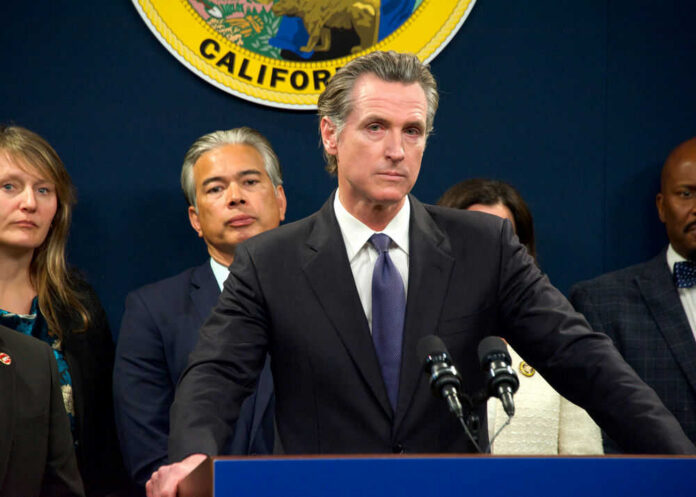
California Governor Gavin Newsom’s political action committee spent $1.5 million in donor funds to purchase 67,000 copies of his own memoir, accounting for two-thirds of total sales and artificially inflating the book to bestseller status.
Story Snapshot
- Newsom’s Campaign for Democracy PAC purchased 67,000 copies of his memoir for $1,561,875, representing roughly two-thirds of the book’s 97,400 total sales
- Only approximately 30,400 copies were sold organically, exposing the manufactured nature of the book’s bestseller status
- Federal filings revealed the PAC distributed the books as donor incentives, using political contributions to boost Newsom’s personal brand ahead of potential 2028 presidential ambitions
- The tactic diverts donor funds from actual campaign activities while manipulating publishing industry sales metrics to create an illusion of popularity
PAC Funds Fuel Bestseller Illusion
Federal Election Commission filings disclosed in April 2026 revealed that Gavin Newsom’s Campaign for Democracy political action committee spent $1,561,875 purchasing approximately 67,000 copies of his memoir “Young Man In a Hurry: A Memoir of Discovery.” The PAC distributed these copies to donors as contribution incentives. According to Circana BookScan data, the memoir sold over 97,000 print copies total, meaning the PAC’s bulk purchase represented roughly 69 percent of all sales. This left only about 30,400 copies purchased through legitimate retail channels, undermining the book’s February 2026 appearance on bestseller lists.
Gavin Newsom’s PAC Spent $1.5 Million To Buy Copies of His Book https://t.co/lZZ9EuCLVN
— Mediaite (@Mediaite) April 17, 2026
Donor Money Diverted to Self-Promotion
The Campaign for Democracy PAC exists ostensibly to advance democratic causes and build political infrastructure for future campaigns. Instead, more than $1.5 million in donor contributions funded the purchase and distribution of Newsom’s personal memoir. This represents a significant diversion of political funds from traditional campaign activities like voter outreach, advertising, or grassroots organizing. The practice raises questions about whether donors understood their contributions would primarily serve to inflate the governor’s book sales and enhance his personal brand rather than support broader political objectives or competitive races.
Manufacturing Credibility Through Manipulation
Bestseller status carries significant weight in American political culture, signaling broad public interest and lending credibility to potential presidential candidates. Newsom’s memoir quickly hit number one on bestseller lists in February 2026, creating the appearance of widespread enthusiasm for his story and political vision. The subsequent revelation that the PAC engineered two-thirds of those sales exposes this success as manufactured rather than earned. This undermines the fundamental purpose of bestseller lists as measures of genuine public interest and consumer demand, transforming them into tools for political manipulation available to well-funded candidates.
Pattern of Political Self-Dealing
Newsom’s tactic follows a troubling pattern among ambitious politicians who use political action committee resources for personal gain disguised as political activity. While not unprecedented—other political figures have employed similar bulk-purchase strategies—the scale stands out. Spending donor money to purchase one’s own book in quantities exceeding organic sales by more than two-to-one represents an extraordinary commitment of political resources to self-promotion. For voters already frustrated with political elites who prioritize personal advancement over public service, this confirms suspicions that the system rewards those skilled at gaming metrics rather than those genuinely connecting with citizens.
The controversy surrounding Newsom’s book sales arrives as he positions himself for a potential 2028 presidential run. California’s governor has cultivated a national profile since 2019, often presenting himself as a Democratic leader capable of challenging Republican dominance. The memoir, framed as a story of overcoming hardships, was clearly designed to support those ambitions by establishing a personal narrative appealing to primary voters. However, the revelation that bestseller status depended on PAC purchases rather than authentic reader interest damages the authenticity essential to such narratives. Conservative critics have labeled the scheme “peak narcissistic grift,” while even neutral observers acknowledge the embarrassing optics of needing to buy one’s own success.
Sources:
Embarrassing tactic Gavin Newsom used to boost his book sales – AOL