

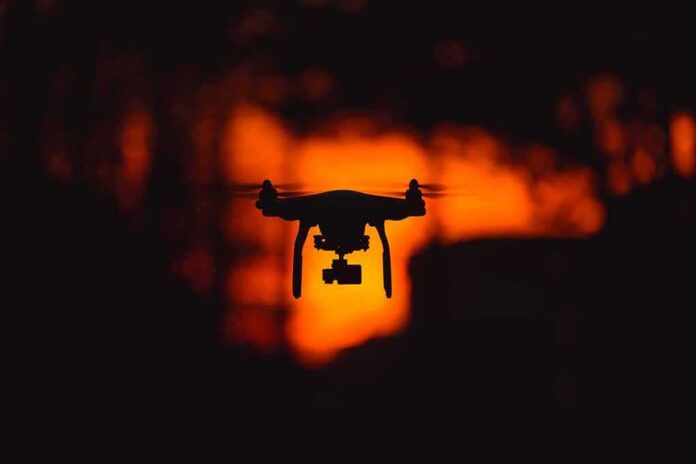
A heavy-lift Ukrainian drone hauled a wounded infantryman off the front line, proving unmanned evacuation can save lives under fire.
Story Highlights
- Ukrainian units used a Heavy Shot Ayudag-6 drone to extract a wounded soldier from the front line.
- The 92nd Assault Brigade shared the mission and credited multiple brigades for the operation.
- The flight reportedly lasted 1 hour, 14 minutes, 36 seconds over about 62 kilometers.
- Officials said the soldier reached care and was no longer in immediate danger.
Ukrainian Forces Execute Drone Casualty Evacuation
Ukrainian forces carried out a battlefield medical evacuation using a large aerial drone and released video of the mission. The 92nd Assault Brigade said the casualty was an infantryman from the 30th Separate Mechanised Brigade. Ground evacuation was judged too risky, so the team turned to a heavy-lift hexacopter. Reports identify the platform as the Heavy Shot Ayudag-6, a six-rotor aircraft built for hauling gear and people when roads are watched by enemy drones and firepower.
The Kyiv Independent said the Ayudag-6 carried the soldier from a forward position to a safer location where troops handled the next leg of care. The outlet attributed specific mission data to Gurzuf Defense, the maker and partner on the operation. Their account said the flight took 1 hour, 14 minutes, and 36 seconds, covering about 62 kilometers. The manufacturer also described how the soldier secured himself to the evacuation system for the ride out.
Multi-Unit Effort and Outcome of the Rescue
The 92nd Assault Brigade credited a joint team for the rescue. The statement named the 30th and 14th Mechanized Brigades, the 10th Army Corps, and Gurzuf Defense as contributors. The Independent reported that the units weighed options and found that normal ground routes were under threat. The drone team then launched the Ayudag-6 to lift the wounded man. After the flight, Ukrainian reports said he reached an evacuation point and began medical treatment and rehabilitation.
Accounts agree on the key point: the unmanned aircraft moved a live casualty off the front. Some reporting says the drone reached a safer point for transfer. Another summary framed it as a flight to a field hospital. The available coverage highlights the successful extraction rather than a full chain-of-custody timeline. What is clear from Ukrainian sources is that the soldier’s life was no longer in immediate danger after the mission concluded.
Why This Matters for Modern War and U.S. Interests
This event fits a growing shift in wartime medicine. Unmanned aircraft have moved beyond scouting and strikes to logistics and casualty movement when roads and helicopters face high risk. Military medical research has explored this idea for years, noting that some patients can be moved safely by unmanned aircraft, especially when rapid removal reduces exposure to enemy fire. Ukraine’s use shows how a drone can close the gap between point of injury and higher care under persistent surveillance and attack.
For American readers, the lesson is simple and serious. Adversaries flood the sky with cheap drones that watch, jam, and strike. That reality forces innovation to save lives while limiting risk to medics and crews. The United States should study results like this and press for gear that protects our troops and allies. Reliable unmanned evacuation can keep fighters alive without sending more Americans into kill zones. That is a sober, cost-aware path that fits strong defense and limited risk.
How The Claim Is Framed and A Sensible Caveat
Ukrainian outlets and partners called the mission a first-of-its-kind rescue by a heavy-lift drone. The Independent used similar language based on the Ukrainian release. The coverage presents a singular success, with hard numbers and unit attributions. One fair caveat from the reports is that the location was not disclosed, and the “first-ever” label reflects the Ukrainian-side framing rather than a global registry of past missions. The core facts of this rescue remain uncontested in published reporting.
What Comes Next on the Drone Evacuation Front
Future progress will turn on repeatable performance. Key questions include weather limits, payload ranges, battery swaps, and how well crews can secure and monitor patients in flight. Research on unmanned medical movement suggests many casualties do not need invasive care during transport and could be moved by drone when airspace is managed well. Ukraine’s operation is a proof point that will fuel more testing, field tactics, and doctrine across allied forces.
Sources:
militarytimes.com, independent.co.uk, kyivindependent.com