

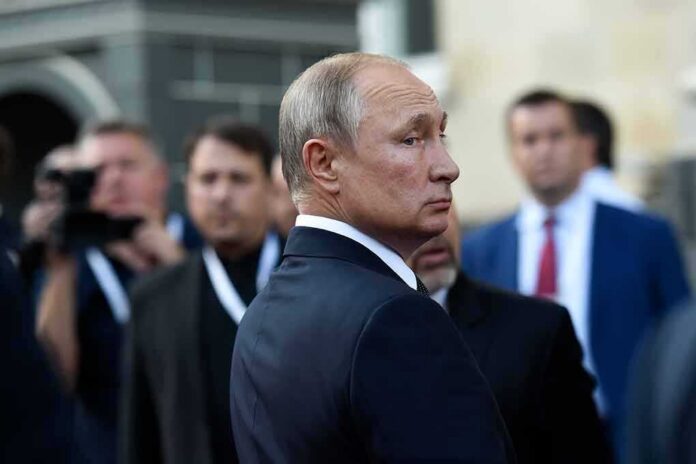
Russia’s demand that Ukraine quit the entire Donbas still blocks a peace deal, even as talks restart under U.S. mediation.
Story Highlights
- Russia is holding firm on a full Donbas withdrawal by Ukraine before peace.
- Ukraine rejects surrendering land and insists borders cannot change by force.
- Talks yielded a large prisoner swap framework but no ceasefire or map deal.
- The United Nations condemned Russia’s attempted annexations, deepening the gap.
Russia’s Core Demand Keeps the Talks Stuck
Reuters reported that Russia shows no sign of dropping its demand that Ukraine leave the entire Donbas before a peace deal. Moscow also wants Ukraine to be neutral and stay out of the North Atlantic Treaty Organization, tying territory to long-term security limits. These conditions shape the talks and slow movement. They turn basic war-ending steps into wider fights over Europe’s security order, not just lines on a map.
Russian President Vladimir Putin still aims to bring all of Donbas under Moscow’s control. Russian forces hold a large slice of Ukraine, and the Kremlin treats that control as leverage at the table. That makes the demand look less like a trade and more like a battlefield ultimatum, which Kyiv rejects. Without a clear give-and-take, negotiators face a wall on the main issue that decides where any ceasefire line could run.
What Ukraine Says It Will Not Accept
Ukraine states that it will not give up its land within its recognized borders. President Volodymyr Zelenskyy has said Donbas and Crimea are Ukraine, and that borders cannot be changed by force. Kyiv’s public position calls for Russia to withdraw its troops fully and verifiably, and it backs strong security guarantees to prevent a repeat of invasion. Those terms set hard limits on any map deal that rewards aggression.
Ukrainian leaders say territory remains a question that only national leaders can decide, but they keep firm red lines in place. They welcome talks on security guarantees, yet they do not accept a deal that locks them out of future alliances or weakens their defense. That means Russia’s demand for neutrality and a ban on joining the North Atlantic Treaty Organization clashes with Ukraine’s view of its own sovereignty and freedom to choose partners.
A Small Step: Prisoner Exchange, But No Ceasefire
Despite the stalemate on borders, negotiators reached a deal for a major prisoner exchange after two days of meetings in Abu Dhabi. That outcome proves the sides can make focused, practical deals when goals are limited and verifiable. It also shows the value of American mediation that keeps pressure on concrete, humane steps while bigger issues stay unsettled. Still, no ceasefire or territorial framework followed that progress.
President Trump’s team is pushing both sides to define security needs and build trust step by step. U.S. officials see a “broad deal” as possible, but they acknowledge the lack of trust and the gulf on territory. Washington’s approach blends pressure for near-term relief, like swaps, with talks about longer-term security rules. The aim is to reduce bloodshed now while creating space for a future map and monitoring system, if leaders choose to move.
International Law and Legitimacy Weigh on the Outcome
The United Nations General Assembly condemned Russia’s attempted annexation of Donetsk, Luhansk, Kherson, and Zaporizhzhia. The resolution affirmed Ukraine’s territorial integrity and said the attempted annexations have no legal validity. That vote isolates Moscow’s claim and signals that force cannot lawfully change borders. This global stance makes it even harder to turn battlefield lines into recognized sovereignty through a quick bargain.
Given that legal backdrop, any durable peace likely needs more than a pullback or a promise. It would need written terms, maps, and enforcement that respect international rules. Without that, a shaky ceasefire could fail and spark fresh fighting. For conservatives who value strong borders, national choice, and clear rules, the lesson is simple: do not trade away sovereignty for a paper peace. Build a deal that deters new wars and protects allies from coercion.
What to Watch Next
Watch for whether Russia releases a detailed proposal that defines exact lines, sequencing, and verifiable steps after a Ukrainian pullback. Look for Ukraine’s answer on security guarantees that do not tie its hands or reward aggression. Track if the United States can lock in more practical wins, like expanded exchanges, de-mining access, and energy-site safety. These moves save lives and can test whether Moscow is ready for real compromise, not just demands.
A breakthrough will require real reciprocity. Russia would need to balance any Ukrainian move on Donbas with clear, enforced limits that stop future attacks. Ukraine would need guarantees it can trust, not vague pledges. Until then, expect more narrow, humanitarian steps, more pressure from Washington, and a long wait for any map that passes both the law and the smell test on fairness and freedom.
Sources:
reuters.com, media.un.org, president.gov.ua