
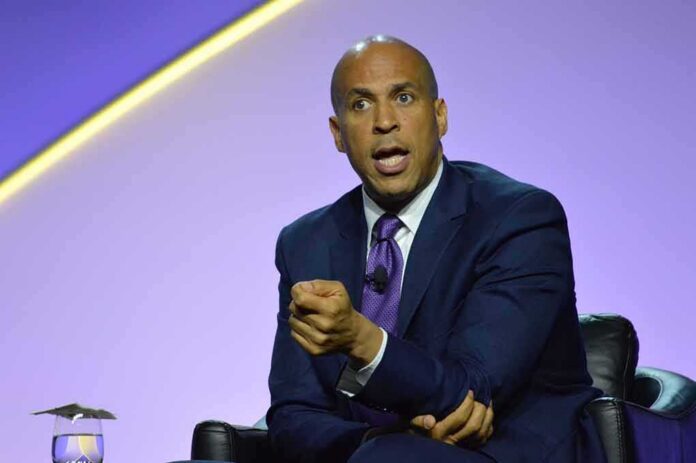
Senator Cory Booker is urging Congress to “check” President Trump’s war powers, reviving a decades-old fight over who decides when America goes to war.
Story Highlights
- Booker urges Congress to rein in Trump using the War Powers Resolution.
- The Constitution splits war powers between Congress and the president.
- War Powers law sets timelines and removal procedures for unauthorized hostilities.
- White House asserts commander-in-chief authority for rapid military action.
Booker’s Call: Congress Must “Check” Trump’s War Powers
Senator Cory Booker said Congress must “check” President Trump and “hold him accountable” on war powers, arguing presidents have pushed the limits for years. In a Senate statement, Booker claimed the administration sought to “outrun the Constitution” and pressed for a resolution to end ongoing hostilities with Iran without a congressional vote. His stance signals a renewed effort by Senate Democrats to force a public debate and a binding test of executive claims.
Booker’s message targets process and principle, not battlefield tactics. He frames the issue as Congress reclaiming its constitutional role to prevent open-ended wars by executive action. His supporters point to a clear statutory path to demand removal of forces absent authorization. They also argue that even successful missions must answer to the rule of law. The push arrives as the White House highlights rapid operations and says Congress was notified of major moves.
What The Constitution And Law Actually Say
The Constitution gives Congress the power to declare war and fund the military, while the president serves as commander in chief who directs forces in the field. Nonpartisan experts explain that both branches share responsibility over war and peace, creating tension by design. The War Powers Resolution requires consultation and reporting when forces enter hostilities and sets a sixty-day clock, with a limited thirty-day extension, unless Congress authorizes continued action or orders withdrawal.
Congressional Research Service guidance states that if Congress determines U.S. forces are in unauthorized hostilities, it can trigger expedited procedures to require removal. Lawmakers can also legislate authority, restrict funds, or demand information from the executive branch. Supporters say those tools give Congress leverage to prevent mission creep. Critics counter that presidents often define operations as limited or defensive, blunting the statute’s bite over time.
The White House Position: Commander-in-Chief Speed And Success
President Trump and senior defense leaders argue the commander in chief must act fast to keep Americans safe and deter enemies. Trump told Congress he did not need new authorization for Iran operations because a ceasefire had halted exchanges of fire, signaling that the legal threshold for “hostilities” had not been crossed again. Supporters add that swift, targeted campaigns can stop threats and end conflicts before they grow, while still notifying Congress after action.
Officials have pointed to claimed battlefield results to validate the approach, describing heavy damage to hostile forces and critical infrastructure, and saying Congress received required notifications. Backers argue Article II of the Constitution grants enough authority for limited, time-bound strikes when danger looms. They also note that after Vietnam, every president has asserted some unilateral power in this space, and courts rarely step in to settle the boundary lines.
Can Congress Really Force A Pullback?
Booker’s camp says yes, citing the War Powers Resolution’s removal process and prior Senate action on Iran that did not require the president’s signature. The statute’s text gives lawmakers a route to demand withdrawal if they find ongoing, unauthorized hostilities. But decades of experience show mixed practical results. Reporters and legal analysts note that the law has not consistently checked presidents in real time, which can limit its punch on the ground.
That gap between paper power and practice is the heart of the fight. Presidents can control intelligence, define mission scope, and move first. Congress must then react with votes, restrictions, or oversight hearings that take time. When operations appear successful, the public often backs the commander in chief. When missions drag on or costs rise, pressure shifts back to Congress to set hard limits. That cycle fuels today’s standoff.
What It Means For Conservatives
Conservatives value a strong military and also demand respect for the Constitution. The split here is not about loving America’s warriors; it is about who authorizes risk and writes the check. The Constitution assigns that choice to the people’s branch. Clear votes prevent mission creep, protect troops, and keep globalists from turning limited missions into endless wars. When Congress shirks duty, bureaucrats gain power and the bill lands on families at home through taxes and inflation.
President Trump’s team argues speed keeps Americans safe and saves money by ending fights fast. Booker wants formal votes to confirm or curb that power. Both frames speak to order and security. The clean fix is simple: demand plain-English authorizations with clear goals, limits, and exit paths. That approach honors the troops, defends the purse, and keeps final war decisions where the Founders put them—squarely in the hands of Congress, accountable to the voters.
Sources:
youtube.com, govinfo.gov, krgv.com, walkinshaw.house.gov, congress.gov