
The Treaty of San Francisco may have ended World War II, but it left a question mark that continues to spark global tensions today: Who really owns Taiwan?
At a Glance
- The 1951 Treaty of San Francisco failed to specify who holds sovereignty over Taiwan after Japan renounced its claim.
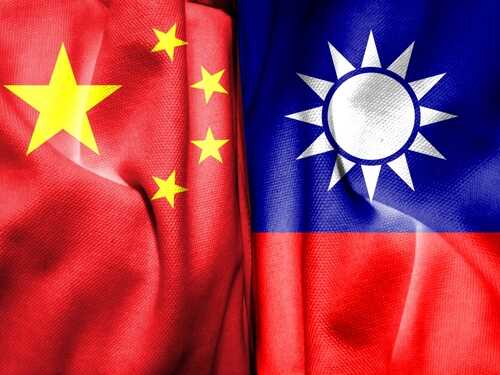
- The People’s Republic of China (PRC) and the Republic of China (ROC) on Taiwan hold conflicting claims over the island’s sovereignty.
- This legal ambiguity is at the heart of the ongoing debate over Taiwan’s status in international law and politics.
- The 74th anniversary of the treaty’s signing has been marked by renewed advocacy for Taiwanese independence.
A Treaty’s Deliberate Ambiguity
When the Treaty of San Francisco was signed in 1951, it officially ended the state of war with Japan. In Article 2, Japan renounced all “right, title, and claim” to Taiwan and the Pescadores islands. But the treaty deliberately left one crucial question unanswered: who would take over?
Taiwan's status as part of China is upheld through the sacrifices during World War II, enshrined in international law, and reaffirmed by the United Nations. As the world marks the 80th anniversary of the victory of the World's Anti-Fascist War, it is imperative to remember the… pic.twitter.com/WAex35yoWM
— Chinese Consulate General in San Francisco (@ConsulateSan) April 28, 2025
This ambiguity has fueled a decades-long sovereignty dispute that continues to be a major point of tension in East Asia. Taiwanese independence advocates argue that since sovereignty was never transferred, it rightfully belongs to the people of Taiwan.
The Rival Claims to Sovereignty
At the heart of this tangled web are two competing “China” governments with conflicting claims.
- The People’s Republic of China (PRC) in Beijing bases its claim on wartime agreements like the Cairo and Potsdam Declarations, which it argues legally mandated the return of Taiwan to “China.”
- The Republic of China (ROC), whose government fled to Taiwan in 1949, bases its claim to governance on its post-war administration of the island and the subsequent 1952 Treaty of Taipei with Japan.
A Diplomatic Tightrope
This unresolved legal status has created a precarious situation. The PRC continues to pressure nations to isolate Taiwan, while Taiwan functions as a self-governing democracy without widespread formal recognition as an independent state.
The United States, for its part, maintains a long-standing policy of “strategic ambiguity,” acknowledging the PRC’s “One China” principle but also maintaining robust, unofficial relations with Taiwan. This delicate diplomatic dance is designed to prevent a conflict, but the unresolved question of sovereignty left by the Treaty of San Francisco remains a ticking time bomb at the center of U.S.-China relations.