

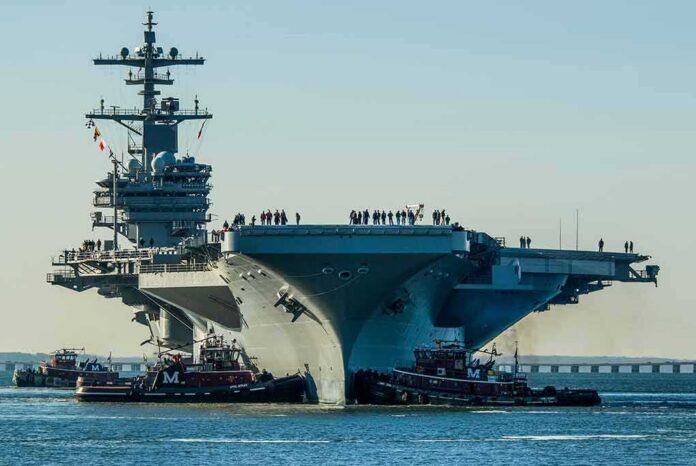
A boy rescued from communist chaos now leads America’s Navy and is pressing Congress to rebuild our fleet and shipyards.
Story Highlights
- Hung Cao, once a Vietnamese refugee, now serves as Acting Secretary of the Navy.
- Cao credited U.S. Sailors and Marines for helping his family after fleeing Vietnam.
- Senators considered his nomination to serve as Secretary of the Navy on Nov. 17, 2026.
- Cao urged action to close the shipbuilding gap and strengthen U.S. industrial power.
Refugee To Navy Leader: An American Story With A Mission
Acting Secretary of the Navy Hung Cao’s path began in 1975, when his family fled Vietnam. The Navy’s official biography records his journey from immigrant to U.S. Navy leader, including his assumption of acting duties on April 22, 2026. In Senate testimony, Cao said Sailors and Marines helped his family when they arrived, setting him on a course of service and duty. His story shows what America can do right: welcome freedom-seekers, knit them into our ranks, and ask them to lead.
Cao entered the Navy enlisted in 1989, earned a commission in 1996, and rose through command and combat deployments before retiring as a captain, then returning to serve in senior civilian roles. On November 17, 2026, the Senate Armed Services Committee met to consider his nomination to be Secretary of the Navy. Lawmakers pressed him on strategy and readiness. Cao kept the focus on the fleet, sailors, and the need to rebuild the nation’s maritime strength.
Rebuilding American Sea Power And The Arsenal Behind It
During recent remarks, Cao urged lawmakers to boost U.S. shipbuilding, close the gap with China, and expand the industrial base that supports the fleet. He discussed using allied expertise to help modernize American yards while keeping warship construction here at home, a balance that aims to speed capacity without offshoring core work. That stance lines up with conservative priorities: secure supply chains, strong industry, and jobs in American communities that anchor national power.
Shipyard capacity shapes deterrence. Cao’s push recognizes that ships, subs, and maintenance cycles depend on welders, fitters, engineers, and dry docks. He tied strategy to the factory floor, which is where wars are won long before a shot is fired. His approach rejects slow-walk bureaucracy and seeks results. That means clearing red tape, aligning funding with real timelines, and holding programs to account so sailors are not left waiting on the pier while threats grow over the horizon.
Why His Journey Matters For Conservative Voters
Cao’s life speaks to the conservative case for a merit-based America. He fled tyranny, worked hard, served in uniform, and now leads the Navy. That is the opposite of identity politics. It is faith in earned opportunity and duty. He praises those who rescued his family, not a government handout, and he calls for strength that keeps our people safe and free. He also reminds Washington that the Navy’s mission is to deter war by being so capable that no rival dares a fight.
Conservatives want secure borders and legal, orderly immigration. Cao’s story fits that view: come here lawfully, adopt American ideals, and serve. He stresses gratitude for the Marines and Sailors who cared for his family after they escaped communism. That is why his message resonates now. The fleet must be ready, the yards must hum, and the chain of command must back sailors with clear goals and the tools to win. That is how peace is kept and chaos kept far from our shores.
The Senate’s Role And The Road Ahead
The Senate Armed Services Committee’s hearing on his nomination set the stage for decisions on budgets, ship counts, and maintenance capacity that affect every coast and heartland supplier. Cao’s case to Congress centers on speed with accountability: fix yard bottlenecks, shorten repair backlogs, and deliver the ships the strategy demands. The task is urgent. Every month of delay bleeds readiness. Every on-time delivery adds real strength at sea and leverage at the table.
Cao’s American journey ends where it began: with the U.S. military. A Marine once helped lift his family to freedom. Today, he works to lift the fleet to dominance. This is not a slogan. It is a plan tied to factories, schedules, and sailors’ lives. If Congress backs it with focus and funding, the Navy can regain the edge, protect trade, and keep faith with those who stand the watch. That is the victory our country needs, and our sailors deserve.
Sources:
news.usni.org, armed-services.senate.gov, navy.mil, guampdn.com