

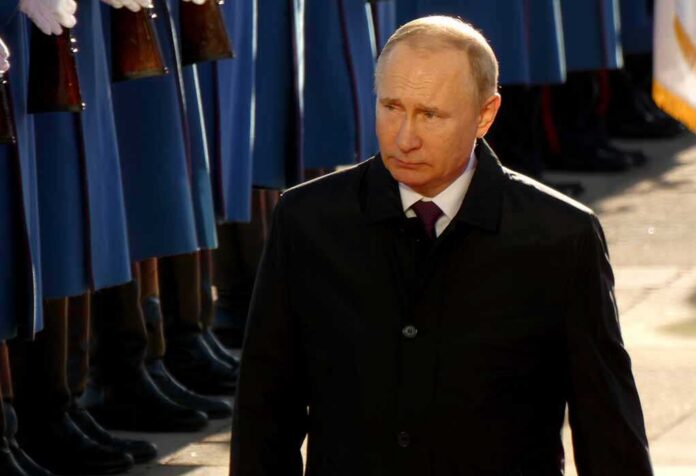
Putin vowed a response “far more painful” after Ukraine shattered the Crimea bridge’s road span and hit its rail line twice more in one week.
Story Highlights
- Ukrainian strikes collapsed a central road section of the Russia–Crimea bridge and later hit rail tracks.
- Putin ruled out any truce on Black Sea shipping or energy sites and promised harsh retaliation.
- Ukraine called the bridge a key military supply route; road traffic was halted after the attack.
- Conflicting reports on casualties and damage details show an information fight around hard facts.
Bridge Damage And Traffic Halt Confirmed By Multiple Reports
Reuters reported that drones and missiles destroyed a central road span on the bridge linking Russia with Crimea, knocking it out for vehicles and sending part of the structure into the water. The British Broadcasting Corporation reported a collapse and said the bridge was unusable for road traffic after the strike. Ukraine’s General Staff said, “The roadway is out of action: no vehicle can cross it,” underscoring the scale of the hit and its effect on movement.
Two days later, Ukrainian officials said Neptune missiles struck the railway, disrupting tracks and adding to the pressure on the crossing. News reports described it as the third attack in a single week, which shows a focused effort to cripple both road and rail logistics on the route. Reuters also framed the strikes as a military and symbolic blow to the Kremlin, given the bridge’s role and the politics of Crimea.
Putin’s Retaliation Pledge Raises Risks To Shipping And Energy
At a press event in Shenzhen, Putin said Russia “will respond” and warned the answer would be “far more painful” than Ukraine’s bridge strikes. Reuters reported he ruled out any moratorium on attacks against energy infrastructure or Black Sea shipping after the latest hits on the bridge. That shift signals higher risk to civilian-adjacent targets, wider regional trade, and energy supply chains, which can raise costs and inflation far beyond the front line.
For readers at home, this matters because instability at sea and in energy networks pushes prices up. Americans have already paid for a long war through higher fuel, shipping, and insurance costs. A declared end to restraint by Moscow means merchant traffic, ports, and refineries in the region could face more danger. That can ripple into our supply chains and raise costs for gas, food, and household goods if shippers pass risk premiums to consumers.
Ukraine Casts The Bridge As A Military Artery, But Legal Questions Remain
Ukraine’s leaders called the bridge a key supply route for troops, fuel, and ammunition moving into southern Ukraine. They said air defense and radar sites were hit first to clear the way, and that the bridge carried military traffic that made it a lawful target in war. Ukraine’s General Staff said the bridge supports Russian units and bases on the peninsula, framing the strikes as aimed at logistics, not civilians.
The available record does not settle legal status. Reports show major damage and disruption, but not a court ruling on whether the strikes met the rules of distinction and proportionality under the laws of war. Claims about casualties also differ across outlets. One report cited no deaths in the later strike, while other accounts tied earlier incidents to fatalities near Kerch. These gaps do not erase the damage; they show why clear facts matter when tempers run hot.
Why This Escalation Should Concern American Families
Escalation invites blowback that can hit our wallets and our security. Putin’s vow to target energy and shipping broadens the battlefield to assets that power homes and move goods. That threatens trade routes and power flows that the world depends on. When shipping slows or tankers take longer, costs climb. Washington must press every side to spare civilian infrastructure and keep trade lanes open. That aligns with American strength, energy independence, and peace through deterrence.
President Trump has pushed partners to share the burden and secure lanes while avoiding endless commitments. That approach matters now. Clear red lines against hitting civilian energy sites and neutral shipping must hold, backed by allied patrols and smart sanctions. At the same time, the United States should demand transparency on targets and casualties from all parties. Facts, not slogans, should guide any response that risks our economy and our service members.
Sources:
youtube.com, reuters.com, abcnews.com, rmb.reuters.com, internazionale.it, yahoo.com