

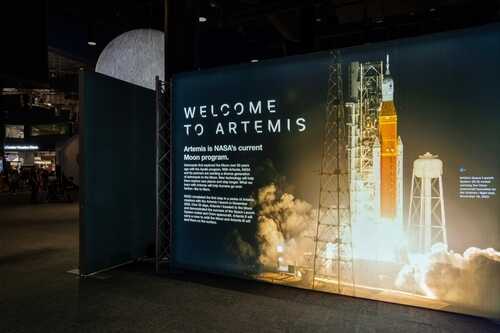
NASA’s upcoming lunar mission could redefine America’s leadership in space exploration, but the pressure is mounting to meet ambitious deadlines.
Story Highlights
- NASA’s Artemis 2 rocket has made its way to Launch Pad 39B at Kennedy Space Center.
- The mission aims to send humans beyond low Earth orbit for the first time since the Apollo 17 mission in 1972.
- Launch window is set for February 6-10, 2026, with a crucial fueling test scheduled ahead.
- The mission includes international collaboration, featuring a Canadian Space Agency astronaut.
Artemis 2 Mission: A New Era for Lunar Exploration
NASA’s Artemis 2 mission represents a pivotal moment in space exploration, marking the first crewed lunar mission since the Apollo program. The Artemis 2 rocket, consisting of the Space Launch System (SLS) and Orion spacecraft, reached Launch Pad 39B at Kennedy Space Center on January 17, 2026. This milestone is part of NASA’s broader vision to establish a sustainable lunar presence, paving the way for eventual human exploration of Mars.
The significance of Artemis 2 extends beyond its technical achievements. It is the first mission to carry humans beyond low Earth orbit in over 50 years, with a crew that includes NASA astronauts Reid Wiseman, Victor Glover, Christina Koch, and Canadian Space Agency’s Jeremy Hansen. This mission highlights the importance of international collaboration, as it not only advances scientific discovery but also strengthens global partnerships in space exploration.
Key Milestones and Preparations
The rollout of the Artemis 2 rocket was a complex operation, utilizing the Crawler-Transporter 2 to move the massive 322-foot-tall, 11-million-pound stack from the Vehicle Assembly Building to the launch pad. The operation took approximately 11.5 hours, underscoring the meticulous planning required for such a significant endeavor. The next crucial step is the wet dress rehearsal, a comprehensive fueling test, scheduled no later than February 2, 2026.
These preparations are vital to ensure the mission’s success, highlighting NASA’s commitment to safety and precision. The agency has emphasized that while the timeline is tight, there is no room for rushing. A successful fueling test will clear the path for the launch window between February 6-10, 2026, an opportunity eagerly anticipated by space enthusiasts and experts alike.
Implications for the Future of Space Exploration
The successful launch and completion of the Artemis 2 mission are expected to validate the technologies and procedures necessary for subsequent missions, including Artemis 3, which aims for a lunar landing in 2027. This mission is not just about returning humans to the Moon; it’s about establishing a sustainable presence and preparing for future exploration of Mars. The economic impact is also substantial, with billions in contracts stimulating the U.S. aerospace industry and inspiring a new generation to pursue careers in STEM fields.
To the moon: NASA rocket heads to pad ahead of astronaut launch as early as February @WashTimes https://t.co/KdtI6Z6Avo
— Washington Times Local (@WashTimesLocal) January 17, 2026
As NASA moves forward with the Artemis program, the world watches with anticipation. The mission represents not only a leap in technological innovation but also a reaffirmation of America’s leadership in space exploration, a position that resonates deeply with those who value national pride and scientific advancement.
Sources:
Artemis 2 NASA Moon Rocket Rollout
NASA’s Moonbound Artemis II Rocket Reaches Launch Pad
NASA’s Artemis II Moon Rocket on Way to Launch Pad
NextSpaceflight Launch Details