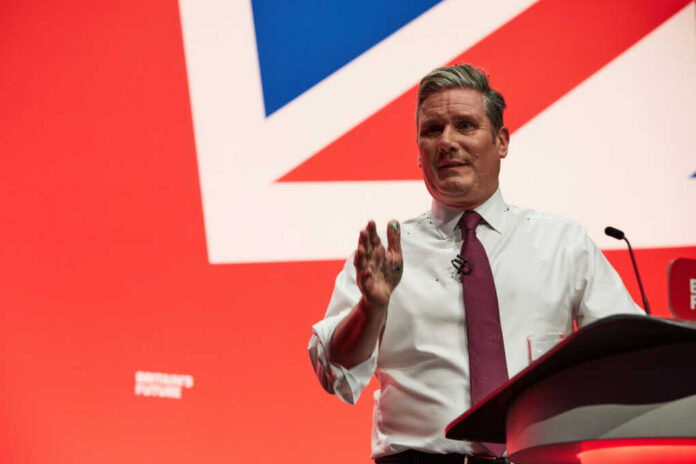
Labour’s leadership is in open revolt, with reports saying around 100 of its own MPs want Prime Minister Keir Starmer to quit.
Story Snapshot
- Sky News and BBC reports tally roughly 100 Labour MPs urging Starmer to stand down [2][4].
- Party rules say a formal challenge needs nominations from 20% of Labour MPs, about 81 names [6].
- Starmer says he will not walk away and would stand if a contest is triggered [13].
- Senior Labour voices are debating his future after the Makerfield result [8].
Rebellion Inside Labour: The Numbers Driving the Crisis
Sky News reported a running tally near 100 Labour Members of Parliament calling for Keir Starmer to resign, with BBC coverage confirming many have gone public against him [2][4]. Some outlets and social posts claim “more than 100,” but those counts rely on media tracking, not an official signatory list. That means the exact number is fluid. Still, the visible dissent is large enough to wound any leader. It signals a serious credibility problem inside Labour’s own ranks [2][4].
Reports also describe senior Labour figures discussing Starmer’s future after the Makerfield result, putting pressure above the backbench level [8]. That matters because it suggests concern is not limited to fringe critics. When cabinet-level or senior figures weigh in, authority erodes faster. This is the pattern we have seen in past Westminster shakeups. The count may shift day to day, but the direction is plain: Starmer’s grip looks weaker now than even a week ago [8].
The Rules That Decide If Talk Becomes Action
The Institute for Government explains how a Labour leadership contest actually starts. There are two routes. Either the leader resigns, or at least 20% of Labour Members of Parliament nominate a challenger. That threshold is currently 81 Members of Parliament. If that written nomination is submitted to the party’s general secretary, a formal contest begins. Until that line is crossed, the crisis lives in headlines and pressure, not on a ballot [6].
There is no public evidence yet that a challenger has filed the needed nominations. That is the gap between noise and action. Media tallies can shape momentum, but they do not replace rules. This is why Starmer can stall a revolt unless his critics organize on paper. It is also why some observers warn that the headline “around 100” can make dissent look more decisive than it is in formal terms [6].
Starmer’s Defiance and What It Signals
Keir Starmer addressed the speculation directly. He said there is no leadership contest right now. He added that if one is triggered, he will run and will not walk away. That stance is meant to cool the fever and test whether his critics can reach the 20% nomination bar. His words also buy time to rally allies, trade favors, and discourage would-be challengers from declaring too early [13].
Speculation is heating up, but it's not confirmed yet. https://t.co/P0YYQlvXsV
The Observer reported that Keir Starmer is expected to announce a timetable for his departure as early as Monday (tomorrow), after concluding his position is "no longer tenable" following… https://t.co/zQMobsQgR1
— AmericaWoman🇺🇸 USA (@MAGAMAHA_LADY) June 21, 2026
Time cuts both ways. If the public tally grows, Starmer’s message looks shaky. If the tally fades, he can claim to have steadied the ship. For now, the public does not see a verified list of names on either side. That makes the weekend chatter at Chequers and comments by senior ministers more important to perception. In politics, perception hardens into reality when rules are finally invoked—or when a leader quits first [8].
Why This Matters for America-First Readers
British Labour’s turmoil reveals what happens when elites chase big government dreams and fail basic tests. Dissent rose after the Makerfield result, which critics cast as a verdict on direction and competence. We have seen this movie in the United States. When leaders push top-down control, spend too much, or ignore borders and energy costs, trust collapses. Voters and lawmakers then look for the exit. Labour’s own ranks are now echoing that backlash [8].
For the United States, a weak Labour government abroad can mean more hedging on security, migration, and energy policy. It can also feed global markets more uncertainty, which hits family budgets. The Trump administration is pressing for strong borders, reliable energy, and fair trade. A shaky partner in London complicates those goals. If Labour cannot even agree on its leader, it will struggle to be steady on anything that matters to working families.
What to Watch Next: Thresholds, Timetables, and Names
Watch for one thing above all: whether a challenger collects the 81 nominations and files them. That turns drama into a contest [6]. Also watch for a public, verified list of Members of Parliament who want Starmer out. Media counts move, but a list locks positions in place. Finally, track whether more cabinet-level voices speak on record. That shows whether pressure is isolated or now reaches the core of government authority [2][4][8].
If a contest starts, Starmer says he will fight [13]. If it does not, he still faces a trust deficit inside his party. Either path drains energy from governing. That is bad for Britain and a warning for any government tempted by elite agendas over common sense. Strong borders, sound money, and free people need steady hands. Revolts grow when leaders forget that simple truth.
Sources:
[2] Web – In the last few days nearly 100 Labour MPs have called for the Prime …
[4] Web – Who is calling on Sir Keir Starmer to resign? The Sky News tally …
[6] YouTube – Keir Starmer preparing to resign as UK Prime Minister | 7NEWS
[8] Web – Burnham insists he will stick to fiscal rules – latest – The Telegraph
[13] YouTube – Is this game over for Keir Starmer? What Burnham win …