
The U.S. Treasury’s explosive decision to slam the Venezuelan ‘Cartel of the Suns’ with a global terrorist designation has left Americans asking: what’s really behind the endless suffering in Venezuela, and who’s profiting from the chaos?
At a Glance
- The U.S. has officially declared Venezuela’s Cartel de los Soles a Specially Designated Global Terrorist entity, freezing its U.S. assets and banning all transactions.
- This marks a major escalation in efforts to weaken the Maduro regime’s grip on power and combat narco-terrorism in the region.
- Sanctions are deepening Venezuela’s humanitarian disaster, driving mass migration and shortages that spill over U.S. borders.
- Experts warn that while sanctions target criminals, ordinary Venezuelans are bearing the brunt of the pain.
U.S. Declares War on Maduro’s Cartel of the Suns
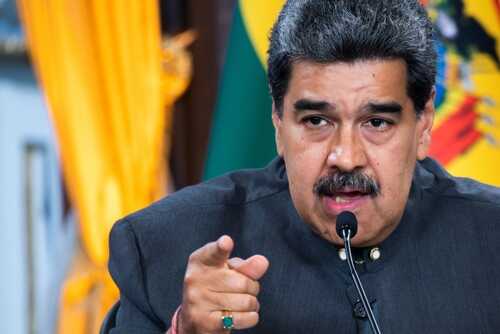
On July 25, 2025, the U.S. Treasury Department upped the ante in the war on narco-terrorism by designating Venezuela’s notorious Cartel de los Soles as a Specially Designated Global Terrorist entity. This action blocks all property and interests of the cartel in the United States and prohibits American citizens and businesses from engaging in any kind of transaction with it. The move targets a syndicate reportedly run by high-ranking Venezuelan military and government officials accused of flooding the world with drugs while propping up Nicolás Maduro’s socialist regime.
US Sanctions Maduro-Linked Venezuelan ‘Cartel of the Suns’ as Terrorist Entityhttps://t.co/hzppU5f2WC
ANY Gangs in America 🇺🇸 MUST ALL BE DEPORTED— Susan B Adams (@choo10_choo) July 26, 2025
The Cartel de los Soles has been on Washington’s radar for years, but this is the first time it’s been formally labeled at the same level as groups like the Sinaloa Cartel. According to Treasury Secretary Scott Bessent, “Today’s action further exposes the illegitimate Maduro regime’s facilitation of narco-terrorism through terrorist groups like Cartel de los Soles.” This announcement comes on the heels of similar terrorist designations slapped on the Venezuelan prison gang Tren de Aragua and Mexico’s Sinaloa Cartel earlier this year, signaling a sweeping crackdown on transnational criminal organizations that poison American communities and destabilize the hemisphere.
How Sanctions Are Squeezing Venezuela—and Ordinary People
The new terrorist designation freezes any assets the cartel has within U.S. reach and slams the door on anyone—even unwitting businesses or banks—who might have dealings with its network. The U.S. government’s stated goal is to isolate Maduro’s regime, cut off its criminal funding, and restore democracy in Venezuela. But here’s the kicker: while these sanctions are supposed to target the corrupt elite, the people who wind up trapped in the crossfire are everyday Venezuelans struggling to find food, medicine, or even basic safety.
Since 2017, the U.S. has steadily ramped up sanctions against Venezuela, targeting everyone from Maduro’s inner circle to the state oil company. The result? Venezuela’s oil-dependent economy has cratered, millions have fled the country, and those left behind face catastrophic shortages. The U.S. has pumped over $3.5 billion in aid into the region, but it barely dented the suffering. Meanwhile, the regime uses the sanctions as a propaganda rallying cry, blaming “Yankee imperialism” for every misery while lining their own pockets.
Winners, Losers, and a Region on Edge
This latest move by Washington is aimed squarely at the power base of Nicolás Maduro—who started his disputed third term in January—and his cronies in the military, many of whom are implicated in the cartel’s operation. For the Biden administration, these kinds of actions were about looking “tough” but rarely delivered real results beyond virtue signaling. Now, with President Trump back in the White House, the gloves are off. The administration is betting that choking off the financial lifelines of criminal regimes will slow the flood of drugs and illegal migrants into the United States.
But not everyone is cheering. Human rights advocates and international organizations warn that sanctions, while a blunt tool against criminal leaders, often end up crushing the most vulnerable. According to recent UN reports and academic studies, sanctions have devastated Venezuela’s GDP, wiped out oil revenue, and pushed millions into poverty. The humanitarian crisis is now a regional emergency, fueling mass migration that strains U.S. border security and resources. As always, it’s law-abiding families—here and there—who end up paying the highest price for government incompetence and criminal greed.