

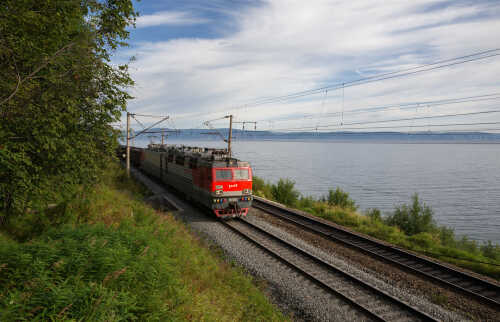
Russia’s Trans-Siberian Railway highlights debate over centralized infrastructure and regional isolation.
Story Snapshot
- The Trans-Siberian Railway, extending 9,289 kilometers over an eight-day journey, remains the world’s longest scheduled train route.
- The railway is a historic and strategic infrastructure project connecting Moscow with Russia’s Far East.
- The extensive duration and isolation of the journey underscore the challenges of centralized planning and managing vast, remote territories.
- The route generates debate over the balance between state strategic necessity and individual passenger experience.
The Trans-Siberian Railway: Endurance, Isolation, and Centralized Control
The Trans-Siberian Railway maintains its status as the world’s longest scheduled train journey. Passengers travel 9,289 kilometers (5,772 miles) across eight time zones in a continuous journey that typically lasts eight days. The route, which connects Moscow with Vladivostok on Russia’s Pacific coast, is a feat of engineering that was largely constructed between 1891 and 1916.
The original purpose of the railway was twofold: to spur economic development across remote Siberian territories and to serve crucial military and logistical needs connecting the far reaches of the Russian empire. Today, Russian Railways (RZD) manages the operational control, with government policy setting the strategic direction and funding.
Strategic Significance and Passenger Experience
The railway’s strategic value persists, as it provides the sole land link across the vast and remote territories of Siberia. The route is utilized by tourists, business travelers, and local residents seeking essential transport.
The journey has a widely noted reputation for the psychological effects of its duration and the isolation of the remote landscapes it traverses. This context frequently fuels public discussion regarding the consequences of large-scale, centralized infrastructure projects that prioritize geopolitical or geographic necessity over the comfort and individual experience of the traveler. The Russian system, in this regard, contrasts with models that emphasize individual choice and decentralized governance in infrastructure development.
Economic, Social, and Political Impact
The Trans-Siberian Railway contributes significantly to regional development and provides essential transport services for remote communities. However, the legacy of the project often prompts political analysis regarding the economic and social costs of centralized planning and government control.
The railway’s continued operation, along with ongoing upgrades and promotion to international tourism, reinforces its status as a historical and strategic asset. For international observers, the route serves as a reminder of the unique challenges associated with governing vast, remote territories and the importance of maintaining robust, efficient infrastructure.
Sources:
Longest Train Route in the World – Current Affairs
Greatest Distance Travelled by Train in 24 Hours – Guinness World Records
Longest Train Services – Wikipedia
Portugal to Singapore Train – Big Think
Rough Notes About the Longest Train Journey in the World in 2025 – Jon Worth