
A tank built so Israel would “never depend on anyone again” now runs on a foreign-made engine that shows how global defense supply chains really work — and why America must guard its own.
Story Snapshot
- Israel’s Merkava tank was designed after British embargoes to give Israel its own home-grown armor.
- Most Merkava parts are made in Israel, but its latest engine is German-designed and built under U.S. license.[8]
- Recent U.S. deals show Israel still needs American and European powerpacks for tanks and armored vehicles.[9][14]
- The Merkava story exposes how “self-reliance” in defense today still depends on trusted allies and secure supply chains.[17][18]
How Israel’s “never again” tank was born
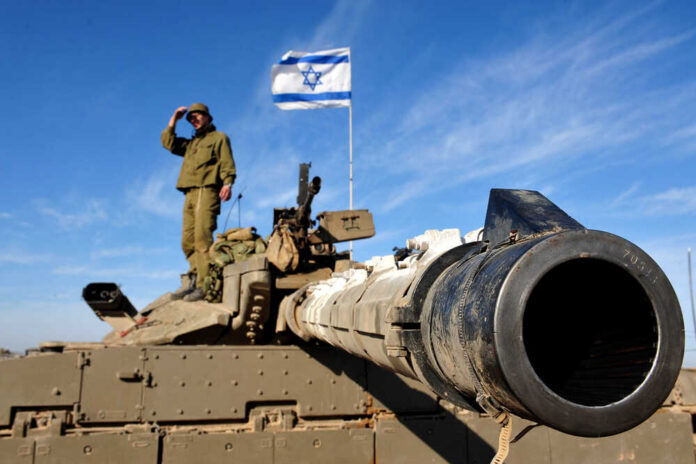
After Britain canceled tank sales to Israel in the late 1960s, Israeli leaders learned the hard way what it means to depend on foreign weapons when the chips are down.[10] Facing Soviet-backed enemies and fresh memories of the Yom Kippur War, Israel’s defense ministry launched the Merkava program in 1970 to build a national main battle tank on Israeli terms, for Israeli terrain, with Israeli priorities.[4][3] The top rule for its designers was simple and blunt: the crew must survive, even if the tank does not.[5]
Designers flipped the classic tank layout to put the heavy diesel engine in front, turning it into a shield between incoming fire and the crew compartment.[5][8] They added a rear door so wounded troops could be pulled out under armor, and they packed the hull with local electronics, armor modules, and weapons tailored to the rocky ground of the Golan Heights and tight urban streets.[3][6] Over about nine years, more than 200 Israeli companies fed parts into the project, and final assembly stayed in Israeli hands.[3][8]
The sovereignty story: mostly Israeli, but not fully
The Merkava is widely described as an indigenous Israeli tank, and that label has real weight.[3][4] Israel’s Ministry of Defense managed development through its own Merkava and Armored Combat Vehicles Division, and open sources say most of the tank’s parts are manufactured inside Israel.[8] The latest Merkava Mark 4 reportedly reaches over 90 percent local content, from fire-control computers to armor systems and active protection suites like Trophy, all built by Israeli defense firms.[2][8]
This high local share gives Israel political and operational freedom that many nations do not enjoy. When a war breaks out, Jerusalem does not have to beg foreign parliaments for the right spare track or turret part. Domestic factories can repair battle damage and roll out upgrade kits without waiting on global shipping lanes. That kind of resilience is exactly what many in the United States are now demanding after seeing how fragile pandemic-era and wartime supply chains can be.[17]
The engine exception: German design, American license
Beneath that sovereignty story, however, sits one big foreign piece: the engine. The current Merkava uses the MTU EuroPowerPack, a powerplant family designed in Germany for heavy armored vehicles.[8][15] Public technical data show that the Merkava’s 1,500-horsepower diesel is an MTU design, built under license by L3 Communications Combat Propulsion Systems in the United States rather than in an Israeli clean-sheet engine plant.[1][3] Videos and encyclopedias alike describe this as a German-designed engine installed in an otherwise largely Israeli-made tank.[2][8]
That engine choice has clear logic. Buying into a proven German powerpack, with licensed production in America, gave Israel a reliable, modern drivetrain without spending decades and billions to reinvent heavy diesel technology from scratch.[4][15] It trades a slice of industrial independence for speed, performance, and access to a larger support base. But it also means that if Western politics or export rules shift, a key part of Israel’s signature “indigenous” tank still rests on decisions made in Berlin and Washington, not only in Tel Aviv.[11]
U.S. deals show how deep the foreign powerpack link goes
Recent American arms and contract notices confirm how central foreign-designed engines remain in Israeli armored fleets. In 2025, the United States Defense Security Cooperation Agency announced a proposed sale of Eitan wheeled armored vehicle powerpack engines and support gear to Israel, naming Rolls-Royce Solutions America as the main contractor.[9] Those engines, meant for Israel’s new eight-wheeled troop carriers, again come from Western industrial giants, with the United States as the export gatekeeper.[13]
In early 2026, a separate report described a 73.5 million dollar American contract for Merkava tank power-pack kits, engineering help, and long-term sustainment support, with a U.S. arm of Rolls-Royce again in the lead.[14] While the public summary does not spell out every bolt in those kits, it reinforces the picture: Israel runs its tanks and vehicles with engines and drivetrains that tie back to German and American intellectual property, factories, and export approvals. The Merkava can be Israeli-led and Israeli-assembled yet still rely on allied muscle at its core.
What “self-reliance” really means in today’s wars
The tug-of-war over how “indigenous” the Merkava truly is mirrors a bigger global debate about self-reliance in defense. Modern policy writing says self-reliance now means having enough domestic industry to support and sustain your forces, not full isolation from allies and partners.[18] Studies of allied doctrine argue that complete industrial autarky is unrealistic; the real goal is to depend as little as possible on outside decisions and still keep your military ready to fight.[19]
That is why many governments, including the United States, are moving away from pure globalized buying and toward stronger home industry, tight alliance networks, and secure supply chains in critical items like munitions and engines.[17] The Merkava fits this pattern. Israel controls the tank’s design, armor, electronics, and assembly lines, keeping the most sensitive combat systems under its flag.[3][8] At the same time, it leans on trusted Western partners for complex powerplants, betting that shared interests and strong ties will keep the fuel of its armored corps flowing.
Why this matters to American readers and U.S. policy
For Americans who care about sovereignty, the Merkava story is both a warning and a lesson. It warns that even a country built on “never again” thinking can still find itself dependent on foreign suppliers for critical parts of its most iconic weapons. It also shows that smart self-reliance is not about cutting off allies, but about knowing exactly where you are exposed and building backup options at home.
As Washington debates energy policy, military budgets, and industrial rules, the same questions apply. Who controls the blueprints? Who controls the factories? Who can cut us off in a crisis? Israel’s tank proves that slogans about independence are not enough. Real security comes from concrete production lines, resilient logistics, and alliances that respect national control instead of tying warriors’ hands with political games and supply-chain choke points.
Sources:
[1] Web – Israel Built The Merkava Tank To Never Depend On Anyone Again. Its …
[3] Web – Merkava 4 – Army Recognition
[4] Web – Merkava — The Home Grown Israeli Tank – The Armory Life
[5] Web – A Brief History of the Merkava Tank – Defense Update:
[6] YouTube – The Merkava | Why Israel Put the Tank Engine in the Front
[8] Web – Why does the Merkava have it’s engine in the front? : r/TankPorn
[9] Web – Why the Israeli Merkava Tank Has it’s Engine in the Front. – Facebook
[10] Web – Israel – Eitan Powerpack Engines
[11] Web – US approves sale of Eitan PowerPack engines to Israel
[13] Web – Rolls-Royce Holdings plc – AFSC Investigate
[14] Web – U.S. Approves $180M Deal to Power Israel’s Eitan Armored Vehicles
[15] Web – Rolls-Royce America Secures $73.5M Merkava Tank Power-Pack …
[17] Web – EuroPowerPack – Wikipedia
[18] Web – Our latest mtu PowerPack contract strengthens European defence …
[19] Web – History – MTU Aero Engines