
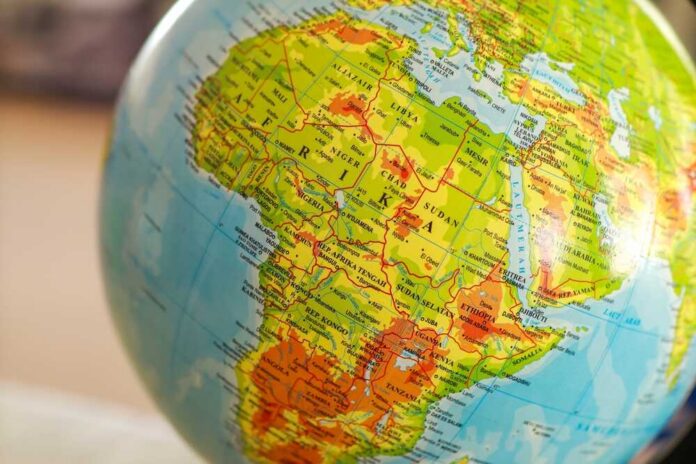
Africa’s ancient crust hides a pulsing mantle plume that beats like a heart, accelerating the continent’s split into two landmasses millions of years ahead of steady predictions.
Story Snapshot
- Emma Watts’ 2025 study reveals rhythmic superplume surges beneath Ethiopia’s Afar region, driving non-linear rifting in the East African Rift System.
- A 35-mile rift tore open in 2005, destroying roads and homes, with cracks expanding at 0.5 inches per year.
- Satellite data from NASA and USGS confirms crustal thinning and early ocean basin formation.
- Sensational headlines exaggerate speed, but real risks include earthquakes and volcanism for millions in the rift corridor.
- Long-term, a new ocean will redraw Africa’s map, turning Ethiopia landlocked.
East African Rift System Origins
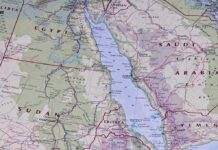
The East African Rift System began 25-30 million years ago when the Arabian Plate pulled away from Africa, forming the Red Sea and Gulf of Aden. The Somalian Plate then diverged from the Nubian Plate at 1-2 cm per year. Ethiopia’s Afar Triple Junction, where three plates meet, drives Y-shaped rifting across 3,000 km from the Red Sea to Mozambique. Extreme heat and volcanism expose early ocean basin stages, making Afar a global tectonic laboratory.
2005 Rift Event Signals Acceleration
In 2005, a 35-mile rift suddenly opened in Ethiopia’s Afar desert through tectonic displacement and magma pulses. This surface rupture destroyed roads, homes, and schools, marking the first visible manifestation of deeper forces. Satellite monitoring in the early 2020s detected faster crustal thinning and fracturing. A 35-meter crack in Ethiopia continues expanding at about 0.5 inches annually, offering real-time evidence of active separation.
2025 Breakthrough: Pulsing Mantle Plume
Emma Watts of Swansea University analyzed over 100 volcanic samples from Afar, identifying “geological barcodes” in chemical striping. These patterns reveal a single asymmetric mantle plume pulsing rhythmically like a heartbeat. Co-author Tom Gernon explains pulses flow faster through thinner crust, akin to blood in a narrow artery, accelerating rifting in zones like the Red Sea. Published in Nature Geoscience, this refines plate tectonics models beyond steady-state assumptions.
NASA and USGS satellite imagery corroborates widening valleys and nascent oceanic crust. Ongoing earthquakes and volcanism persist, with expanded networks tracking micro-quakes. No imminent continental split threatens human timescales, countering viral hype.
Scientists just discovered Africa is closer to breaking apart than we thought | ScienceDaily https://t.co/Bz0QpQdZjq
— Carrie Granberg (@granberg15954) April 25, 2026
Short-Term Risks and Long-Term Transformation
Afar residents in Ethiopia, Eritrea, and Djibouti face immediate seismic and volcanic hazards, as seen in 2005 infrastructure losses. Millions along the EARS corridor in Kenya, Tanzania, and Mozambique risk quakes disrupting mining, agriculture, and tourism. Social displacement from fissures looms, while political borders in the Horn of Africa may shift over eons. Long-term, 5-10 million years will birth a new ocean, splitting Africa and granting the Horn fresh coastlines to spur trade.
Expert Consensus Pierces Sensationalism
Geologists hail the plume discovery as a breakthrough, linking 2005 events to superplume surges. Watts’ team positions Afar as a natural lab for ocean birth, resolving prior model discrepancies. Diverse views note minor climate influences atop mantle drivers, but consensus affirms millions-year timelines. Peer-reviewed sources like Nature Geoscience outweigh YouTube dramatizations, which amplify “terrifying speed” despite non-linear, not uniformly faster, rates. Common sense aligns with facts: geological patience tempers alarmism.
Sources:
A newly forming ocean may split Africa apart, scientists say – Space
Scientists Warn Africa Is Gradually Breaking Apart, New Ocean Possible – NDTV