
Iranian commandos reportedly boarded a Honduras-flagged ship near the United Arab Emirates and forced it toward Iranian waters—another hard test of U.S. resolve and global shipping freedom.
Story Highlights
- United Kingdom Maritime Trade Operations reported unauthorized boarding near Fujairah and loss of contact as the vessel was directed to Iranian waters [6].
- Iran’s Islamic Revolutionary Guard Corps confirmed a seizure off the UAE coast, claiming maritime violations, while omitting cargo specifics [7].
- Conflicting reports and unclear manifests leave key facts unsettled, fueling risk for energy markets and insurers [8].
- Escalating Gulf incidents continue a multi-year pattern of seizures and strikes that threaten global commerce [11][12][13].
What Happened Near Fujairah and Why It Matters
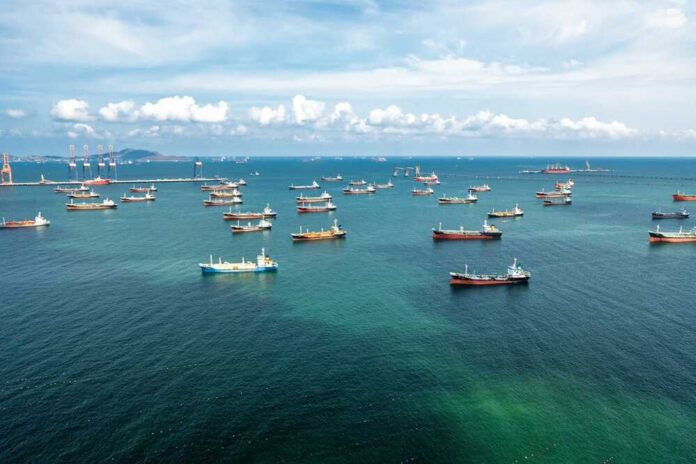
United Kingdom Maritime Trade Operations reported that unauthorized personnel boarded a Honduras-flagged vessel while it was at anchor roughly northeast of Fujairah, after which the ship’s tracking fell silent and it headed toward Iranian waters, according to the reporting chain from the vessel’s security officer [6]. This location—near the United Arab Emirates and along one of the world’s busiest energy corridors—turns a single boarding into a strategic problem: energy security, shipping costs, and insurance premiums all hinge on safe passage through these lanes [8].
Iran’s Islamic Revolutionary Guard Corps confirmed seizing a tanker off the United Arab Emirates coast the same day, framing the action as an enforcement of maritime law and signaling that the vessel would face judicial review in Iran [7]. Iranian claims referenced violations but did not publish a cargo manifest, inspection report, or bill of lading to substantiate the allegation. That gap keeps shipowners, insurers, and governments guessing, complicating immediate responses while investigations and diplomacy play out [7][8].
Conflicting Narratives and Unsettled Facts
Reports diverge on the vessel’s identity and precise status, with Western-linked maritime monitors highlighting the unauthorized boarding and diversion, and Iranian outlets emphasizing purported legal violations without detailing the evidence [6][7]. The lack of public documentation—no released manifest, no third-party inspection logs—prevents independent verification of Iran’s justification. That ambiguity, repeated across recent Gulf incidents, raises operating costs and injects fresh uncertainty into already tight energy routes that serve America’s allies and global markets [8][11].
Regional coverage points to a broader climate of risk around Fujairah, including reports of projectiles striking a tanker and intermittent drone-related incidents in recent months and years, underscoring how quickly localized actions escalate into market-moving events [12][13]. Each episode compounds a pattern that shippers now price into every voyage: route changes, higher war-risk premiums, and contingency plans that ultimately land on consumers through elevated fuel and goods prices—exactly the kind of inflationary pressure American families are sick of absorbing [8][11][12][13].
A Pattern of Seizures and the Stakes for U.S. Policy
Analysts have tracked a steady increase in Gulf incidents since 2019, from vessel seizures to attacks, with Iranian authorities frequently framing operations as lawful enforcement while commercial and Western monitors flag coercive tactics in or near international waters [11]. Recent reporting catalogs continuing attacks and diversions in the wider Mideast Gulf, reinforcing that the security environment remains fragile even after episodic ceasefires or lulls [8][11]. That reality puts the burden on Washington and partners to protect freedom of navigation—deterring aggression without stumbling into a broader regional war.
Iran’s Islamic Revolutionary Guard Corps (IRGC) announced the seizure of an oil tanker during a “special operation” in the Gulf of Oman, while the United States military reported that it had immobilized two other vessels attempting to enter Iranian ports.
The statements came… pic.twitter.com/06TmdVZohh
— Bakhtar News Agency (@bnaenglish) May 9, 2026
For American conservatives, the principle is simple: free seas, strong deterrence, and no blank checks for regimes that intimidate civilian shipping. United Kingdom Maritime Trade Operations’ account of unauthorized boarding and a forced course change demands consequences calibrated to restore deterrence, paired with a push for hard evidence from Tehran if it claims lawful grounds [6][7]. Congress and the administration should align on sanctions tools, multinational escorts where appropriate, and tighter intelligence-sharing that warns crews before commandos are on the ladder [8][11].
What to Watch Next: Proof, Protection, and Price at the Pump
Clarity must start with documents. If Iran alleges smuggling or permit violations, it should publish the manifest, chain-of-custody records, and court filings to justify holding the ship and crew. Ship managers and the Honduras flag registry can narrow the fog by releasing pre-seizure compliance certificates. Meanwhile, insurers will adjust premiums based on risk signals, and any sustained spike will push costs through to diesel and groceries—another tax on working families unless navigation is secured [6][7][8][11].
Policy-makers should press for joint patrols, rapid incident reporting, and standardized evidence disclosure after any seizure to prevent manufactured ambiguity from becoming a weapon. The United States can champion a coalition that upholds maritime law and shields commerce without overextension or mission creep. Peace through strength is not a slogan here—it is the difference between predictable fuel prices and rolling shocks that punish every American commuter and small business [8][11][12][13].
Sources:
[6] Web – Vessel seized off UAE and heading toward Iranian waters: UKMTO
[7] Web – Iran’s Revolutionary Guards confirm seizing oil tanker sailing off …
[8] Web – Vessel attacks continue in the Mideast Gulf | Latest Market News
[11] Web – Strait of Hormuz | International Crisis Group
[12] Web – Tanker Struck by Projectiles Off Fujairah – Ship & Bunker
[13] Web – UAE reports fire at Fujairah facility after Iran drone strike