

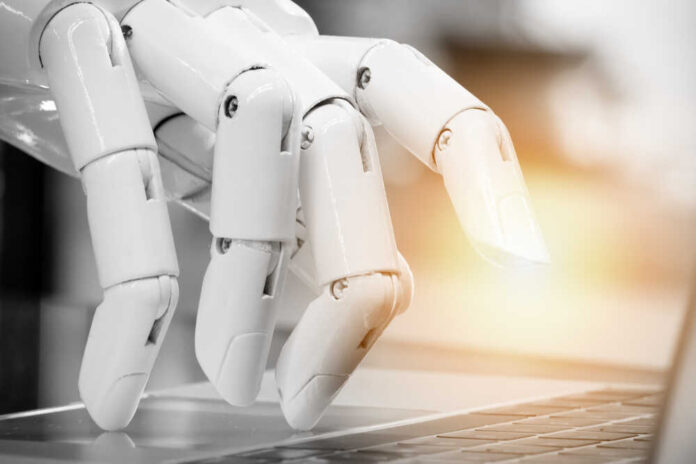
Silicon Valley’s rush into “physical AI” could transform how Americans work, move, and secure their borders long before Washington finishes arguing about yesterday’s tech fights.
Story Snapshot
- Venture capital is pouring into “physical AI,” a new wave of robots and autonomous machines built on advanced artificial intelligence.[1][2]
- Major firms and analysts are pitching a multitrillion‑dollar robot economy, but much of the hype is still ahead of real‑world deployment.[1][2][3]
- Physical AI could reshape factories, logistics, and even national security, raising new questions about jobs, safety, and control for American citizens.[2][3]
- Conservatives have a narrow window to insist this revolution serves workers, families, and constitutional freedoms—not Silicon Valley’s social agenda.
Silicon Valley Rebrands: From Chatbots to “Physical AI”
Over the last three years, Silicon Valley moved from chatbots and image generators to a new obsession: robots and machines that can think and act in the real world.[2][3] Venture reports show that out of one hundred eleven billion dollars raised by scaleups in 2025, one hundred three and a half billion—ninety‑three percent—went into artificial intelligence, with attention “rapidly shifting” toward what investors now call physical AI.[1] That phrase describes systems that do not just process data but manipulate objects, drive vehicles, and work alongside people on factory floors.[1][2]
Business press coverage calls this “Silicon Valley’s new slogan: let’s get physical,” noting that big players like Nvidia, OpenAI, Meta, Tesla, and a flock of startups are racing to give artificial intelligence a body.[2] PitchBook data cited in that reporting says global robotics and physical AI investment grew from around four billion dollars in 2019 to twenty‑six billion in 2025, with more than twenty‑three billion already raised this year.[2] For everyday Americans, that means the same elite companies that reshaped online speech now want to run warehouses, assembly lines, and even self‑driving vehicles.[2][3]
From Factory Floors to Humanoid Workers: What Physical AI Really Is
Policy analysts describe physical AI as the convergence of advanced artificial intelligence with robotics, self‑driving cars, and “smart spaces” that perceive, understand, and perform complex actions in the physical world.[3] Nvidia publicly declares that “in the near future, everything that moves, or that monitors things that move, will be autonomous robotic systems,” signaling how aggressively chipmakers plan to automate motion itself.[3] Amazon already reports operating about one million robots and argues that physical AI will transform autonomy, manipulation, sorting, and computer vision in logistics.[3] Electric vehicle makers like Tesla and XPeng are racing to build humanoid robots of their own, betting that general‑purpose robot workers will eventually handle many tasks humans now perform.[3]
Financial analysts are amplifying the enthusiasm, projecting eye‑popping numbers for long‑term growth.[3] Morgan Stanley, for example, estimates that the market for humanoid robots could rise from tens of millions of dollars today to five trillion dollars by 2050, a figure being used to justify aggressive investment and stocking up on hardware capacity.[3] Local platforms in the Bay Area now advertise “mobility and physical AI” as core innovation themes, emphasizing autonomous vehicles and new forms of robotic transport.[4] Grassroots builder communities have emerged as well, with meetups for “physical AI builders” that bring together hardware tinkerers, embodied artificial intelligence developers, and robotics enthusiasts across Silicon Valley.[5] Together, these signs support the view that the Valley is trying to push artificial intelligence off the screen and into every warehouse, street, and workplace.[1][2][3][4][5]
Hype, Power, and What Conservatives Should Watch Next
Researchers at a nonpartisan technology center caution that this cycle follows a familiar Silicon Valley playbook: intense marketing, concentrated capital, and visionary language arrive well before broad operational adoption.[3] The strongest public evidence today focuses on funding flows, pilot projects, and executive rhetoric, not independent audits of uptime, safety, or job impact in factories and public spaces.[1][3] Even the investor report that trumpets ninety‑three percent of Silicon Valley venture capital going into artificial intelligence acknowledges physical AI as “the start” of a new cycle rather than a mature, proven industry.[1] For conservatives, this gap between hype and real‑world performance matters because federal and state regulators may be lobbied to subsidize or mandate systems whose reliability and social consequences remain untested.
ITCAPITAL announces the launch of ITCAPITAL Ventures. Silicon Valley venture platform focused on Physical AI, Robotics. Founded by Oleh Podobied
Founders pitch here:https://t.co/DiJknMcsNx
More info: https://t.co/aYWsKYRkC3
–#ITCAPITAL #ITCAPITALVentures #PhysicalAI pic.twitter.com/3Uzpx4gM6W
— ITCAPITAL (@ITCapit) June 1, 2026
At the same time, ignoring the shift is not an option, because physical AI will shape core issues: manufacturing revival, border and infrastructure security, and whether American workers are replaced or empowered.[2][3] Autonomous robots could help reshore critical industries, reduce reliance on hostile regimes, and make dangerous jobs safer if deployed thoughtfully.[2][3] They could also enable new forms of surveillance, central control over transportation networks, and pressure for digital identification systems if left solely to progressive regulators and corporate boards. Conservatives who care about limited government, stable families, and constitutional rights will need to insist that any physical AI deployment respects due process, private ownership, and the dignity of work—so that Silicon Valley’s latest revolution strengthens, rather than erodes, the American way of life.
Sources:
[1] Web – Silicon Valley’s new slogan: Let’s get physical
[2] Web – Silicon Valley Bets Big on Physical AI – Mind the Bridge
[3] Web – Robotics: AI Moves into the Physical Economy – Global X ETFs
[4] YouTube – The Humanoid Robot Revolution: What’s Coming in 2026 …
[5] Web – Here be dragons: physical AI, world models and robot brains