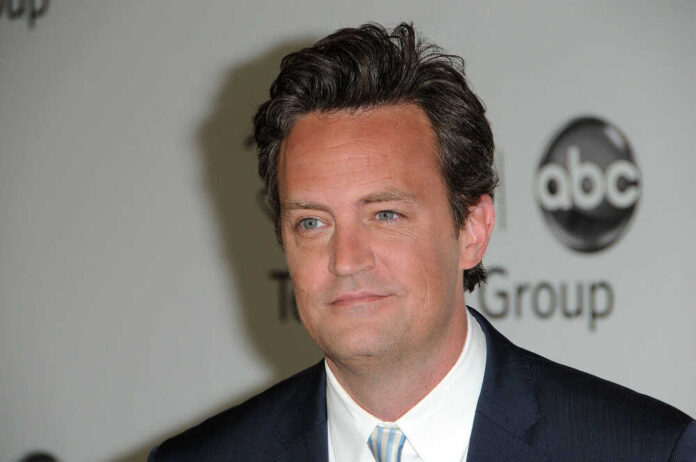
A justice system that hands a drug counselor just two years for feeding Matthew Perry deadly ketamine reminds Americans why they no longer trust the “experts” or the institutions that protect them.
Story Snapshot
- Licensed addiction counselor Erik Fleming received 24 months in federal prison for supplying the ketamine that killed Matthew Perry.
- Fleming worked with dealer Jasveen “Ketamine Queen” Sangha and Perry’s assistant in a small but lethal drug network.
- The lenient sentence underscores how elites and professionals often escape full accountability, even when lives are lost.
- The case exposes dangerous gaps in regulation of addiction counselors and the booming ketamine industry.
A Counselor Turns Dealer – And Gets Just Two Years
Federal prosecutors in Los Angeles announced that Erik Fleming, a 56-year-old licensed drug addiction counselor and former producer, was sentenced to 24 months in prison for supplying illicit ketamine that led to Matthew Perry’s fatal overdose in October 2023. Fleming pleaded guilty to conspiracy to distribute ketamine and distribution of ketamine resulting in death, charges that could have carried up to 25 years. Instead, cooperation with investigators helped reduce his punishment to two years and three years of supervised release.
According to court records, Fleming partnered with ketamine dealer Jasveen “Ketamine Queen” Sangha to obtain roughly 50 to 51 vials of the drug for Perry. The vials were delivered to Perry’s live-in assistant, Kenneth Iwamasa, who repeatedly injected the actor in the days leading up to his death. On October 28, 2023, Iwamasa injected Perry with at least three shots of that ketamine, and medical authorities later concluded that ketamine toxicity, along with drowning and other factors, caused the 54-year-old actor’s death.
Network of Enablers Around a Vulnerable Addict
Matthew Perry’s public battle with addiction was no secret; he wrote about near-death experiences and multiple rehab stays in his memoir. Despite that history, several people around him helped secure and administer illicit ketamine, bypassing medical safeguards. Prosecutors say Fleming learned through a friend that Perry was looking for ketamine and stepped in as a broker, using his professional credibility to connect Sangha’s black-market supply with Iwamasa’s access to Perry’s home and body.
Fleming’s role went far beyond a one-time lapse in judgment. Prosecutors described “profit-seeking behavior and reckless distribution of dubiously manufactured drugs,” arguing he knew the risks of feeding a vulnerable addict a powerful anesthetic. Judge Sherilyn Peace Garnett called Fleming a “major” player in the supply chain that “ultimately led to Mr. Perry’s death.” Yet the court still credited his “extensive cooperation” and sobriety efforts, settling on a sentence lighter than prosecutors’ request of 30 months and far below his maximum exposure.
What This Says About Regulation, Elites, and Public Trust
This case taps into a broader frustration many Americans share: the sense that professionals and insiders get second chances ordinary people never see. Fleming was not a stereotypical street dealer; he was a licensed addiction counselor entrusted to help people get clean. The fact that someone inside the recovery system could funnel illicit ketamine to a celebrity patient raises hard questions about licensing boards, oversight, and how many similar abuses never make headlines because the victim is not famous.
The rise of ketamine as a trendy treatment for depression and pain, often in boutique clinics or at-home services, has outpaced government safeguards. Ketamine is a Schedule III controlled substance, but lax enforcement and regulatory gray zones make diversion easier. Prosecutors’ reference to “dubiously manufactured” drugs underscores the dangers when powerful substances drift into black-market channels. Americans on both left and right who already distrust big medicine, big pharma, and bureaucracy see in this case another example of a system that talks “public health” while failing to police its own gatekeepers.
Shared Concerns in an Era of Government Failure
Many conservatives will look at Fleming’s two-year sentence and see a justice system that goes soft on white-collar drug crime while lecturing law-abiding citizens on guns, speech, and energy use. Many liberals will see another example of a vulnerable addict exploited by people with power and connections, and a system that fines and jails street-level offenders more harshly than professionals. Both sides can agree on this much: a counselor selling dangerous drugs to a client and walking away with 24 months is not a sign of a healthy system.
The Perry case also highlights how celebrities, like everyday Americans, can be pulled into webs of profit and dependency that blur lines between care and exploitation. A growing ketamine industry, lightly regulated and aggressively marketed, offers a cautionary tale about what happens when fashionable therapies move faster than common-sense safeguards. For readers frustrated with the “deep state” and the expert class, this outcome reinforces a familiar message: when institutions fail to guard basic ethics, ordinary people pay the price—sometimes with their lives.
Sources:
Drug counselor sentenced to prison for selling Matthew Perry ketamine that killed him
4th person sentenced in Matthew Perry’s overdose death gets 24 months in prison