
A former United Nations human rights officer says the UN’s newest Nobel Peace Prize winner helped send Uyghur dissidents to their deaths.
Quick Take
- Navi Pillay, former UN High Commissioner for Human Rights, won the 2026 Nobel Peace Prize.
- Whistleblower Emma Reilly says Pillay’s office gave China the names of more than 50 Uyghur dissidents and their families.
- Reilly says families testified under oath that relatives were detained, tortured, disappeared, or killed in concentration camps.
- The UN and the Nobel Committee have praised Pillay as a human rights defender without addressing Reilly’s specific claims.
Nobel Committee Honors Former UN Rights Chief
The Norwegian Nobel Committee awarded its 2026 Peace Prize to Navi Pillay, a South African jurist who once led the United Nations human rights office. The committee called her “one of the most respected international jurists of our time” and credited her with helping prosecute war crimes and genocide. United Nations Geneva went further, calling Pillay a “staunch defender and advocate of human rights” on social media the day the prize was announced.
That praise came the same day a former colleague called Pillay’s legacy something very different. Emma Reilly, who worked as a UN human rights officer, publicly denounced the award. She said Pillay’s leadership made her “quite literally complicit in the Uyghur genocide,” according to the Washington Examiner.
Whistleblower Alleges Names Were Handed to Beijing
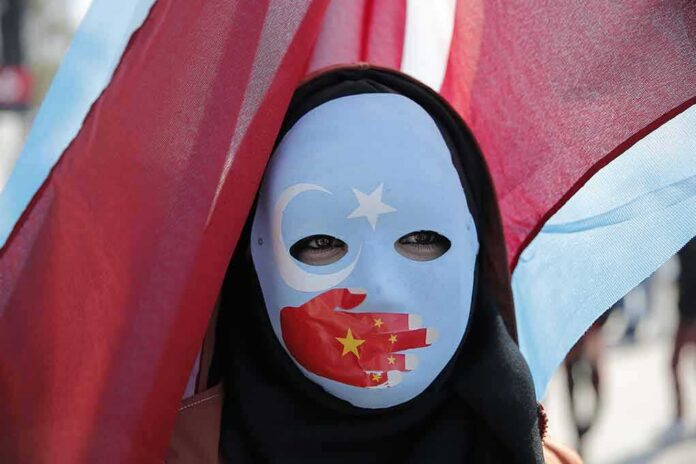
Reilly’s claim is specific and serious. She says that under Pillay’s watch, the UN human rights office sent the names of more than 50 Uyghur dissidents and their families to Chinese officials. UN Watch, the advocacy group that compiled Reilly’s allegations, reported the same number of names and said the office ignored warnings about the danger this created for the people on the list.
The alleged harm was not abstract. A statement shared by UN Watch executive director Hillel Neuer quotes Reilly saying families testified under oath that their relatives were intimidated, arbitrarily detained, tortured, disappeared, or killed in concentration camps. Reilly reportedly first raised these concerns years ago, while Pillay still ran the office.
A Pattern Reaching Back Years
This is not a new accusation invented for the Nobel moment. Radio Free Asia reported back in 2020 that a former UN official called for an independent investigation into whether the human rights body was giving China the names of exiled dissidents, including Uyghurs, who testified about abuses. Civil society groups later demanded the UN Secretary-General investigate Reilly’s concerns after she said she was fired for raising them.
The core dispute boils down to three separate questions people often mix together: whether the UN office actually shared the names, whether that sharing led to real harm, and whether Pillay personally bears legal responsibility for genocide complicity. The first question has drawn documented, years-old allegations. The third is a much higher legal bar that requires proof of her personal knowledge and intent.
Institutional Praise Overshadows the Allegations
Major outlets covering the Nobel announcement, including the BBC and CNN, focused on Pillay’s decades of human rights work and framed her as a pioneer being honored for a lifetime of service. Neither the Nobel Committee nor the United Nations has publicly addressed Reilly’s specific allegations about the Uyghur dissident list, even as the claims circulated widely on the same day as the award.
Reilly reportedly believes victims would have sued Pillay directly if not for the diplomatic immunity that shields senior UN officials from ordinary courts. That detail matters for conservatives who have long distrusted international institutions that answer to no voter and face no real accountability. An organization built to protect human rights now faces a credible accusation that it helped an authoritarian regime track down the very people it was supposed to protect.
The allegation remains an accusation, not a legal finding, and no court has ruled on Pillay’s personal responsibility. But the underlying claim that the UN human rights office shared dissident names with Beijing has been raised by multiple sources over several years, not invented overnight. For an institution that demands moral authority on the world stage, that record deserves far more scrutiny than a gold medal and a press release.
Sources:
humanevents.com, x.com, miragenews.com, bbc.com, edition.cnn.com