
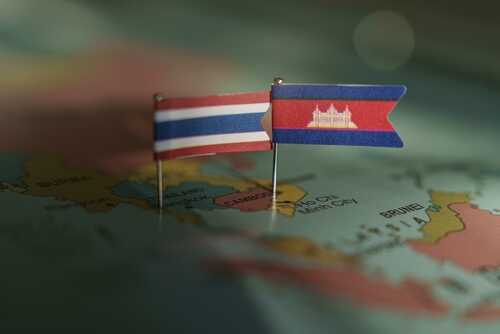
Over 130,000 terrified civilians have fled their homes as artillery shells rain down on the Thailand-Cambodia border, and Thailand’s own acting Prime Minister is warning the world that this chaos could explode into outright war—yet the so-called international community is still wringing its hands and issuing statements while families are caught in the crossfire.
At a Glance
- Over 130,000 people have evacuated Thai border regions as military clashes with Cambodia escalate.
- Thailand’s acting Prime Minister publicly warned the conflict could spiral into a full-blown war.
- Both sides trade blame for starting the conflict, with civilian casualties mounting and international mediation stalling.
- The United Nations Security Council has held an urgent meeting, but fighting and displacement continue.
Mass Exodus as Border Explodes in Violence
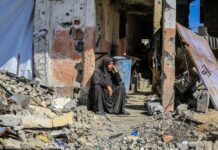
Families in the rural heartland of Thailand’s border provinces are packing what little they own and fleeing for their lives as artillery, tanks, and airstrikes reduce their villages to rubble. Over 130,000 Thai citizens—and thousands more in Cambodia—have been forced from their homes since violence erupted on July 24. These aren’t just statistics; they’re hardworking men, women, and children who want nothing more than safety and stability, now sleeping in makeshift shelters while politicians argue over who fired the first shot. Meanwhile, at least 19 lives have already been lost on the Thai side, including 13 innocent civilians, as the death toll continues to climb and hospitals overflow with the wounded.
For years, this border region has been a powder keg, with ancient land disputes and nationalist posturing creating the perfect storm for disaster. The recent violence was sparked by a series of provocations—first, Thai troops preventing Cambodians from singing their anthem at a contested temple, then a deadly landmine incident, and finally all-out fighting near the Emerald Triangle. The border, once marked by little more than jungle and the occasional checkpoint, is now a no-man’s land patrolled by tanks and haunted by the sounds of shelling.
#Update: 12 people die in military clashes along Thailand-Cambodia border | #DW_News https://t.co/7qpkNtGmqF
Military clashes have broken out along the Thai-Cambodian border, leaving at least 10 people dead. #Cambodia has fired rockets and artillery shells into #Thailand.
The… pic.twitter.com/YSMCA4k8g0— ⚡️🌎 World News 🌐⚡️ (@ferozwala) July 25, 2025
Leadership and Accountability: Who’s Protecting the People?
Thailand’s acting Prime Minister Phumtham Wechayachai hasn’t minced words—he’s warned that if this crisis isn’t stopped, a wider war is on the horizon. Cambodia’s Prime Minister Hun Manet, meanwhile, is pointing fingers at Thailand for violating Cambodian sovereignty, racing to the United Nations for support. Both governments have recalled ambassadors and expelled envoys, and both militaries are digging in their heels, blaming each other for targeting civilians. But as usual, the people paying the price are the everyday citizens caught in the middle, watching their livelihoods, homes, and loved ones vanish in the smoke.
International organizations have swooped in to “mediate,” with the United Nations Security Council holding closed-door sessions and ASEAN making noise about regional stability. But let’s be honest—how many times have we seen these global bureaucrats accomplish anything beyond issuing sternly worded statements? While diplomats dither, the crisis grinds on, and the only certainty is that more families will be uprooted and more lives shattered before the talking stops and the bullets do.
Humanitarian Fallout and the High Cost of Inaction
The impact is catastrophic and growing by the day. Schools have closed, border markets are shuttered, and entire towns are deserted—just another sacrifice at the altar of “international diplomacy.” Infrastructure is collapsing: hospitals bombed, gas stations torched, and roads cratered by shellfire. Local economies, already struggling, are now in free fall, with cross-border trade gone and farmers unable to reach their fields. Desperate families are running out of food, clean water, and hope, while politicians insist that “talks are ongoing.”
Behind every statistic is a story of loss: a child separated from their parents, a farmer watching his year’s work go up in smoke, a nurse treating wounds she knows will never heal. The ripples are spreading far beyond the border, threatening the stability of the entire region and putting pressure on governments already struggling under the weight of inflation and mismanagement. Yet once again, the world’s attention is fleeting, with the next crisis just a click away.