
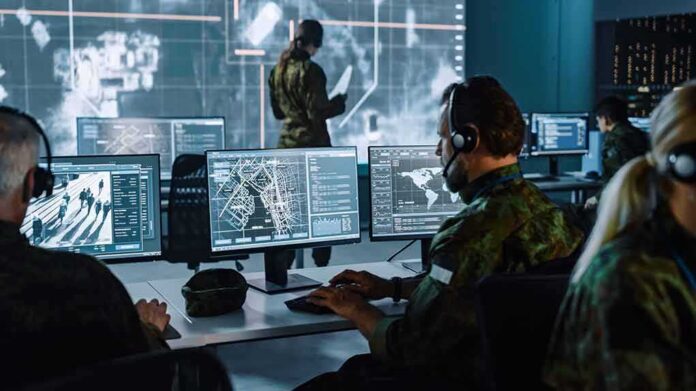
Leaked files show Immigration and Customs Enforcement posted inside U.S. military commands with access to powerful surveillance tools, raising fresh questions about privacy and mission creep.
Story Snapshot
- Leaked records list Immigration and Customs Enforcement liaisons at Special Operations, Africa, and Southern Commands, plus a Central Command–linked role.
- The same files tie users to Palantir-linked systems and other surveillance platforms used in criminal probes.
- The Department of Homeland Security says these tools are governed by privacy rules and court orders when needed.
- Auditors have flagged past Department of Homeland Security privacy and security lapses, underscoring oversight needs.
What The Leak Says About Military Liaisons
Reason reported that leaked Department of Homeland Security personnel data identified Immigration and Customs Enforcement and Homeland Security Investigations staff embedded as liaisons at U.S. Special Operations Command, United States Africa Command, and United States Southern Command. A contractor was listed with a Central Command connection. These roles appeared alongside permissions for advanced data systems common to high-end investigations and targeting analysis, according to the reporting based on the leaked files.
Wired separately described the breach as exposing personal and operational details for more than forty-one thousand Department of Homeland Security employees and contractors, including links to wiretap programs and analytic software. That scope matters because it shows how broad the tool access lists can be, and how much an attacker can infer about who uses which system inside the government from login records and group rosters alone.
What Immigration and Customs Enforcement Says About Surveillance Rules
The Department of Homeland Security states that Homeland Security Investigations uses surveillance technology to support criminal investigations and national-security missions. The agency describes three buckets of activity: consensual interception with one party’s consent, non-consensual interception with a court order, and non-consensual surveillance that does not intrude on a reasonable expectation of privacy. A formal Privacy Impact Assessment explains controls for body wires, cell-site simulators, drones, license-plate readers, and video systems.
The Department of Homeland Security adds further guardrails in its published documentation. Those rules limit data use to authorized law-enforcement purposes, require manual verification of system alerts, and set refresh limits for notifications. In short, the agency’s policy claims to restrict dragnet behavior and require human checks before action. These stated limits are relevant as lawmakers and the public weigh what the leaked liaison placements might mean in practice.
Why The Military Link Raises Red Flags For Civil Liberties
Federal law allows the Defense Department to share information collected during normal operations with civilian authorities, under other applicable law. That framework exists to help fight cartels, traffickers, and cross-border threats. But Americans also draw a clear line between military roles and domestic policing, reflected in the Posse Comitatus tradition. Liaisons at combatant commands can blur that line if not tightly scoped, documented, and overseen for strictly lawful civilian uses.
For conservatives, the bottom line is simple: secure the border and bust cartels, but do not turn military-grade surveillance inward on law-abiding citizens. The leaked listings show institutional proximity and potential technical access, not a proven rights violation. That is exactly why transparency is key. Clear charters, audit trails, and narrow purpose limits protect both mission success and constitutional boundaries at the same time.
Oversight Gaps And The Case For Tighter Controls
Department of Homeland Security watchdogs have already flagged holes in privacy and data security at immigration agencies. Inspectors found that agencies did not always follow privacy policies when buying and using commercial telemetry data, calling for stricter approvals before deployment. That history should guide Congress and the Department of Homeland Security toward stronger pre-use reviews, logging, and penalties for misuse, especially when tools touch location or communication data.
Auditors also found that Immigration and Customs Enforcement fell short on key cybersecurity controls for certain high-value systems, including cloud configuration standards and monitoring. When leaks and audits land in the same news cycle, trust erodes fast. The fix is not to shelve needed tools against cartels or traffickers. The fix is to lock down access, document every query, limit data retention, and publish regular compliance reports that show the rules are working in the real world.
What The Trump Administration Should Do Now
President Trump’s team should direct the Department of Homeland Security to publish a plain-English charter for every military-command liaison, including mission scope, datasets touched, and legal authorities. The department should commit to quarterly public metrics on tool use tied to court orders, emergency exceptions, and minimization. Congress should require independent audits that test whether users follow the “authorized purpose only” rule, with fast discipline for violations and a sunset unless safeguards pass.
Border security and national security demand speed, but the Constitution demands limits. Liaisons can help chase transnational criminals, move faster on leads, and keep agents safe. They can also drift without bright lines. Conservatives can back strong enforcement and still insist on guardrails that protect privacy, gun rights, and free speech. The leak is a warning shot: prove the rules work, or tighten them until they do—before a future administration abuses the access the leak just mapped.
Sources:
reason.com, washingtonpost.com, dhs.gov, ice.gov