
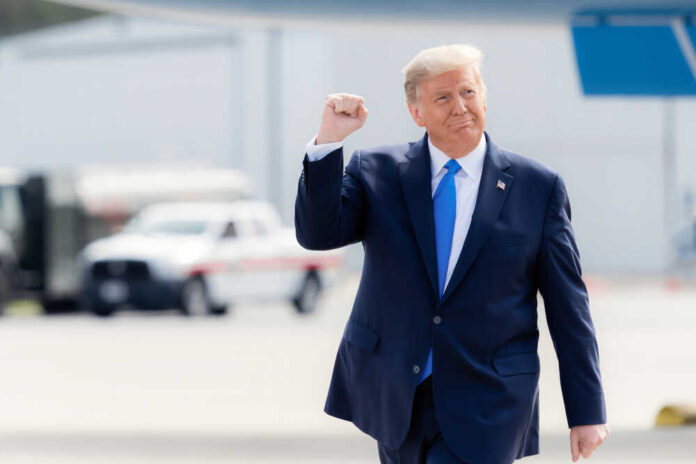
Trump’s “Peace Through Strength” might sound robust, but in practice, it raises questions about the effectiveness of balancing military power and diplomacy.
At a Glance
- The Trump administration’s “Peace Through Strength” foreign policy is facing scrutiny over its inconsistent application.
- The administration has taken decisive military action against Iran’s nuclear program, a move praised by its supporters.
- However, critics argue the administration has been reluctant to apply similar “strength” to counter Russian aggression in Ukraine.
- A major bipartisan sanctions bill against Russia has momentum in Congress, but President Trump has so far been hesitant to fully support it.
An Inconsistent Doctrine?
President Donald Trump’s stated foreign policy doctrine of “Peace Through Strength” is facing a major test, with critics questioning its inconsistent application in two of the world’s most dangerous conflicts. While the administration has taken decisive military action against Iran, its approach to Russia’s ongoing war in Ukraine has been far more hesitant, raising questions about the strategy’s credibility and effectiveness.
“Strength” Against Iran
The administration is holding up its recent military strikes on Iran’s nuclear facilities as a prime example of the “Peace Through Strength” doctrine in action. The move was praised by congressional leaders as a necessary and decisive action to neutralize a major threat.
“The President made the right call and did what he needed to do,” House Speaker Mike Johnson said in a statement on the White House’s website. “The world’s largest state sponsor of terrorism, which chants ‘Death to America,’ simply could not be allowed the opportunity to obtain and use nuclear weapons.”
A Different Approach for Russia
In stark contrast to the hardline stance on Iran, the administration’s approach to Russia has been far more focused on diplomacy, with critics arguing it has lacked the “strength” component. President Trump recently held a direct phone call with Vladimir Putin to propose a ceasefire, but the offer was rejected. Trump has also redirected some U.S. military resources away from Ukraine.
No surprise. In a phone call with Trump, Putin rejects the U.S. ceasefire proposal and peace plan. Instead, he tries to fool (likely unaware) Trump into accepting Russia's 2022 terms of Ukraine's capitulation. Trump blinks and plays Putin's ballhttps://t.co/p4NaHTm3KG
— Daniel Szeligowski (@dszeligowski) May 19, 2025
This perceived reluctance to confront Moscow has drawn criticism from foreign policy experts. “Trump promised peace through strength,” John E. Herbst, a former U.S. ambassador and senior director at the Atlantic Council, wrote in a recent analysis. “When will he use U.S. strength to bring peace to Ukraine?”
The administration’s hesitancy is further highlighted by its position on a major, bipartisan Russia sanctions bill that has momentum in Congress. While Trump has said he is “very strongly” considering supporting the bill, he has not yet thrown his full weight behind it. For the “Peace Through Strength” doctrine to be effective, critics argue it must be applied consistently to all of America’s adversaries.