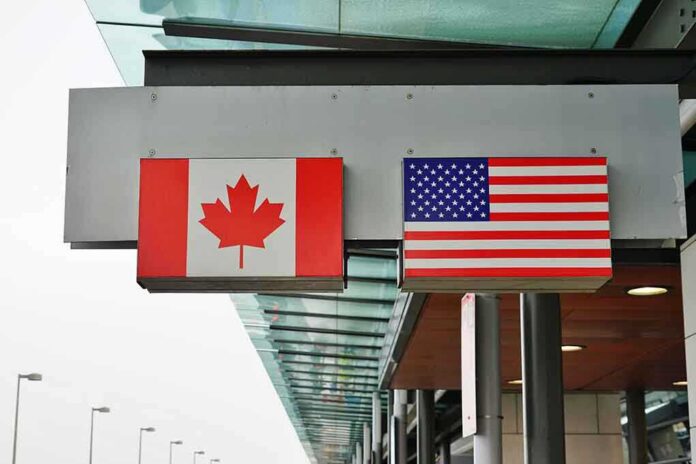
Europe signaled a Canada-EU “associate member” push, and President Trump warned he will hit back if it harms America.
Story Highlights
- European Commission chief proposed Canada as the EU’s first “associate member.”
- Plan lists deep ties in defense, tech, energy, and critical minerals.
- No legal category exists in EU treaties for this status yet.
- President Trump called the idea “laughable” and warned tariffs if it’s hostile.
EU Floats Unprecedented Status For Canada
European Commission President Ursula von der Leyen proposed making Canada the European Union’s first “associate member” during her State of the Union speech in Strasbourg on September 16, 2026. She directly addressed Canada’s prime minister in the chamber and cast the move as a way to link democracies in a tense world. Major outlets confirmed the proposal and its significance as a public overture from the top of the European Commission.
Von der Leyen paired the idea with a long list of sectors for joint work. She named advanced manufacturing, technology, defense production, the Arctic, energy, critical minerals, batteries, artificial intelligence, quantum computing, cybersecurity, and economic security. That scope suggests a strategic platform, not a symbolic gesture. She framed it as building on the existing Comprehensive Economic and Trade Agreement, moving “from CETA to an alliance for the future,” as summarized by multiple reports.
Legal And Political Gaps Cloud The Path
Reporters quickly noted a hard fact: no “associate member” category exists in current European Union treaties. The Commission did not present terms, timelines, market access rules, or voting rights. Several sources described the plan as an invitation, not a negotiated text. Any real status would likely need agreement from all twenty-seven member states, which makes approval uncertain at best. Those gaps make this a concept in search of legal scaffolding.
Canada also signaled caution on labels. Coverage cited Canadian statements saying Ottawa is not seeking European Union membership and prefers a tailored alliance. European diplomats were reported as skeptical and called the idea underdeveloped. Ongoing trade frictions remain, and the existing trade deal is still not fully ratified in every European Union country, which complicates any leap to a new structure. These facts show many hurdles before anything binding emerges.
Trump Draws A Line On U.S. Interests
President Trump responded that the notion of Canada becoming an “associate member” of the European Union is “laughable.” He warned that if he views the move as hostile to the United States, he will impose very serious tariffs or stop trade with Europe on many items. He added that if intentions are good, that is fine, but if they are bad, tariffs will be heavy. His stance puts Europe on notice that the U.S. will defend its workers and supply chains.
This is not about opposing allies. It is about protecting American jobs, energy security, and strategic industries. A deeper Canada–European Union bloc that tilts rules, subsidies, or supply chains away from the United States would raise costs here at home. It could hit family budgets through higher prices and squeeze small factories already hurt by past globalist policies. Trump’s tariff warning aims to keep negotiations honest and prevent end-runs around American leverage.
Why This Matters For American Families
Europe’s pitch highlights defense production, energy, and critical minerals. Those areas drive the cost of cars, batteries, and home power. If Europe and Canada knit tight rules that sidestep the U.S., American makers could face new barriers or lose access to key inputs. That would mean higher prices for families and weaker paychecks for skilled workers. Clear U.S. guardrails now can stop another wave of one-sided deals that helped fuel inflation and undercut domestic industry.
The European Union also lacks a defined legal path for this new status. That uncertainty invites mission creep: wider rules with little oversight. It could pressure immigration and regulatory policies in ways that ripple into North American markets. By moving fast to set terms, the administration can protect U.S. sovereignty and make sure any deal among allies does not undermine our laws, our borders, or our energy policy. Strength with clarity beats vague promises every time.
What Comes Next
European leaders must explain the legal footing and spell out concrete rights and duties. Member states will weigh costs, and some have shown caution. Canada’s leaders will face questions at home about sovereignty, market access, and alignment with European rules. Until real text appears, this remains a political signal, not a contract. The Trump administration’s clear red line tells partners that America welcomes fair trade but will not accept frameworks that sideline our workers.
For readers, the bottom line is simple. Watch the details, not the spin. If Europe and Canada seek supply chain stability without targeting the U.S., cooperation can continue. If the plan chips away at our industry or our leverage, expect fast U.S. action. That is how you keep prices down, keep factories open, and keep power in American hands. The message abroad is clear: respect America’s interests, or face real costs for ignoring them.
Sources:
facebook.com, reuters.com, npr.org, bbc.com, youtube.com