
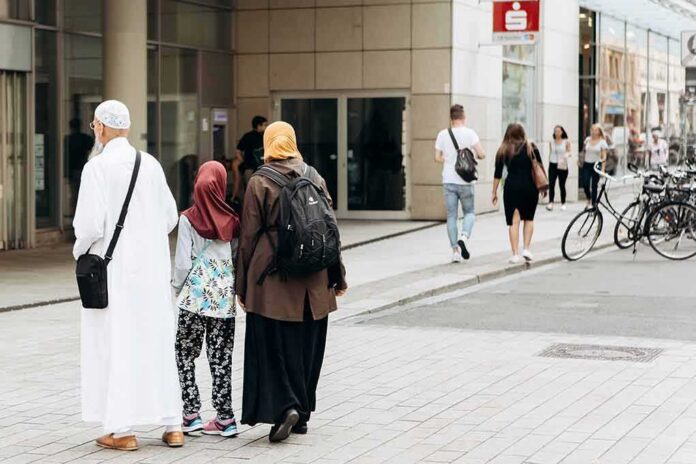
UK officials confirmed nearly 1,000 taxpayer-funded hijabs were issued to Channel arrivals under detention rules that allow “cultural and religious” clothing.
Story Highlights
- Home Office says short-term holding rules require basic clothing, including cultural or religious items when needed.
- Reports cite 974 hijabs issued between January and June 2026 as part of clothing packs.
- Clothing packs also include dry basics like tracksuits, socks, and coats for health and safety.
- Critics argue taxpayers should not fund religious garments for illegal entrants.
What Happened: Clothing Packs Now Include Religious Items
British media reported the Home Office issued 974 hijabs to small-boat arrivals from January to June 2026. The figure reflects items recorded within welfare clothing packs at short-term holding sites. A Home Office spokesperson said arrivals who need dry clothing receive a basic pack, and items can include cultural or religious garments under the facility rules. The government says these packs address health and safety risks from wet or fuel-soaked clothes after the Channel crossing.
The Home Office position links this practice to United Kingdom Short-term Holding Facility Rules. Those rules require providing clothing “adequate for warmth and health,” and Home Office policy material explains religious and cultural needs must be met as far as practicable. Officials frame the hijab distribution as a lawful accommodation inside a standard welfare process, not a special giveaway. They stress that the pack’s core is dry, clean basics to replace unsafe, soaked clothing.
The Rulebook: What The Law Says And What It Does Not
Short-term holding rules adopted in 2018 set the baseline. Detainees may wear their own clothing if it is clean and suitable. If not, officers must provide adequate clothing for health and warmth. Home Office equality material further states religious and cultural needs should be catered for when practicable. The reporting ties the hijab stock to that framework, though the full operational guidance and raw inventory data behind the 974 figure have not been publicly released in full.
Press accounts also describe the wider list of items in these packs. Typical stock includes tracksuits, underwear, socks, T-shirts, jogging bottoms, sweatshirts, and weather-ready footwear. In colder conditions, sites provide coats, hats, gloves, and children’s items. The hijab count sits within that larger inventory. Officials say the clothing packs answer immediate health and safety needs on arrival before any next steps in processing or removal decisions begin.
Why Critics Are Angry: Taxpayers, Deterrence, And Priorities
Conservative critics in the United Kingdom say taxpayers should not fund religious garments for people who crossed the border illegally. They argue such items send the wrong signal and weaken deterrence. Some describe the practice as an “insult” to workers who are already facing high costs of living. They call for an immediate halt, saying support should focus on border enforcement, not items that can look like a welcome pack for illegal entry.
UK Hands Out More Than 1,000 Free Hijabs to Channel Migrants at Taxpayer Expense https://t.co/YjY7JXHugp
— Debra Scott (@DebandezScott) October 5, 2026
Supporters of the current approach answer that the rulebook requires basic clothing and care, and that cultural or religious items may be part of that when needed. They portray this as standard duty-of-care, similar to how many detention systems handle religious clothing. Still, unanswered points remain. The public has not seen the full Home Office dataset, itemized by site, or confirmation that each hijab was requested by an individual rather than issued by default. Those gaps keep the debate heated.
What To Watch Next: Data, Transparency, And Policy Choices
Key questions can be settled by records. The Home Office could release the operational guidance for clothing packs, the precise rule text used by facility managers, and the raw inventory logs for January through June 2026. That would show whether hijabs were issued only on request, how often alternatives were offered, and how many items were replaced due to contamination or damage. Clear data would help the public judge costs, necessity, and any impact on deterrence.
For American readers, the lesson is familiar. Clear borders and swift consequences deter unlawful entry. Strict care standards can still be met with transparency and limits. President Trump’s team can push partners to close loopholes, speed removals, and publish real numbers. Strong enforcement and honest books protect taxpayers, uphold the rule of law, and keep compassion tied to order—not incentives that pull more illegal crossings.
Sources:
thegatewaypundit.com, uk.news.yahoo.com, ground.news