

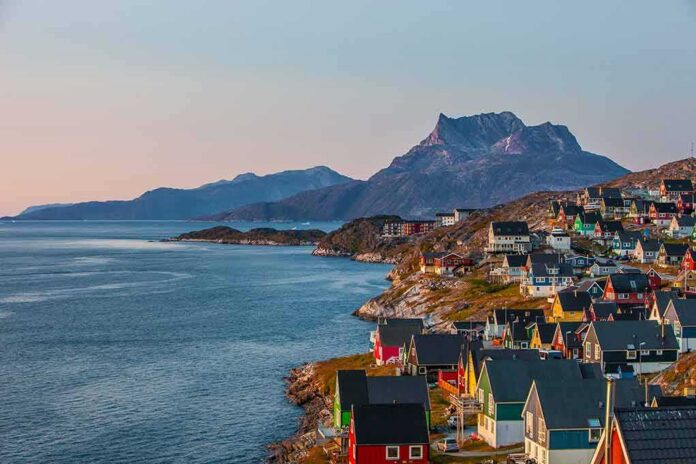
President Trump declared that massive oil, gas, and mineral exploration is getting ready to begin in Greenland, signaling an energy push aimed at lowering costs and strengthening U.S. security.
Story Highlights
- Trump announced large-scale resource exploration activity “getting ready to begin” in Greenland.
- A 2026 field program in East Greenland supports permits and environmental review for exploration work.
- Geological assessments have pointed to significant potential oil and gas in Greenland’s basins.
- Regulatory timelines in Greenland mean drilling cannot start before winter 2027 on the identified project.
Trump’s Energy Push Targets Arctic Potential
President Trump used a public statement to back a new phase of exploration in Greenland, calling it “massive” and “getting ready to begin”. The message aligned with his long-standing goal of American energy strength and lower consumer prices. The announcement did not include company names, exact sites, or a timetable, but it placed the Arctic back on the energy map for investors and allies watching fuel markets and national security risks tied to foreign oil supply.
White House allies argued that expanding friendly, nearby supply helps shield families from global price shocks. They said more North American and allied output can protect the grid, cut shipping risks, and blunt pressure from regimes that use energy for leverage. Supporters also tied exploration to jobs, ports, and shipyard work. They said a secure energy base supports the military and deters threats that could come across the Arctic, where sea routes and undersea cables are strategic lifelines for the United States.
What Is Actually Happening on the Ground
Company filings show real field work in East Greenland. Greenland Energy reported finishing a 2026 environmental baseline program at the Jameson Land Project. The work supports an Environmental Impact Assessment and future permits under licenses OEEL 2015/13 and OEEL 2015/14. Greenland’s Ministry of Business and Mineral Resources granted field-activity approvals on August 19, 2026, for specific tasks tied to those licenses. That means surveys and science are underway to clear regulatory steps before drilling decisions.
Geology gives the push a foundation. Prior assessments have identified large potential offshore oil and natural-gas deposits around Greenland, drawing interest from major firms over five decades. Potential resources are not the same as proven reserves, but they justify mapping, sampling, and seismic work. That is the phase now supported by the completed 2026 baseline program. These steps are normal in energy development: gather data, test the model, secure permits, and then decide if drilling makes sense for cost, safety, and the environment.
Regulatory Gateways and the Timetable Reality
Reporting indicates the only identified drilling project in Greenland faces a firm timeline. Drilling cannot start before winter 2027, and the government has pressed for full compliance on approvals after earlier logistics moved ahead without all required sign-offs. Licenses tied to Jameson Land remain an anchor for planning, but officials still control reviews, site rules, and any final drilling green light. That means exploration is “getting ready,” while actual drilling will follow completed permits and seasonal windows.
Media noted that the announcement lacked details on companies, dates, and specific sites. That absence does not block early-stage work, but it limits clarity for investors and local stakeholders. A straight path forward will require Greenlandic approvals and steady environmental work. Supporters say this process, while slow, is the right way: follow the law, prove the case, and build the energy security America needs without shortcuts that invite court fights or poor engineering outcomes.
Why This Matters for Energy Bills and National Security
Energy markets punish the United States when supply is tight. Families feel it in gas, heating, and food prices. Exploration with partners in Greenland can add future supply options near key Atlantic routes. That can help calm price spikes, reduce dependence on shaky suppliers, and keep freight moving. Arctic resources, including oil, gas, and critical minerals, also support defense needs, from fuel stocks to electronics, ships, and aircraft that guard the northern flank of the homeland.
The bottom line is simple. Trump put a spotlight on Greenland to push affordable energy and strong security. Documented field work in Jameson Land backs the direction of travel. Geological studies say the potential is real, even if the path is long. Greenland’s rules set the pace, and drilling on the identified project cannot start before winter 2027. For conservatives focused on lower bills and a stronger America, that mix looks like a patient, lawful path to reliable supply.
Sources:
nbcnews.com, trumpstruth.org, yahoo.com, edition.cnn.com, sec.gov, thejournal.ie