
President Trump says Iran is faking tanker attacks and mine strikes just to jack up oil prices before the midterm elections, even as his own United Nations ambassador warns this war could grind on for another full year.
Quick Take
- Trump accused Iran of staging fake strikes to raise oil prices ahead of the November 3 midterms.
- Iran’s Revolutionary Guard claims seven ships were hit, including one that sank after striking a mine.
- Ambassador Mike Waltz says the war could last another year, far longer than Trump’s early four-to-five-week estimate.
- Brent crude spiked past $113 a barrel, briefly topping $117, as the conflicting claims rattled markets.
Trump Says Iran Is Lying About Oil Price Spikes
President Trump posted on Truth Social on October 23 that Iran is “doing everything they can to drive up the price of Oil” before American voters head to the polls. He said Iran is “making up fake hits, mines, and everything else,” insisting more oil is actually flowing through the Strait of Hormuz now than before the fighting started.
That is a bold claim, and it fits a pattern conservatives know well. Hostile regimes love to manufacture chaos right when it hurts American families most at the gas pump and in the voting booth. If Trump is right, Tehran is weaponizing fear itself, betting that panic at sea will push oil prices up and pain onto U.S. drivers before an election.
Tehran’s Count: Seven Ships Hit, One Sunk
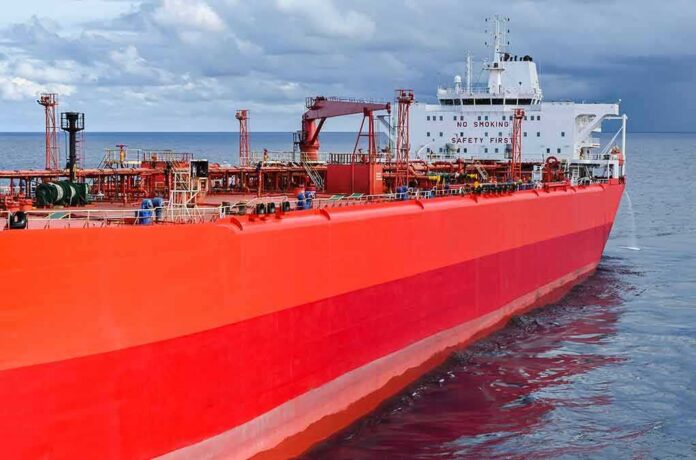
Iran’s Revolutionary Guard tells a very different story. Its navy claims four vessels transferring oil were struck and caught fire, while three more hit naval mines and were left disabled near the Strait of Hormuz. Days earlier, Iranian state television reported a cargo ship sank entirely after hitting a mine while allegedly traveling what the Guard called an “illegal and dangerous route.”
Independent shipping-safety warnings add a wrinkle to Trump’s fabrication claim. Britain’s maritime trade monitoring group logged twelve attacks on commercial vessels in the Strait of Hormuz and Persian Gulf between October 5 and 11, including six ships struck in a single day. Those warnings do not prove Iran’s exact October 22 tally, but they show some vessel incidents were tracked by neutral observers, not just Tehran’s state media.
A War Trump Once Said Would Last Weeks
Here is the part that should concern every American watching their gas prices. United Nations Ambassador Mike Waltz told the Financial Times this war could stretch on for another year, a stunning reversal from Trump’s original prediction of just four to five weeks of fighting. That is not a small miss. It raises real questions about how this conflict gets resolved and how long oil markets stay rattled.
Markets already feel the strain. Brent crude jumped above $113 a barrel and briefly spiked past $117 as traders tried to sort fact from propaganda between Washington and Tehran. Reports also describe millions of barrels a day still shut in through the end of the year, proof that real disruption exists in the region even if some individual attack claims turn out to be exaggerated or invented.
Why This Matters for American Families
This is not the first time a chokepoint war has been used as a weapon beyond the battlefield. Back in the 1980s, Iran and Iraq both targeted tankers in the same strait to cripple each other’s economies, a conflict historians call the “Tanker War.” Today’s standoff follows a similar script, but with a twist: information itself, true or false, moves oil prices just as fast as missiles do.
Conservatives have watched years of reckless spending and energy mismanagement drive prices skyward under past administrations. Now a foreign adversary may be exploiting America’s election calendar to squeeze family budgets even further. Whether or not every Iranian claim is false, one truth stands clear: energy security and a strong, no-nonsense foreign policy matter more than ever, and voters deserve straight answers before they head to the polls.
Sources:
cbsnews.com, hngn.com, yahoo.com, article.wn.com, apnews.com, iranintl.com, mdpi.com