
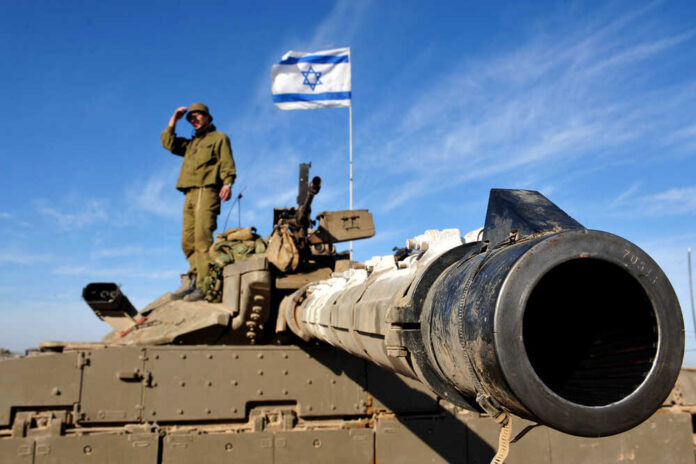
As Israel weighs fresh strikes on Iran, Prime Minister Benjamin Netanyahu says President Trump’s Iran deal will not stop Israel from defending its borders—reassuring conservatives who feared another globalist leash on a key ally.
Story Snapshot
- Trump’s proposed Iran framework centers on stopping Tehran’s nuclear ambitions, not restraining Israel’s right to self-defense.[3][4]
- Netanyahu’s message: any U.S.–Iran deal will not bar Israel from acting against threats on its borders.
- Gulf Arab governments push hard for diplomacy and de-escalation, but they are not writing Israel’s rulebook.[1][2]
- Lack of full deal text leaves room for media spin, but available evidence shows no binding limits on Israeli military action.[1][2][3][4]
Trump’s Iran Strategy: Pressure Tehran, Protect Allies
Reporting on the current negotiations makes one thing clear: President Donald Trump has tied any Iran arrangement to the non‑negotiable demand that Tehran never obtains a nuclear weapon.[3][4] Broadcast coverage and think‑tank analysis describe a conditional process in which Washington paused strikes, but kept a “full, large‑scale assault” ready if talks fail.[3] That structure targets Iran’s capabilities, not Israel’s independence. The message to Tehran is straightforward—give up the nuclear path, or face overwhelming force.
Trump’s willingness to halt a planned attack at the urging of Gulf Arab leaders has been widely reported, but the same reports emphasize that United States military options remain on the table.[3] Gulf governments wanted time for diplomacy to avoid a wider regional war and oil shock, particularly around the vital Strait of Hormuz.[1][4] Trump listened, paused, and then used that pause as leverage—demonstrating flexibility on timing, while underlining that American strength and deterrence are not going anywhere.
Where Israel Fits: Self‑Defense, Not Handcuffs
Within this diplomatic grind, Israel’s position is starkly different from that of the Gulf monarchies. Analyses of the conflict note that Gulf states are recalibrating their relationship with Washington and exploring dialogue with Tehran, but none suggest that Israel has surrendered its own military decision‑making.[1][2] On the contrary, regional security write‑ups assume that Israel continues to plan for unilateral action if Iranian forces or proxies threaten its territory, using any deal as one tool among many, not as a binding leash.[2]
That backdrop makes Netanyahu’s reassurance—that Trump agreed the Iran deal will not prevent Israel from defending its borders—entirely consistent with what public sources describe.[3] The available material shows Trump focusing on Iran’s nuclear program and on managing escalation, not on constraining Israeli operations.[3][4] Crucially, none of the reporting or analysis presents a clause, annex, or side letter that would limit Israeli strikes against direct threats. Instead, Israel is treated as a sovereign actor that will coordinate with Washington where useful, but still ultimately act alone if its citizens are in danger.
Gulf Diplomacy and the Risk of Quiet Pressure on Israel
Regional think‑tanks describe an intense push by Saudi Arabia, the United Arab Emirates, and Qatar to steer Washington toward diplomacy and away from sustained war with Iran.[1][4] These governments fear missile retaliation, unrest, and economic pain. Commentators even argue the United States should sometimes “limit its support of Israel” if Israeli operations disrupt Gulf outreach to Iran. That view reflects the same globalist instinct that many conservatives remember from the Obama and Biden years, when Washington often prioritized diplomatic optics over Israel’s immediate security needs.
However, there is a crucial difference between outside pressure and legal restriction. None of the cited work from Arab Center, Atlantic Council, Carnegie, or the Association of Gulf and Strategic Industries shows a binding agreement that forces Israel to stand down.[1][2][4] They describe atmospherics—de‑escalation, mediation, and market stability. Those may create political headwinds if Jerusalem plans a strike, but they do not repeal Israel’s right of self‑defense or Trump’s authority to back a close democratic ally when it decides it must act.
Missing Text, Media Spin, and What Conservatives Should Watch
A glaring weakness in the public record is the absence of the formal Iran deal text, including any side letters or secret annexes.[1][2][3][4] Without that, neither supporters nor critics can point to a specific paragraph guaranteeing Israeli “freedom of action” or, conversely, limiting it. The same gap applies to the precise Trump‑Netanyahu exchange: there is no released verbatim transcript, only press descriptions and second‑hand accounts.[3] That leaves the field wide open for partisan media to spin the story either as a betrayal or as a blank check.
President Trump's Saturday afternoon call with Gulf leaders has concluded, according to U.S. officials.
Counties invited to join the conference call with Mr. Trump to discuss Iran negotiations include Saudi Arabia, Turkey, Egypt, Pakistan, the United Arab Emirates, Jordan, and…
— Giovanni Staunovo🛢 (@staunovo) May 23, 2026
For constitution‑minded readers, the practical test is simple. First, does any published material show Trump trading away Israel’s right to act in self‑defense? The answer, based on current evidence, is no.[1][2][3][4] Second, does the administration keep Congress and the public informed about war‑and‑peace decisions, respecting separation of powers while refusing to let foreign regimes or international bureaucrats dictate American or Israeli security policy? That transparency, combined with vigilance against secret side‑deals, is where conservatives should keep pressing—so that “no nuclear Iran” never comes packaged with “no sovereign Israel.”
Sources:
[1] Web – Changing GCC Outlook Toward US-Iran Talks
[2] Web – How the Iran war could change the US relationship with Gulf states
[3] YouTube – Gulf USA Tie: Saudi Arabia UAE push US to intensify US-Iran Strike …
[4] Web – The Gulf Countries Want to Stay Out of the Iran Conflict. Each Is …