
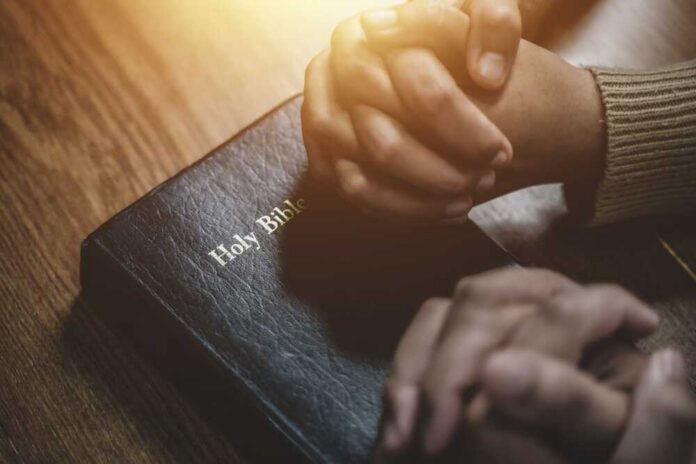
Critics are trying to turn a National Mall prayer gathering into a constitutional crisis, but the facts show a public celebration of faith and heritage—not a state church.
Story Highlights
- Reports describe a nine-hour Christian prayer event on the National Mall with White House involvement and senior officials slated to speak [2][4].
- Coverage claims part of the funding comes from semiquincentennial allocations, prompting Establishment Clause questions [2].
- Organizers and officials frame the day as honoring America’s Judeo-Christian heritage and religious liberty, not creating an official religion [2][3].
- Key documents like permits and budgets were not published in the reports, limiting independent verification [2][3][4].
What Is Planned On The National Mall
Reports say the White House is involved in a nine-hour Christian prayer festival on the National Mall, tied to the nation’s 250th anniversary observances and featuring a lineup that is described as almost entirely Christian [2][4]. Coverage says organizers call the gathering a “national jubilee,” with plans that emphasize Christian themes and public prayer [3][4]. Outlets also report senior officials, including the Speaker of the House and cabinet secretaries, are slated to deliver remarks during the program [2][4].
Coverage characterizes the event as “White House-hosted” or “sponsored,” asserting a level of government branding unusual for prior public prayer observances [3]. Organizers reportedly say the celebration reflects the country’s Christian origins, while a White House task force leader referenced an American heritage grounded in Judeo-Christian values [2][3]. Those descriptions animate the current debate: whether this is a lawful, traditional recognition of faith in public life or a government endorsement of a particular religion [2][3][4].
The Funding And Access Questions Being Raised
One outlet claims the gathering is partly funded by taxpayer dollars set aside for semiquincentennial programming, potentially raising Establishment Clause concerns if public funds subsidize devotional content [2]. Reports also say several government agencies appear as sponsors, though the coverage does not publish underlying budget lines, sponsorship contracts, or interagency approvals [3]. Absent those records, the degree of official financial support remains based on reporter summaries and organizer statements rather than primary documents [2][3].
Unanswered questions include whether the National Park Service issued a standard special-use permit for a private event, what fees were paid, and whether equal-access rules applied to other faith groups. The available reporting does not provide the permit, fee schedule, or insurance filings that typically govern Mall events [2][3][4]. Without those documents, it is difficult to determine whether this is government speech or a private religious assembly benefiting from the same public forum rules as other groups [2][3][4].
How Supporters And Critics Frame The Constitution
Critics describe the gathering as a “massive Christian nationalist festival” and argue that overt government sponsorship risks endorsing a single faith tradition [2][3]. They point to speaker rosters that are overwhelmingly Christian and statements disfavoring multi-faith prayer formats as evidence of sectarian tilt [2][4]. These concerns rest on the premise that official branding, taxpayer support, and cabinet-level participation convert an otherwise lawful public worship event into constitutionally suspect government speech [2][3][4].
Supporters answer that America has always made room for public acknowledgments of faith and heritage, and that celebrating Judeo-Christian roots during a national anniversary does not establish a church. They emphasize that religious liberty protects public expression of belief, including on the National Mall, and that participation by officials does not erase constitutional limits or invite coercion [2][3]. Because the reports do not cite a court ruling on this specific event, the legal verdict remains unsettled and fact-dependent [2][3].
What Viewers Should Watch For Next
Documentation will determine whether this crosses constitutional lines or remains within the bounds of accommodation. Key records include the National Park Service permit, the full sponsorship list, detailed budgets for semiquincentennial allocations, and any official guidance on devotional content. If agencies followed equal-access rules and standard permitting, claims of special privilege weaken. If direct taxpayer funds underwrote worship or exclusive sectarian programming, constitutional concerns grow sharper [2][3][4].
Today a White House-backed prayer event takes over one block of the National Mall for the 250th anniversary celebrations
But with the exception of one rabbi, the event excludes non Christian speakers @DavidNunoHood and I will be there reporting https://t.co/1T2Y62oGPy
— Julio-César Chávez (@JulioCesrChavez) May 17, 2026
Conservatives can welcome an open celebration of faith while demanding transparency that protects both religious liberty and limited government. Clear disclosures about funding, access, and official roles would undercut partisan spin and reinforce a simple standard: public forums remain open to people of faith, the government does not pick winners among religions, and commemorations of America’s founding values need not apologize for the nation’s Judeo-Christian influences [2][3][4].
Sources:
[2] Web – The White House Is Hosting a Massive Christian Nationalist Festival
[3] YouTube – Separation of Church and State? WH to host 9-hour prayer festival …
[4] Web – The White House is planning a big prayer event. Almost all … – WUSF