
America’s joint strike that reportedly killed the Islamic State’s number‑two leader in Nigeria is not just a battlefield win—it is a loud warning to jihadists and to the anti‑Western Sahelian alliance watching from next door.
Story Snapshot
- U.S. and Nigerian forces say they eliminated Islamic State’s global second‑in‑command in a coordinated strike.[2]
- Washington released video of missiles hitting terrorist camps, but key details still rely on official statements.[1][2]
- Nigeria backs the mission as a joint counterterrorism effort while downplaying religious framing.
- The operation signals Trump’s willingness to project power into Africa as juntas in the Sahel tilt toward Russia.[1]
Trump’s Nigeria Strike: What We Know About Hitting Islamic State’s Number Two
President Donald Trump ordered American forces, alongside Nigerian troops, to carry out a complex operation against Islamic State militants in Nigeria that U.S. officials say killed Abu‑Bilal al‑Minuki, described as the terror group’s global second‑in‑command.[2] United States Africa Command released video that appears to show missiles launched from a warship striking militant camps, while stressing that the mission targeted Islamic State fighters responsible for brutal attacks in the region.[1][2] Initial assessments from military briefings say multiple terrorists were killed.[1]
United States Africa Command and Nigerian officials have characterized the mission as a coordinated or joint effort, with public statements emphasizing that Nigerian authorities were involved in planning and consent.[1] Reuters reported that an Africa Command statement said the strike hit Islamic State camps in Sokoto State and was conducted at Nigeria’s request, though an earlier social media post carrying that claim was later removed.[1] The Nigerian government, for its part, has confirmed cooperation but has offered few granular operational details so far.
Evidence, Gaps, And Why Transparency Still Matters
Major outlets including Reuters, the British Broadcasting Corporation, the Independent, and Fox News broadly echoed the Pentagon line: a joint U.S.–Nigeria strike in northwest Nigeria took out Islamic State fighters and likely a top commander.[1][2] Yet even these reports acknowledge that some facts remain unsettled. Reuters noted it could not independently verify the location or date of the strike video released by the Pentagon, limiting how far that footage alone can prove what happened.[1] Precise coordinates, impact analysis, and forensic confirmation have not been made public.[1]
Nigeria’s Messaging, Religion, And The Sahelian Alliance Watching Closely
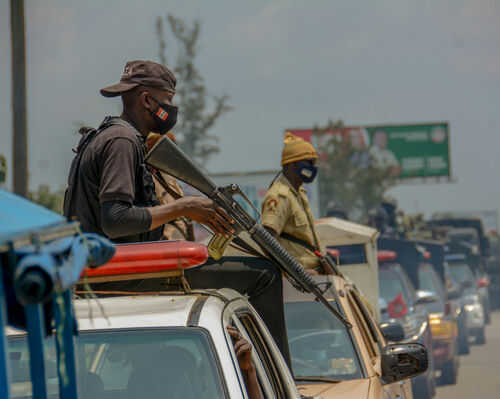
Nigerian Foreign Minister Yusuf Maitama Tuggar has been careful in his wording, calling the action a “joint operation” but stressing that it had “nothing to do with a particular religion,” even as Trump has repeatedly framed the broader Islamic State threat in Nigeria as targeting “primarily, innocent Christians.” That divergence matters. Abuja wants to highlight national sovereignty and counterterror cooperation without inflaming sectarian tensions at home, where Christians and Muslims alike suffer from jihadist violence. At the same time, Nigerian leaders clearly welcome the operational boost that American intelligence, surveillance, and strike capabilities provide.
This mission also unfolds against a larger power struggle across the Sahel, where military juntas in Mali, Burkina Faso, and Niger have pulled away from Western partners and moved closer to Moscow and its mercenary networks.[1] A successful, high‑profile joint strike with a democratically elected government like Nigeria sends a message to those regimes: Washington can still reach into the region, punish Islamic State networks, and support allies who share basic security goals. For conservatives tired of apologetic foreign policy, it signals that the Trump administration is willing to use force abroad while working with partners rather than writing blank checks.[1][2]
Why This Matters For American Conservatives At Home
For many readers, the key questions are whether this operation makes Americans safer and whether it respects constitutional limits and common‑sense accountability. Removing a senior Islamic State figure who has been orchestrating attacks in West Africa reduces the group’s capacity to project terror and target Christians and other civilians, even if, as experts warn, the organization may eventually replace leaders.[1][2] Doing it in partnership with Nigeria, rather than through unilateral secret deployments, helps avoid the endless‑war model that many conservatives reject.
US Africa Command Releases Video of Strike Targeting ISIS Fighters in Northeastern Nigeria
On its X handle on Saturday, the Command said, "Last night's operation targeted a significant presence of ISIS fighters in Northeastern Nigeria, eliminating multiple high-value individuals pic.twitter.com/PKH8Ub284b
— TVC News (@tvcnewsng) May 16, 2026
At the same time, conservatives are right to insist that victory claims be backed by evidence, not only press releases. The pattern in past conflicts has been quick announcements followed by slow corrections once journalists and investigators dig in.[1] In this case, requesting Africa Command’s after‑action report, target package, and casualty‑confirmation data through oversight channels would strengthen trust that the administration’s tough talk matches verifiable facts.[1] Standing firmly against jihadists abroad does not require giving the permanent security bureaucracy a free pass at home.
Sources:
[1] YouTube – US launches airstrike on ISIS militants in Nigeria | REUTERS
[2] Web – US AFRICOM video shows targeted strike against ISIS fighters in …