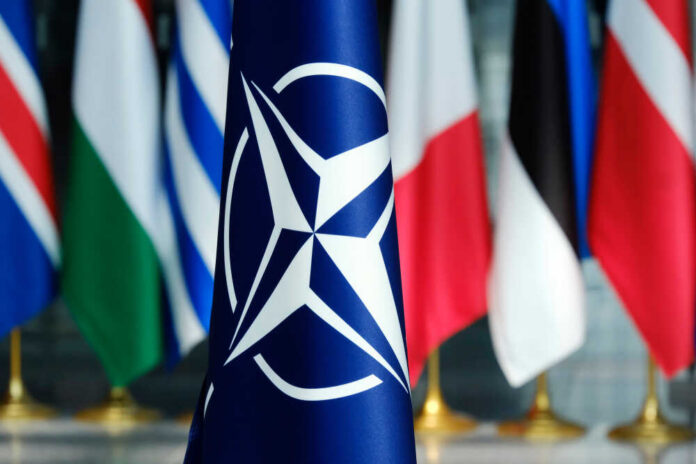
NATO’s multinational jet scramble against Russian bombers over the Baltic Sea signals escalating tensions that risk drawing America deeper into endless European conflicts, far from our shores.
Story Highlights
- Seven NATO nations, including France, Sweden, Finland, Poland, Denmark, and Romania, intercepted two Russian Tu-22M3 bombers and 10 escort fighters on April 20, 2026, in neutral Baltic airspace.
- The operation was part of NATO’s routine Baltic Air Policing mission, following four prior scrambles for Russian rule violations the previous week.
- Russia claims the flight was a compliant, planned patrol; NATO views it as a show of force amid heightened regional tensions.
- The pattern of hundreds of annual intercepts underscores persistent friction near Russia’s Kaliningrad exclave.
Details of the April 20 Intercept
French Rafale fighters from Lithuania’s Šiauliai Air Base, Swedish Gripen jets, Finnish Hornets, and aircraft from Poland, Denmark, and Romania scrambled on April 20, 2026, to intercept two Russian Tu-22M3 strategic bombers escorted by 10 Su-30 and Su-35 fighters. The Russian formation flew over neutral Baltic Sea airspace, linking mainland Russia to the Kaliningrad exclave. NATO pilots conducted visual inspections and escorts as part of standard air-policing procedures. The mission ended without incident, with all aircraft returning to base. This coordinated response from seven nations highlighted alliance unity in monitoring Russian activity.
Routine Missions Amid Rising Tensions
NATO’s Baltic Air Policing mission, launched in 2004 after Lithuania, Latvia, and Estonia joined the alliance, stations rotational jets at bases like Šiauliai to patrol airspace these nations cannot fully cover themselves. Pre-Ukraine war, NATO intercepted Russian planes about 300 times annually over northern European waters. Frequency increased post-2022 invasion due to escalated Russian patrols. The week before April 20 saw four scrambles from Lithuanian bases after Russian aircraft turned off transponders and flew without plans, breaching safety rules. Such patterns fuel concerns over provocations near sensitive areas.
Swedish Air Force Gripens specifically engaged the Russian Su-30SM escorts during the Tu-22M3 flight. France’s four-month Rafale deployment included an embedded AP reporter, adding transparency to operations. Lithuania’s Defense Minister Laurynas Kasčiūnas noted the prior violations, emphasizing NATO vigilance.
Stakeholders and Conflicting Narratives
NATO allies pursue collective defense and deterrence, motivated by alliance solidarity and responses to perceived Russian provocations. Russia maintains these are routine long-range patrols over neutral waters in the Arctic, Atlantic, Pacific, Baltic, and Black Seas to ensure readiness, fully complying with international rules. Power dynamics show NATO’s multinational coordination contrasting Russia’s isolated flights. Tensions arise from Kaliningrad’s proximity and the Ukraine war, yet intercepts remain non-confrontational, limited to visual checks and escorts. Russian Defense Ministry spokespeople reiterated the April 20 flight was planned and rule-abiding.
Implications for U.S. Interests
Short-term, the intercept reinforces NATO readiness without sparking conflict. Long-term, sustaining over 300 annual scrambles normalizes escalatory posturing amid ongoing Ukraine tensions, straining resources. Baltic states gain security through BAP; Kaliningrad flights face monitoring. Economic costs involve NATO fuel and rotations, with minimal social impact as operations stay routine. Politically, it bolsters alliance cohesion but raises questions for Americans about endless foreign entanglements.
In President Trump’s second term, with Republicans controlling Congress, focus remains on America First priorities like border security and energy independence. Yet NATO commitments pull resources from domestic needs, frustrating conservatives weary of globalism and overspending. Liberals decry fossil fuel reliance, but both sides share distrust of distant elites prioritizing power over citizens’ dreams. These Baltic tensions highlight how federal overreach abroad erodes founding principles of limited government and sovereignty, urging scrutiny of alliances that no longer serve core national interests.
Sources:
Kyiv Post article on the event
Military Watch Magazine: Russian Su-30 engaged Gripen in Baltic
The Independent: Russia-NATO jets bombers Europe
Aviation24.be: NATO jets intercept Russian bombers over Baltic Sea