
Ulta Beauty’s latest marketing stunt—celebrating their new JVN Hair collaboration with a flamboyant, dress-wearing Jonathan Van Ness—has left everyday Americans wondering how much further these corporations will go to mock women and push their woke agenda, even at the expense of their own customers.
At a Glance
- Ulta Beauty launches JVN Hair in 700 stores, led by nonbinary “Queer Eye” star Jonathan Van Ness
- Promotional video featuring Van Ness triggers outrage for “caricaturing” women
- Conservative media and consumers draw parallels to Bud Light’s infamous Mulvaney misfire
- Ulta faces mounting backlash but remains silent as debate over gender and authenticity escalates
Ulta Beauty’s JVN Hair Rollout Sparks Conservative Outrage
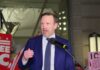
Jonathan Van Ness, best known for amping up the drama on “Queer Eye,” took center stage for Ulta Beauty’s new JVN Hair launch , strutting through stores in a dress and heels in a widely circulated Instagram reel. This campaign, meant to celebrate JVN Hair’s July 20th arrival at 700 Ulta locations, immediately drew fire from conservative voices who saw not inclusivity, but a mockery of womanhood. BlazeTV hosts Sara Gonzales and Dave Landau led the charge, slamming the ad as a “caricature of a woman”—a move they argue erodes the dignity of women everywhere while chasing empty virtue points.
Ulta’s decision comes on the heels of JVN Hair’s bumpy ride through bankruptcy and private equity buyout, a journey that left many wondering who exactly the brand is serving. Van Ness, who identifies as nonbinary and uses multiple pronouns, declared on social media that not only does the brand “exist,” but it’s “growing”—a statement that rings hollow for those who watched Bud Light’s Mulvaney disaster just two years ago. Despite the firestorm, Ulta has stayed silent, refusing to address the outrage brewing among its core customer base.
— Private Equity Insights (@PE_Insights) July 8, 2025
Corporate America’s Obsession with Woke Marketing
The beauty industry’s feverish push for “diversity and inclusion” has become a tired routine, with Ulta Beauty now following the same script that tanked Bud Light’s reputation. The precedent is clear: brands that ignore the values of mainstream Americans in favor of performative activism risk alienating their loyal customers. When Ulta previously featured transgender influencer Dylan Mulvaney on its podcast, it faced similar backlash. Yet, instead of learning from these costly mistakes, Ulta doubled down—proving once again that virtue signaling is more important to them than respecting the women who built their business.
Many customers see the JVN campaign not as progress, but as a slap in the face to real women. Critics argue this is not about inclusion, but about corporate elites dictating how women should feel, look, and be represented for the sake of a fleeting headline. The swift, negative reaction on social media—where countless users echoed conservative pundits’ outrage—shows just how out of touch these companies have become with the people who actually keep their lights on.
Public Reaction and Industry Fallout
The backlash, though loud and swift, has not yet spiraled into an all-out boycott or measurable sales collapse. For now, the outrage simmers mostly on social media and in conservative outlets, but the writing is on the wall. Previous blunders—like Bud Light’s infamous slide after its Mulvaney partnership—prove that ignoring customer values in favor of woke marketing is a risky, if not reckless, business strategy.
Supporters of Van Ness and Ulta’s approach claim this is about representation, but for millions of Americans, it’s about respecting women and the families who rely on brands to reflect—not ridicule—their values. Industry insiders note that while such stunts may earn applause from activist circles, they risk driving away the core demographic that made these companies successful in the first place. If Ulta thinks it can ride out this storm by staying silent, they might be in for a rude awakening.