

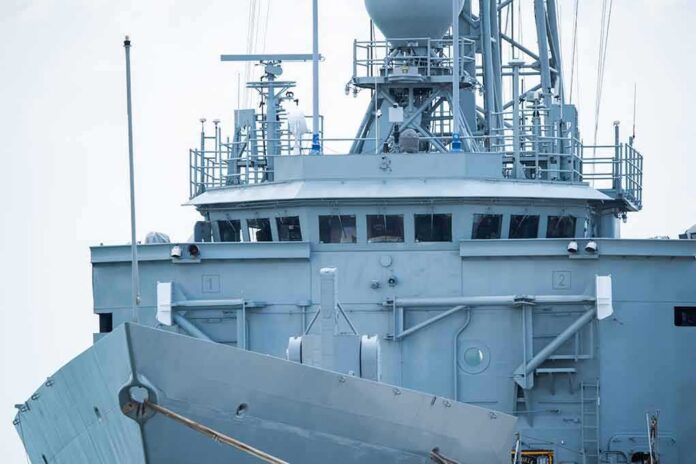
Canada just committed over $11 billion to build six new icebreakers, reshaping trade and power in the North while testing cross-border ties with the United States.
Story Highlights
- Prime Minister Mark Carney announced a six-icebreaker, $11 billion plan in Québec.
- Ottawa links the fleet to protecting trade routes and Arctic sovereignty.
- The move fits a long Canadian push to pair Arctic security with economic goals.
- Joint icebreaker efforts with the United States and Finland continue under the ICE Pact.
Carney Unveils Record Icebreaker Contract Tied to Trade and Sovereignty
Prime Minister Mark Carney announced the largest shipbuilding contract in Québec’s history, an investment of more than $11 billion to build six program icebreakers for the Canadian Coast Guard. The government framed the ships as essential to keep trade routes open, protect the St. Lawrence Seaway and Arctic waters, and reinforce national sovereignty. The contract partners with Chantier Davie in Lévis and anchors jobs and skills in Canada’s domestic shipyards, according to the official release.
The Prime Minister’s Office said the fleet will help secure critical corridors that move Canadian goods to global markets. Ottawa tied the ships to economic security, emergency response, and safe navigation when ice and winter choke points threaten supply lines. The announcement followed months of messaging that linked defense of the North with growth at home, a blend that has become the standard way Canada sells big Arctic projects to voters and industry alike.
Arctic Pattern: Security Projects Framed as Economic Engines
Government policy documents show a consistent theme: invest in icebreakers, surveillance, and ports to project sovereignty and to grow trade. Recent Arctic policy and program notes highlight new icebreaker procurement, including polar-class hulls, as tools for year-round presence, resupply, and commercial access. Officials have long argued that these ships pull double duty by backing search and rescue, enforcing rules, and keeping export lanes open during harsh seasons when ice can stall traffic.
Parliamentary and program updates tie these plans to the National Shipbuilding Strategy and stress renewal of an aging icebreaking fleet. Analysts flagged capacity gaps years ago, warning that delays could limit Canada’s ability to meet Arctic missions. The new build plan directly responds to those concerns by locking in design, production slots, and skilled labor inside Canadian yards. That approach aims to reduce future shortfalls while building a stable industrial base at home.
Cross-Border Angle: ICE Pact Links Allies, But Canada Signals Self-Reliance
Canada, the United States, and Finland signed the Icebreaker Collaboration Effort in 2024 to speed design, production, and learning across allied shipyards. The pact is meant to improve Arctic access for all three nations and to share know-how on complex polar builds. Today’s move in Québec fits within that framework while also underscoring Canada’s choice to place major work inside its own yards to protect jobs, skills, and supply chains critical to sovereignty in the North.
For American readers, this matters. Strong, ice-capable fleets shape shipping costs, mineral access, and sea-lane control in the High North. Secure Canadian routes mean steadier North American supply lines and fewer shocks for farms, factories, and families. President Trump’s team has pushed for resilient trade and reliable energy. A capable Canadian icebreaking force can help keep Great Lakes and Atlantic flows moving in winter and reduce bottlenecks that fuel inflation and raise energy and goods prices.
What Changes on the Water: Missions, Timing, and Industry Effects
The six program icebreakers are built for daily work: escorting ships, breaking channels, freeing stuck vessels, and supporting safety missions. Officials say the fleet will protect the St. Lawrence corridor, sustain Arctic sealifts, and keep ports working during peak ice. Tying production to a Québec yard locks in long-term schedules and skilled trades, which reduces maintenance backlogs and cuts the risk of renting foreign tonnage when Canada faces hard winters on the Seaway and in the North.
Canada’s broader Arctic plan calls for polar icebreakers and regional infrastructure to enable year-round presence. That approach treats the North as both a security frontier and a growth engine for minerals, energy, and new corridors beyond the United States market. Government summaries say these investments support emergency response, rule enforcement, and steady trade. Today’s contract marks a major down payment that converts years of planning into steel, jobs, and measurable capacity on the water.
Bottom Line for Conservatives: Strong Borders, Open Lanes, Shared Interests
Sovereign control of ice-choked routes is a national duty. When Canada funds its own hulls and keeps lanes open, North American families benefit from lower costs and more reliable delivery. Allied icebreaker cooperation also helps the United States project strength without ceding ground in the Arctic. The key test now is execution: build on time, on budget, and for real missions, not for photo ops. Trade and security depend on hard assets that work in the worst weather.
Sources:
youtube.com, pm.gc.ca, ctvnews.ca