
Argentina’s president is skipping the World Cup final in New Jersey, and the real reason tells us more about politics and power than superstition.
Story Snapshot
- Javier Milei will watch the World Cup final from Argentina instead of traveling to the United States.
- Media chatter claims he is skipping the game due to a superstition, but stronger evidence points to politics.
- Milei has openly boycotted key World Cup events to protest Argentina’s scandal-hit soccer bosses.
- The fight shows how global sports turn into battlegrounds over corruption, national identity, and media spin.
Milei stays home for the final, but not because of a lucky charm
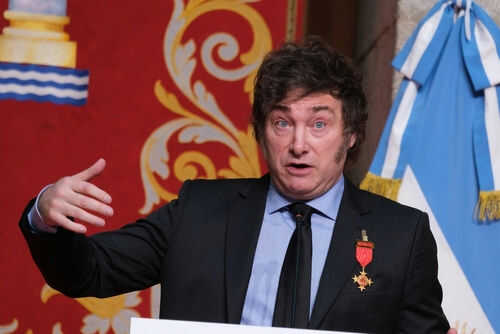
Argentina has reached the 2026 World Cup final in the United States, yet its president, Javier Milei, will not be in the stadium. Reports from Spanish outlet El Mundo say a senior source in the presidential palace, the Casa Rosada, confirmed that “the president will be Sunday in the Quinta de Olivos,” the official residence near Buenos Aires, watching from home instead of traveling to New Jersey’s MetLife Stadium. That on-the-record detail locks in the basic fact: Milei is skipping the final.
Some online posts and fringe outlets tried to frame this as a quirky superstition story. They pointed to Milei’s own comments in an Argentine radio interview, where he said he is watching all matches at the presidential residence and called it his “only superstition.” For casual readers, that sounds like a fun World Cup ritual. But the claim that superstition is the reason he is missing the final goes beyond the evidence. Milei never publicly said he would skip the final because of that ritual, only that he was keeping it while the team kept winning.
A deeper feud with Argentina’s soccer bosses shapes his travel
The stronger, documented reason for Milei’s choices is his clash with the leadership of the Argentine Football Association, known in Spanish as AFA. In late 2025, ahead of the World Cup draw in Washington, D.C., his chief of staff, Manuel Adorni, posted an official statement on social media. He wrote that the president decided not to make the trip for the draw “to avoid what he considers an act of legitimization” of AFA president Claudio “Chiqui” Tapia, who faces multiple corruption accusations and complaints of mafia-like practices in Argentine soccer.
Several news outlets, including Archysport and others, described Milei’s cancellation of the draw trip as a “silent response” to scandals around AFA and Tapia. Politico later reported that Milei has not attended any of Argentina’s World Cup matches, even though he had traveled to the United States 17 times since winning office in 2023. The outlet noted he may be keeping his distance from Tapia, who is reportedly under Federal Bureau of Investigation (FBI) scrutiny for possible money laundering. This pattern of boycott fits a political protest, not a light-hearted superstition.
Superstition, “cábala,” and media spin around sports rituals
The idea of Milei’s “superstition” did not come out of nowhere. Argentine culture has a long love affair with World Cup rituals, known as “cábala.” A cábala is a good-luck routine fans repeat while the team is winning, like always watching in the same seat or wearing the same shirt. Coverage of Argentina’s World Cup journey has mixed these social habits with references to Milei’s own viewing routine at Olivos. That made it easy for social media accounts and low-credibility outlets to turn a political boycott into a clickbait superstition headline.
This confusion follows a wider pattern where politics and sports blur. Commentators have tracked how world leaders use big events like the World Cup and Olympics for “sportswashing,” trying to clean up their image or distract from scandals. Others note “diplomatic boycotts,” where countries send athletes but keep officials home to protest human rights or corruption. In that context, Milei’s refusal to stand beside AFA’s boss in U.S. stadiums looks less like a lucky charm and more like a clear message about cleaning up dirty soccer politics.
Why this matters to conservative readers in Trump’s America
For many conservatives in the United States, the story hits familiar nerves. They have watched woke sports leagues, massive corporate sponsors, and global bodies like FIFA push politics into games while dodging real accountability. Milei, an ally of Donald Trump, was originally expected to attend the World Cup draw in Washington as a special guest and use the event to highlight their partnership. His choice to sacrifice that photo-op rather than stand next to a scandal-plagued soccer boss shows a willingness to lose glamor to defend principle.
At the same time, mainstream outlets rushed to the lighter “superstition” angle. That framing makes Milei look odd, instead of focusing on his charge that AFA has become a corrupt, mafia-style machine. It is a reminder to readers to look past viral posts and ask who benefits when serious political stances are turned into human-interest fluff. When leaders challenge globalist sports structures and entrenched insiders, their motives are often softened or mocked in coverage. In this case, the on-record statements point to a boycott, not a lucky charm.
Sources:
insiderpaper.com, ilmessaggero.it, kz.kursiv.media, footboom1.com, newarab.com, politico.com, elmundo.es, ca.news.yahoo.com