Vladimir Putin threatened to seize European ships after courts in Norway and Sweden moved on Russian-linked vessels tied to Ukraine’s war claims.
Story Highlights
- Putin vowed tit-for-tat seizures of European ships, calling Western actions “piracy.”
- Norway seized a Russian vessel under a district court order to enforce a $4.22 billion award.
- Sweden’s top court cleared transfer of a seized ship suspected of carrying looted grain.
- Russia’s Foreign Ministry says such actions breach maritime law and promised responses.
Putin’s Retaliation Warning Targets European Shipping
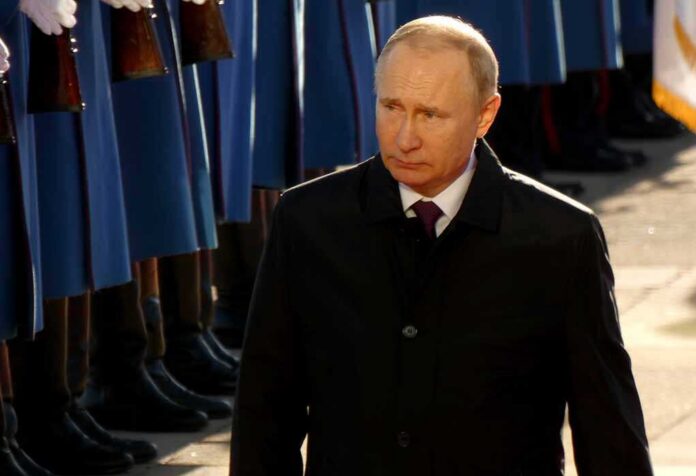
Russian President Vladimir Putin warned that Russia will seize European vessels if European states continue to detain ships linked to Russia. He used the terms “piracy” and “robbery” to describe Western actions and said Moscow would respond “in kind.” He spoke while visiting a warship during a naval exercise, signaling a military backdrop to his threat. His message aimed at Europe’s ports and insurers, which already face higher risk premiums and rerouting costs. These threats raise stakes for shippers and energy buyers.
Putin also claimed the West is breaking international maritime law by blocking or detaining ships with Russian cargo. He said Russia could act “wherever we deem it necessary and appropriate.” That phrase suggests global reach, not just nearby seas. The warning fits a pattern since the war began: Russia labels enforcement as unlawful while Europe leans on courts and sanctions to squeeze revenue that fuels the invasion. The clash now extends from oil flows to legal seizures.
Norway’s Court-Ordered Seizure Backs Ukraine’s Award
Norwegian authorities seized the Russian vessel Professor Molchanov in Svalbard under an order from the Nord-Troms and Senja District Court. The move enforces a $4.22 billion arbitral award won by Ukraine’s state energy firm Naftogaz over assets lost after the 2014 seizure of Crimea. Naftogaz said the order bars the vessel from leaving its port. The action is part of a broader, court-led push to convert legal wins into real payments across Europe and beyond.
Independent reports note the ship’s arrest aims to secure the claim, not to punish crew or stop research. Legal experts say enforcement often turns on whether a state-owned asset is used commercially. Courts can allow seizure if property is used for commerce. Russia disputes that and promises to challenge the move in court. For now, the order stands, and the vessel remains detained. That outcome pressures Moscow to negotiate or face more arrests of tradable assets.
Swedish Ruling Adds Pressure Over Illicit Cargo Claims
Sweden’s top court upheld a ruling allowing transfer of a seized cargo ship to Ukraine. Officials suspect the vessel carried grain taken from occupied Ukrainian land. The decision strengthens Europe’s legal posture against wartime profiteering. It also shows courts are ready to act when evidence links cargo to illegal extraction. This ruling adds a new front to maritime enforcement by targeting both the vessel and its controversial cargo, not just state ownership issues.
Shipping firms now face tighter scrutiny on routes, bills of lading, and end buyers. Banks and insurers must also verify the chain of title for cargo. These checks add delays and costs. But they help block black-market exports from occupied territory. Europe’s strategy uses courts and due process instead of open naval clashes. That approach keeps trade lanes open while denying funds to the Kremlin. It is slow and technical, but it is working case by case.
Russia’s Legal Objections and Escalation Risks
Russia’s Foreign Ministry argues that the United States and Europe are breaching maritime law. Moscow says only a vessel’s flag state has high-seas authority except in narrow cases such as piracy or slave trading. Russia called recent seizures a “gross violation” and warned that it will use all tools to defend its interests. These statements set up legal fights in multiple courts while signaling that Russian forces could shadow or board ships in response.
Escalation at sea would raise prices for fuel, food, and shipping insurance that Americans and Europeans pay. That risk is why court-led enforcement matters. Judges review evidence, issue orders, and allow appeals. This channel gives clear limits and reduces mistakes. It also denies Moscow the claim that Europe acts without law. For U.S. readers, strong, lawful enforcement abroad supports stability, energy security, and a rules-based order that protects American commerce and jobs.
What This Means for U.S. Conservatives
American conservatives want peace through strength, secure borders, and honest trade. Court-backed seizures punish unlawful gains without dragging our troops into new wars. They also check regimes that bully neighbors and game markets. The Trump administration can back allies when actions follow clear law and due process. That keeps pressure on Russia’s war machine while guarding U.S. shipping and energy flows. The goal is simple: defend free commerce, deter aggression, and avoid reckless escalation.
Sources:
redstate.com, scmp.com, abcnews.com, themoscowtimes.com, itlos.org