

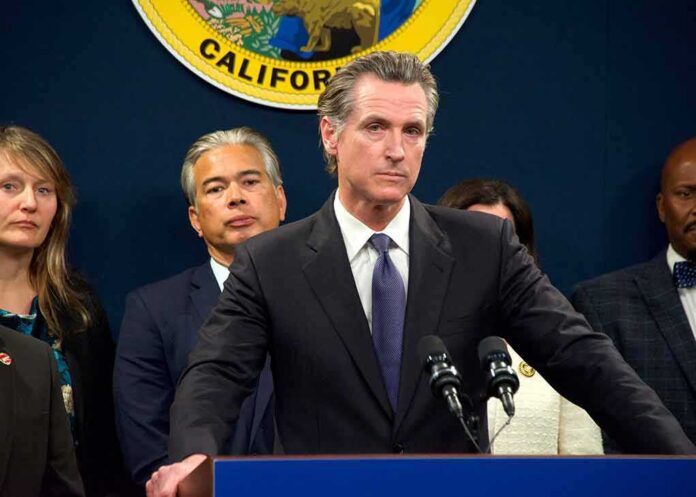
California Governor Gavin Newsom wants at least $1 billion a year for Hollywood tax credits, shifting more taxpayer money to studios while families face high costs at home.
Story Snapshot
- Newsom proposed raising California’s film and TV tax credits from $750 million to at least $1 billion.
- The plan extends the program through 2040 and adds new perks for repeat productions.
- Supporters say richer credits lure productions back amid fierce interstate and global competition.
- Independent reviews question whether film credits deliver net gains for taxpayers.
Newsom’s Proposal: Bigger Credits, Longer Timeline
Governor Gavin Newsom announced a plan to expand California’s Film and Television Tax Credit Program from $750 million to at least $1 billion per year. The proposal would extend the program through 2040, add eligibility for above-the-line talent like actors and directors, and reserve $100 million each year for independent films. The plan would also add a five percent bonus credit for companies that commit to at least two California projects, aiming to lock in repeat investment.
Newsom’s team frames the move as a way to bring work back to Hollywood’s home state. Reporting describes the proposal as a bid to lure productions from rival states and countries offering rich incentives. California has faced rising competition as producers chase lower costs and bigger rebates elsewhere. The Governor’s office says a larger, longer program gives studios the certainty they need to plan multi-year slates in California rather than moving shoots out of state.
What Changes For Studios, Workers, And Independents
The five percent bonus aims to reward companies that keep coming back, not just one-off shoots. The new eligibility for above-the-line compensation targets the people who steer projects, from writers to producers, in hopes that decisions shift toward filming in California. The $100 million annual set-aside for independent productions is meant to widen access beyond the biggest studios and to support smaller projects that often struggle for financing and crew availability in a crowded market.
California previously ramped this program from about $330 million to $750 million a year through 2030. Even with that jump, location competition increased, and many productions kept looking elsewhere. Coverage of industry data found filming activity remained well below recent norms, underscoring the state’s struggle to hold on to shoots while costs stay high and other places roll out uncapped or richer incentives. That context helps explain why the Governor is pushing a larger ceiling and longer runway now.
The Fiscal Question: Do Taxpayers Get A Real Return?
Independent analysts have long warned that film credits can be costly and deliver weak returns. California’s Legislative Analyst’s Office has found that while states with incentives tend to have larger motion picture sectors, the effect on the broader economy and net tax revenue remains unclear because credits displace other uses of state funds. Maryland’s legislative review described how mobile productions pit states against one another, raising costs as governments outbid each other for temporary jobs and spending.
Those reviews do not dispute that credits can drive spending and jobs on a set. The open issue is whether new tax revenue and lasting employment outweigh the foregone revenue that funds the credit. Many programs create short-term work tied to each project, then disappear when production wraps. That is why cost-per-job and tax-revenue-per-dollar measures matter. The Governor’s announcement did not include a disclosed return-on-investment estimate or job targets for the expanded program.
Legislature Holds The Keys And The Clock Is Ticking
The plan is a proposal, not enacted law. The California Legislature must approve any increase and extension. Reporting notes that doing so before Newsom leaves office in January 2027 could be difficult, creating a tight window to draft, analyze, and pass complex tax language. The timetable, along with competing budget pressures, could shape negotiations over caps, eligibility, and safeguards to prevent abuse or concentration of benefits among only the largest companies.
Gov. Gavin Newsom proposes expanding California film tax credit to $1 billion https://t.co/gbgB4oyjRa
— The Sacramento Bee (@sacbee_news) November 3, 2026
Conservative takeaway: government should prove value before writing a bigger check. If California wants to spend at least $1 billion a year, lawmakers should demand a clear fiscal estimate, strong clawbacks, and transparent reporting. They should show how many in-state jobs each dollar buys, how much new tax revenue returns to the state, and how the program avoids becoming another open-ended subsidy race. Families and small businesses deserve proof that Hollywood’s boost delivers real gains for taxpayers, not just studio balance sheets.
Sources:
deadline.com, gov.ca.gov, uk.finance.yahoo.com, latimes.com