

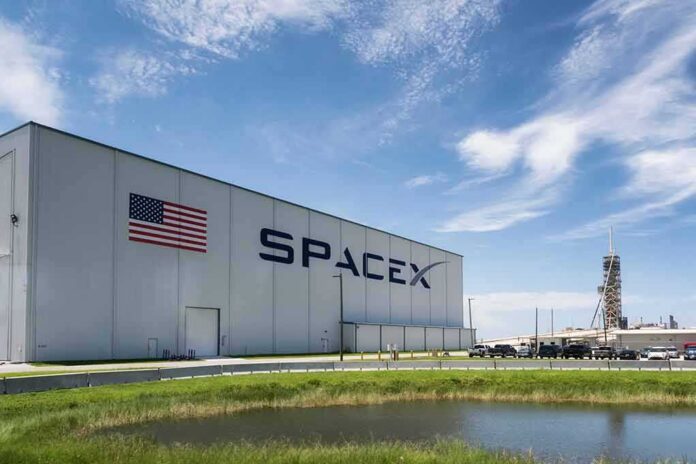
SpaceX moved to buy nationwide low-band airwaves and won key federal approvals, setting up a direct challenge to America’s wireless giants.
Story Highlights
- SpaceX agreed to acquire up to 14 megahertz of paired 800 megahertz spectrum for Starlink Mobile.
- Low-band airwaves aim to improve indoor and obstructed coverage for phone users.
- The Federal Communications Commission approved SpaceX’s Gen2 constellation plan in part, enabling up to 15,000 satellites.
- Major carriers urged the Federal Communications Commission to slow SpaceX’s plans as competition heats up.
SpaceX Secures Low-Band Spectrum To Reach Phones Indoors
SpaceX said on October 8, 2026, that it agreed to buy a nationwide portfolio of up to 14 megahertz of paired spectrum in the 800 megahertz band. The company framed this as the missing piece for Starlink Mobile. SpaceX said low-band signals can pass through walls and reach phones inside homes and offices. The plan would pair these airwaves with satellite links, adding a stronger terrestrial layer to improve coverage and reliability for regular phones.
SpaceX’s announcement described a signed agreement, not a finished transfer. Reports said the deal was expected to close in the first half of 2027 after Federal Communications Commission review. That means paperwork and conditions still stand between SpaceX and full control of the licenses. Even so, the step shows SpaceX is moving beyond tests and toward the assets needed for a full mobile service in the United States.
Federal Permissions Expand The Direct-To-Device Satellite Plan
The Federal Communications Commission granted SpaceX authority for a major next-generation constellation designed for direct-to-device service. The approval allows up to 15,000 satellites and supports broad use of two gigahertz spectrum globally, according to SpaceX. The order was not a blanket approval of every item SpaceX sought. The agency granted in part and deferred in part, and some United States two gigahertz requests remained under review.
Federal actions around spectrum transfers add to the momentum. On October 21, 2026, the Federal Communications Commission approved a SpaceX-Tristar license-control transfer, reflecting progress on related spectrum steps. Earlier, on May 12, 2026, the Commission approved a two-step deal to move EchoStar licenses, including several advanced wireless bands, into SpaceX’s control. Those rulings show federal staff are processing the complex set of authorizations SpaceX needs.
What The Buildout Could Mean For Competition And Consumers
SpaceX leaders set a clear goal and timeline. President and Chief Operating Officer Gwynne Shotwell told investors that the spectrum purchase and satellite approval would help Starlink Mobile become a major United States carrier. She pointed to service on SpaceX-owned airwaves targeted for early 2028. Timelines are plans, not proof of launch, but they show SpaceX intends to stand up a network that reaches regular phones at scale in the next two years.
Incumbent carriers pressed the Federal Communications Commission to move carefully. Reports said Verizon, AT&T, and T-Mobile urged limits or delays as SpaceX advanced its plan. An AT&T executive argued satellite capacity will not beat fiber and raised concerns about indoor and uplink traffic. Those points set up a policy fight over interference, reliability, and market power. That fight will shape whether new entrants can break the tight hold of the largest operators.
The Hybrid Network: Towers Plus Satellites, With Work Still Ahead
SpaceX described a hybrid design. The company plans to place standard wireless gear on towers, rooftops, and other sites to work with its satellites. That approach could handle indoor calls and texts on low-band airwaves while satellites expand reach to rural roads, farms, and disaster zones. Reporting said SpaceX is seeking access to tens of thousands of cell sites nationwide, but it did not document completed leases or a finished footprint yet.
SpaceX may have found another path into the U.S. wireless business. After the big carriers reportedly turned down Elon Musk’s requests for network access, SpaceX has been in talks to buy Boost Mobile or use its network to launch its own phone service.https://t.co/bDVTfGz1iu
— Wirefly.com (@Wirefly) November 3, 2026
The company did not disclose the purchase price for the 800 megahertz deal in its announcement. Reports have discussed large figures, but SpaceX’s public update kept financial terms private. The key fact is the asset mix: low-band spectrum for indoor reach, two gigahertz satellite authority for broad device links, and federal approvals on several license transfers. If the buildout proceeds, Americans could see a new option that pressures prices and boosts coverage across cities and the heartland.
Sources:
washingtonpost.com, spacex.com, finance.yahoo.com, notebookcheck.net, fcc.gov, starlink.com