
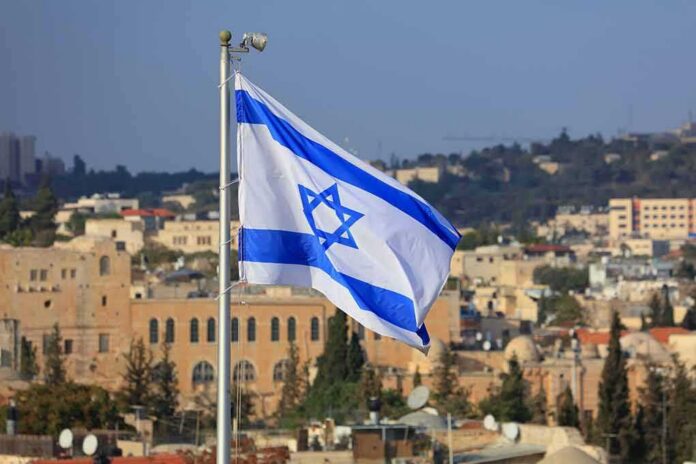
Israel’s election ended in a stalemate that empowers hard-right factions while sidelining any push toward a Palestinian state, keeping the region on edge.
Story Snapshot
- No bloc won a majority; Netanyahu’s alliance leads but fell short of 61 seats.
- Security issues dominated; debate on a two-state deal stayed muted.
- Arab-led parties scored a record 19 Knesset seats, reshaping leverage.
- Both leading camps reject a near-term Palestinian state, with policy gaps on outposts.
Results Leave Power Split and Policy Unclear
Final counts put Benjamin Netanyahu’s bloc at 53 of 120 seats, short of the 61 needed to govern, while the main opposition finished close behind, setting up weeks of talks. Reports describe a hung parliament with no clear path to a single-party rule. The arithmetic forces coalition bargaining with smaller factions, including hard-right partners that back tougher policies. That split raises the risk of unstable deals and narrow demands shaping policy across security, settlements, and budgets.
Coverage from major outlets stressed the numbers and the wait ahead, not a shift in core strategy. Analysts said the campaign focused on threats from Hamas, Hezbollah, and Iran. The two-state question and Gaza policy drew limited debate on the big stages. That focus suggests continuity on security first, with few signs of a negotiated path forward for Palestinians in the near term, regardless of who seals a coalition deal when talks end.
Arab-Led Parties Gain Seats, But Face Coalition Barriers
Arab-led parties won a record 19 seats, a historic showing that could make them pivotal in coalition math. Nearly 840,000 voters backed these lists, lifting their share and their leverage in talks. Their leaders argue they should translate votes into real gains. Yet campaign lines from the main opposition limited room for a formal partnership, which could narrow their influence to budgets, services, and committee roles instead of core security and settlement policy.
Arab-party leverage could still shape agendas at the edges. Extra funds for local policing, housing, and roads are typical asks in such deals. But security control, settlement approvals, and West Bank enforcement usually sit with senior ministries and the cabinet. That structure can mute any policy swing even when kingmakers are needed for a majority. The result is likely practical gains for Arab citizens, not a major rewrite of Israel’s approach to the Palestinian Authority or Gaza.
Security Consensus Holds; Policy Gaps Narrow to Enforcement
Reuters reported that both Netanyahu and rival Gadi Eisenkot oppose an independent Palestinian state, signaling a shared line on final-status issues. The sharper differences appear in how the state handles outposts and settler violence. Eisenkot’s camp says it would dismantle illegal outposts and curb violence while keeping legal settlement under Israeli law. That stance contrasts with partners to Netanyahu’s right, who favor a freer hand for settlers and stricter moves on the Palestinian Authority.
For American readers watching energy prices and regional risks, the bottom line is stability with tension. A deadlock in Jerusalem means policy drift unless a firm deal emerges. Security-first consensus lowers chances of a sudden diplomatic breakthrough, while far-right influence can stoke flashpoints. President Trump’s team will keep pushing Israel on shared defense and terror threats and press regional partners to deter Iran-backed groups, while guarding against steps that could spike conflict and global costs.
What Changes Next—and What Will Not
Coalition talks will decide who runs defense, finance, and the police. Those posts set the pace on raids, outpost removals, and enforcement. An opposition-led deal that leans on centrists could tighten control on illegal outposts and cut settler violence. A Netanyahu-led deal that leans on hard-right allies could lock in tougher ground rules and keep pressure on the Palestinian Authority. Either way, a two-state track remains off the table for now, according to current party lines.
How to Read the Signals Without the Spin
Watch three signals. First, which party gets the Defense Ministry; that pick shapes daily rules in the West Bank. Second, who holds the Finance Ministry; budget lines reveal a lot about settlement growth and police resources. Third, cabinet statements on the Palestinian Authority; language about “dismantling” or “reform” points to the road ahead. These concrete moves will matter more than speeches. Numbers on the board, not noise online, will tell us what comes next.
Sources:
original.antiwar.com, timesofisrael.com, cnn.com, nytimes.com, france24.com, indianexpress.com, boston.com, washingtonpost.com, theweek.com