
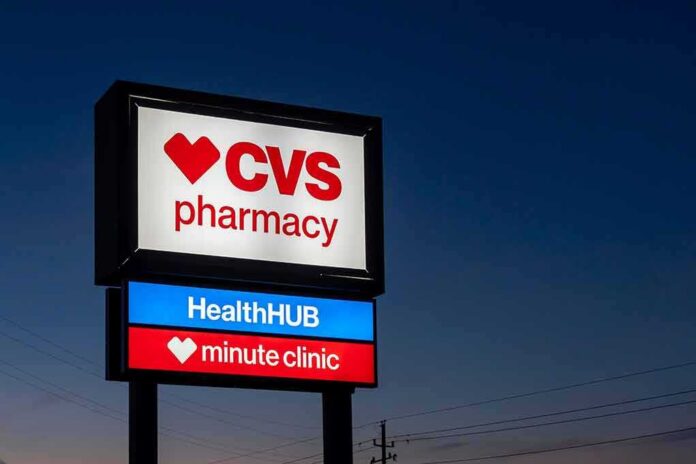
CVS will pay $315 million after federal allegations that it filled unlawful opioid prescriptions and billed taxpayers for them.
Story Highlights
- Justice Department said CVS filled prescriptions that lacked a legitimate medical purpose and then sought federal payment.
- Alleged red flags included huge quantities, early refills, and risky “trinity” drug combinations.
- Settlement covers activity from 2013 to 2025 and adds strict compliance and reporting safeguards.
- CVS did not admit wrongdoing; a whistleblower helped bring the case under the False Claims Act.
What The Government Alleges CVS Did
The United States alleged that CVS pharmacies filled controlled-substance prescriptions that were invalid, not issued for a legitimate medical purpose, or outside normal professional practice, and then sought payment from Medicare and other federal programs for many of them. Prosecutors flagged patterns like very large opioid quantities, early fills, and the dangerous “trinity” mix of an opioid, a benzodiazepine, and a muscle relaxant. Officials said these were classic warning signs that demanded a stop at the counter, not a stamp and a claim.
The conduct at issue spanned October 17, 2013, through December 2, 2025, according to the settlement announcement, and involved claims submitted to federal health programs tied to those dispensings. The government pursued both the Controlled Substances Act and the False Claims Act, reflecting a clear shift: when prescriptions look unlawful, reimbursement claims to taxpayers can be treated as false as well. That dual approach raises the stakes for every large chain and independent pharmacy that processes controlled substances.
The $315 Million Settlement And New Safeguards
CVS agreed to pay $315 million to resolve the allegations and to adopt forward-looking controls designed to prevent suspect dispensing. The deal includes enhanced monitoring of dispensing patterns, added safeguards at the pharmacy level, and a hotline so employees and the public can report suspected illegal activity. These steps aim to catch risky scripts before they leave the counter. The Justice Department framed the result as accountability for conduct that fueled addiction and wasted public funds.
The settlement did not include an admission of liability by CVS. Company statements reported in the press say CVS strongly disagreed with the claims, noted its pharmacist training, and emphasized that the resolution admits no wrongdoing. That caveat does not change the outcome for taxpayers: the chain will pay a large sum and operate under tighter oversight. For families who watched the opioid wave hit their towns, the message is simple—pharmacies must act as gatekeepers, not pass-throughs.
Why This Matters For Patients, Taxpayers, And Law And Order
The case signals that pharmacies share a “corresponding responsibility” to stop prescriptions that look illegitimate, not just rubber-stamp a doctor’s order. Federal action here shows how the government now links unlawful scripts to false bills sent to Medicare and other programs, protecting taxpayers and pushing companies to police their counters. This matters to readers who value law and order, limited waste, and safe communities. Systems should block red flags before pills move and before bills hit the Treasury.
Conservatives want strong but fair enforcement, not micromanagement. This case shows federal law used for clear aims: stop unlawful dispensing and stop billing the public for it. The added compliance tools—pattern monitoring and a public hotline—support pharmacists who follow the rules and call out pressure to look the other way. Going forward, chains that ignore warning signs risk steep penalties. Families deserve pharmacies that treat powerful drugs with the care and caution the law requires.