
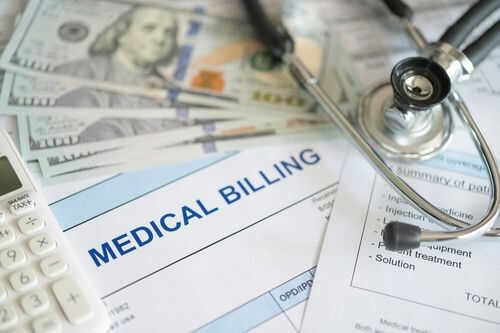
A surprise gift from a tech billionaire couple just wiped out **$550 million** in medical debt — but it also exposes how broken our health-care system really is.
Story Snapshot
- Snapchat CEO Evan Spiegel and Miranda Kerr funded the erasure of about $550 million in medical debt for over 261,000 Californians.
- The nonprofit Undue Medical Debt buys overdue hospital bills for pennies on the dollar and then cancels them for low‑income families.
- Many families will get letters in the mail saying their debt is gone, with no forms, no applications, and no tax bill attached.
- The donation is a welcome relief, but it highlights deeper problems with high costs, insurance games, and government‑driven health-care inflation.
Big Tech Billionaire Helps Wipe Out Californians’ Medical Debt
Snapchat co-founder Evan Spiegel and his wife, model and entrepreneur Miranda Kerr, have backed one of the largest medical debt relief efforts in California, helping erase more than **$550 million** in unpaid medical bills for over 261,000 residents. Their multimillion-dollar donation went to Undue Medical Debt, a national nonprofit that targets families crushed by health-care costs and past-due hospital bills. For many working families, this is more than a nice gesture. It is the difference between staying in their homes or facing bankruptcy, especially after years of rising premiums and high deductibles.
Undue Medical Debt uses a simple but powerful approach. The group buys bundles of overdue medical debt from hospitals and collection agencies for a small fraction of the face value, then cancels that debt for the people who owe it. Because the nonprofit can buy debt so cheaply, every $10 donated relieves about $1,000 in medical debt. That leverage lets a “multimillion-dollar” gift wipe out more than half a billion dollars’ worth of bills. It is a creative private-sector answer to a problem Washington has allowed to grow for decades.
Who Gets Help — And How You Know If You’re Eligible
The Californians who benefit from this debt relief are not chosen by politics or lobbyists. Undue Medical Debt uses income and debt levels to identify households truly in need. In general, people qualify if their income is at or below about four times the federal poverty level or if their medical debt equals at least 5% of their yearly income. That means families who are solidly middle class but hit with a major illness can get help, not just those in deep poverty. It focuses relief on people pushed into debt by life events, not bad choices.
There is another key detail: nobody has to fill out forms or fight some federal agency to benefit. Individuals cannot apply for this program; instead, Undue Medical Debt buys large portfolios of qualifying debt and then sends letters to the people whose bills have been erased. Starting in mid-July, recipients across California will open their mail and find out that their medical debt is gone. The canceled amount is treated as a gift, not income, so families do not get hit with extra taxes on top of their original medical hardship. That is a rare win in a system that usually punishes people for getting sick.
San Diego, Los Angeles, And A National Pattern Of Debt Relief
The impact of Spiegel and Kerr’s gift is spread across the state, but some counties benefit more than others. San Diego County residents see the largest share, with roughly $99 million in debt erased for about 40,369 people. In Los Angeles County, the effort cancels about $26.7 million for 17,466 residents. Other counties, including Riverside, San Bernardino, San Joaquin, and San Francisco, also see millions in relief as Undue Medical Debt works through the portfolios it purchased. For many of these families, high health-care costs were already stacked on top of California’s steep housing prices and taxes.
This donation fits into a broader trend. Across the country, nonprofits like Undue Medical Debt and its predecessor, RIP Medical Debt, have used similar methods to erase billions of dollars in medical debt for millions of families. Cities and states — often using federal COVID relief dollars — have copied the model to promise more than $15 billion in medical debt relief to over 6 million residents. Cook County, Illinois, for example, put $9 million into a program that could cancel up to $1 billion in local medical debt. In other words, private philanthropy and local experiments are trying to fix a problem created by years of complex regulation, opaque hospital pricing, and insurance mandates.
Relief Helps Families, But It Doesn’t Fix The System
Medical debt is now a leading reason Americans file for bankruptcy, and four in ten adults report some form of medical debt. For conservatives, that raises hard questions. How did we get to a place where a family that plays by the rules can be wrecked by one hospital visit? Federal programs and mandates were sold as ways to make care cheaper and more secure. Yet stacked regulations, insurer carve-outs, and government-driven inflation helped push prices higher, not lower, while personal responsibility shrank and bureaucracy grew.
Snapchat CEO Evan Spiegel and his wife, entrepreneur Miranda Kerr, are partnering with the nonprofit Undue Medical Debt to eliminate more than $550 million in unpaid medical debt for more than 250,000 Californians.
— ABC 10News San Diego (@10News) July 3, 2026
Some researchers say medical debt relief alone does not always improve long-term finances or health outcomes, even when credit scores rise right away. That finding does not make Spiegel and Kerr’s gift less generous. It shows that America needs deeper reform that puts patients and families first. Many conservatives argue that the answer is transparent pricing, more competition, and less federal micromanagement, so families can shop for care and carry portable, affordable coverage. Philanthropy can provide mercy where the system fails, but it cannot replace common-sense policy grounded in the Constitution’s limits on government power and respect for family stability.
Sources:
nypost.com, chosun.com, reddit.com, wusf.org, policymattersohio.org, unduemedicaldebt.org, governor.nc.gov