
An archbishop barred Catholic men from praying the Rosary on cathedral steps as a Pride parade passed, citing “neutrality.”
Story Snapshot
- Archbishop Robert G. Casey reportedly told a men’s group not to pray the Rosary on cathedral steps during a local Pride parade.
- Casey has promoted outreach and inclusion for people who identify as LGBTQ, following a dialogue-first approach.
- He was installed as the Metropolitan Archbishop of Cincinnati in April 2025, giving him authority over the cathedral grounds.
- The men’s group has a history of public Rosary rallies of “reparation” tied to Pride events in Cincinnati.
What Happened on the Cathedral Steps
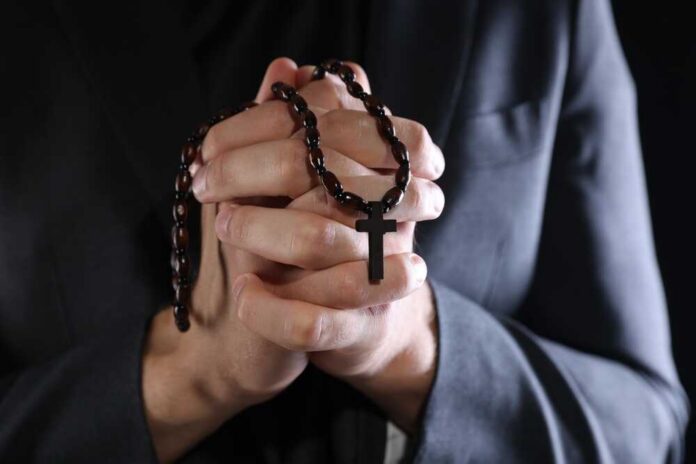
Reports state Archbishop Robert G. Casey asked a Catholic men’s group not to pray the Rosary on the steps of the Cathedral Basilica of St. Peter in Chains as a Pride parade went by, saying he wanted the cathedral to remain “neutral”. The decision affected a planned public Rosary that participants frame as prayer and reparation, not a protest. The archdiocese has not published a formal canonical or legal rationale for the restriction. That lack of detail leaves room for debate among the faithful.
The men’s group has organized annual Rosary rallies near the cathedral around Cincinnati’s Pride weekend, presenting them as a solemn witness to faith and a plea for mercy. Listings describe a “Men’s Rosary Rally in Reparation,” specifying timing that coincides with the parade. Supporters call it peaceful prayer in the public square. Critics view the timing and setting as confrontational. This clash over intent and optics sits at the center of the current dispute in Cincinnati.
Who Made the Call and Why It Matters
Archbishop Casey was appointed in February 2025 and installed on April 3, 2025, as the 10th Metropolitan Archbishop of Cincinnati, which establishes his authority over the cathedral grounds and ministries there. In local coverage, Casey has emphasized inclusion and dialogue with people who identify as LGBTQ, echoing themes from Pope Francis. Supporters of the restriction argue this approach aims to prevent conflict and keep the cathedral from appearing partisan during a charged civic event.
Traditional Catholics in Cincinnati see the Rosary on cathedral steps as a clear, faithful practice rooted in centuries of devotion. They argue prayer is not political speech and should not be lumped in with protests. Organizers say “reparation” addresses sin and injury in society, not people as such, and that public prayer is a normal, public witness of faith. They contend that asking Catholic men to leave the steps reads as silencing rather than shepherding.
Where the Rationale Stands and What Is Missing
Public posts cite the archbishop’s “neutrality” concern but do not point to a specific archdiocesan policy, cathedral bylaw, or canon law reference that forbids the Rosary on the steps at that moment. Without a cited document, many faithful feel unsure where the line is and how it was drawn. A clear, written basis could help everyone understand whether this was a time, place, and manner restriction or a broader rule impacting public prayer on church property.
Archdiocesan materials do confirm Casey’s installation and governing role, which would include stewardship over the cathedral’s use and witness. Local news also reports his stated desire to foster inclusion for people who identify as LGBTQ, which helps explain the “neutrality” framing. Yet the gap between those aims and a prayer ban troubles many believers who see no neutrality in sidelining prayer. They argue neutral ground should never exclude the Rosary.
The Broader Trend and Stakes for Religious Freedom
Lay rosary gatherings have grown worldwide, often as responses to moral and social decline. Organizers pick visible places near cathedrals. Some bishops, weighing safety, optics, and outreach, restrict steps or entry points to avoid conflict during city events. Cincinnati now sits in that pattern. The question for many Americans is simple: if peaceful prayer can be moved off church steps during a parade, what space remains for the church to stand visibly in public life?
Conservatives also see a familiar pattern of soft pressure: keep faith “neutral,” but only when public prayer conflicts with progressive events. That feels like a one-way street. The men’s rally will likely continue in some form, because devotion does not end at a curb. A transparent statement that names the rule, scope, and timing—backed by canon or policy—would calm confusion and protect both pastoral outreach and the public witness of prayer.
Sources:
lifesitenews.com, local12.com, athenaeum.edu, chicagocatholic.com