
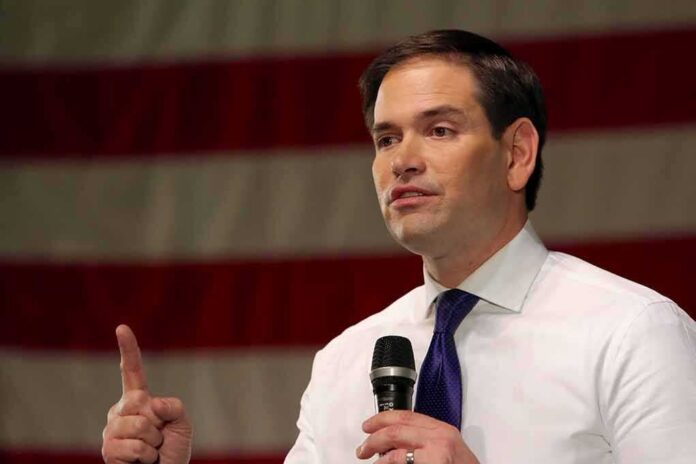
As Marco Rubio touched down in the Philippines for a high‑stakes Asia summit, he repeated that the United States is “open to diplomacy” with Iran—but only if Tehran stops attacks on global shipping and abandons its nuclear ambitions.
Story Snapshot
- Rubio says the U.S. remains open to a diplomatic deal to end the Iran war, but only if Iran changes course.
- He demands Iran reopen the Strait of Hormuz and halt attacks on ships before deeper talks can move forward.
- Rubio insists Iran must never get a nuclear weapon and must stop sponsoring terrorism across the Middle East.
- His trip to the Philippines links the Iran crisis with wider battles over shipping lanes and Chinese pressure in Asia.
Rubio ties “open to diplomacy” to strict conditions on Iran
U.S. Secretary of State Marco Rubio has repeated that America’s “preference is always a diplomatic solution” with Iran, even as U.S. forces continue strikes against Iranian missile sites, naval assets, and proxy groups. Rubio has said the United States will either reach a “good agreement” with Iran or “deal with it another way,” but he stresses that Washington will give diplomacy “every chance to succeed” before turning to harder options. For a conservative audience, this framing matters: diplomacy is on the table, yet it is clearly backed by military strength and the promise that the Iranian regime will never gain a nuclear weapon.
Rubio also spelled out what “open to diplomacy” means in practice. He made clear that Iran must first stop aggressive behavior, including missile attacks, drone strikes, and harassment of ships in and around the Strait of Hormuz. In public interviews, he has said the Iranian regime can never have nuclear weapons, must stop sponsoring terrorism, and must halt the building of weapons aimed at neighbors like Saudi Arabia and Qatar. Only if Tehran abandons these programs and chooses a more “normal” path, Rubio argues, can the country hope for a brighter future. That message lines up with long‑held conservative views that peace comes when enemies change their behavior, not when America looks the other way.
Strait of Hormuz blockade at center of U.S. demands
At the heart of Rubio’s conditions is Iran’s de facto closure of the Strait of Hormuz, the narrow waterway that carries a huge share of the world’s oil and gas. Iran has fired on ships, tried to impose tolls, and claimed the right to control traffic through the strait, threatening global energy supplies and shipping freedom that matter directly to American families facing fuel costs and market shocks. Rubio and U.S. officials have demanded that Iran publicly pledge to stop attacks on ships and keep all lanes open with no tolls or attempts to assert control. A joint statement with Gulf partners backed “free, unconditional, and unrestricted navigation” there, without fees or any bid by Tehran to dominate this vital route.
Rubio has described a two‑phase plan for talks that reflects this tough stance. In phase one, Iran must reopen the Strait of Hormuz safely, drop toll plans, and help remove any obstacles it has placed in the water. Only after that basic shipping freedom is restored would phase two begin, dealing with Iran’s stockpile of highly enriched uranium and strict limits or an end to enrichment activities. This structure shows that for the Trump administration, economic and energy security—free flow of oil and gas—is not a bargaining chip but a non‑negotiable starting point. It also places responsibility squarely on Iran: if they want sanctions relief and an end to the U.S. naval blockade, they must stop threatening world commerce and accept tight nuclear controls.
Philippines trip links Iran war to wider regional stakes
Rubio’s arrival in the Philippines for a major Association of Southeast Asian Nations summit comes as allies in Asia watch both Iran’s behavior and China’s growing pressure on regional waters. Reports say he is using the summit to rally support for defending open sea lanes, from the Strait of Hormuz in the Middle East to contested areas in the South China Sea. For many U.S. partners, the message is that Washington under President Donald Trump still leads the fight for free navigation and stands against regimes that try to weaponize shipping routes, whether those regimes sit in Tehran or Beijing.
Conservative readers will recognize a familiar pattern in American foreign policy—what some experts call “conditional normalization.” Past administrations often offered talks only if hostile states first stopped actions seen as threatening, such as uranium enrichment or terrorism support. Critics say that can lock both sides into stalemate. But Rubio’s approach fits core constitutional and security values: protect American lives, defend free trade routes, and refuse to reward regimes that attack civilians and allies. His insistence that Iran “behaviour must change” before the U.S. course changes shows that diplomacy, under this Trump‑Rubio team, is not a blank check but a tool to secure peace through strength.
Sources:
youtube.com, state.gov, cbsnews.com, rubio.senate.gov, theguardian.com, dailymotion.com, cnn.com, reuters.com, cbc.ca, pbs.org, krcrtv.com, timesofindia.indiatimes.com, cfr.org, cato.org