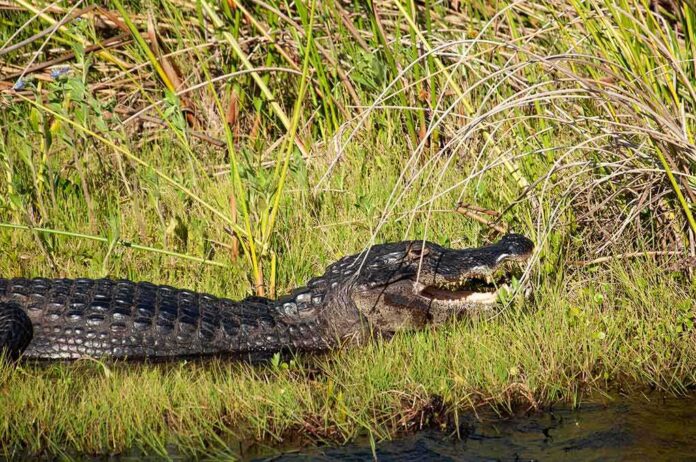
A shocking spike in Florida alligator attacks is raising hard questions about personal responsibility, government warnings, and basic common sense around our waterways.
Story Snapshot
- Fatal alligator attacks are still rare, but recent Florida cases show a clear upward trend in bites and deadly encounters.
- University of Florida researchers say about 96% of alligator attacks come from risky human behavior like swimming where gators live.
- Florida Fish and Wildlife officers warn that mating season, drought, and low water levels can make large alligators more territorial and dangerous.
- State nuisance gator programs and safety rules focus on “mutual avoidance,” but people keep ignoring clear warnings and basic safety advice.
Deadly River Attack Puts Focus on Florida’s Growing Gator Problem
A 31-year-old Orlando woman’s death after an alligator ripped off her arm in the Econlockhatchee River has become the tragic face of a bigger problem. She and her friends stepped into three feet of water in a state forest to cool off when a large alligator struck without warning. Officials later killed two big gators nearby, one about 13 feet long, and sent samples to a lab to confirm which one attacked. This was the third reported alligator attack in Central Florida in only a week.
Florida Fish and Wildlife Conservation Commission (FWC) investigator Grant Eller told reporters he cannot say for sure why this alligator attacked. He did note that mating season was ending, which can make alligators more territorial, and that low water from drought may have pushed big gators and people into closer contact. Serious attacks remain uncommon, but records now show hundreds of unprovoked bites since 1948 and more than 30 deaths. Recent years, including 2023, have posted some of the highest bite totals in a decade.
Experts Say Risky Human Behavior Drives Most Attacks
University of Florida and Centre College researchers studied hundreds of unprovoked alligator bites across several states and found a blunt truth. About 96% of attacks involved human risk-taking or inattention, usually people swimming or wading where alligators are known to live. The study stressed that alligators are not roaming around hunting people; they respond to splashing and movement that look like prey. Walking near the water or staying on land led to far fewer attacks, underscoring that most bites can be avoided with simple choices.
FWC data backs that picture. Florida has logged about 500 unprovoked bites since 1948, with 32 confirmed fatal attacks before this latest river death. Researchers note that bite frequency has risen slowly over time, but the overall risk to any one person remains low. In other words, attacks are rare but predictable: they tend to involve swimming, wading, or playing in natural waters that everyone knows are gator habitat. When victims stay out of those areas, serious encounters drop sharply.
Territorial Gators, Hot Weather, and Human Habits Collide
Wildlife officers and scientists agree that nature still matters. Large male alligators get more active during mating season, which peaks in late spring and early summer. Drought and low water can crowd big predators and people into the same shrinking rivers and creeks. FWC officials have said alligators are more active when temperatures rise, just as Floridians flock to the water to escape the heat. Add in holiday weekends, hiking, and swimming in remote spots, and the stage is set for trouble.
History shows a clear pattern. A classic review of Florida attacks found most bites happened in warmer months, in late afternoon, when victims were swimming or playing in the water. More recent risk comparisons by University of Florida scientists found that unprovoked attacks are still “rare” but usually preventable, and often come from larger gators over eight feet long. These big animals are opportunistic. If it is easy food—a splashing swimmer, a dog near the edge—they take it. They quickly lose fear when people feed them, making future attacks more likely.
State Safety Programs Rely on ‘Mutual Avoidance’ That Many Ignore
Florida runs a Statewide Nuisance Alligator Program that sends licensed trappers when gators are seen as a threat to people, pets, or property. Officials urge residents to keep pets leashed and away from the water, swim only in marked areas during daylight, and never feed alligators. University of Florida guidance adds simple rules: stay at least 60 feet away from gators, use barriers and fences near neighborhoods, and post clear warning signs at public access points. These steps reflect a policy of “mutual avoidance” instead of heavy-handed bans.
Father of Florida woman killed in alligator attack honors daughter: She loved people, nature, adventure https://t.co/XhAvuluy4p
— FOX 35 Orlando (@fox35orlando) July 3, 2026
The problem is that many people brush off those warnings. Media reports show swimmers entering remote rivers, disc golfers reaching into ponds, and dog walkers strolling right along the water’s edge. Social media chatter after the recent death included comments like “pretty simple, don’t swim in a river in Florida,” capturing a common-sense view that too many ignore. When people choose recreation over caution, it forces the state to kill more gators, spend more money on traps and fences, and chip away at the wild character of Florida’s outdoors.
What This Means for Freedom-Loving Floridians
For conservatives, this story is not about blaming the animals. It is about personal responsibility and limited government in a state built on outdoor freedom. The science says most alligator attacks can be avoided by basic behavior changes—where we swim, how we walk our dogs, whether we respect posted signs. When people ignore those rules, they invite tragedy, fuel media panic, and pressure officials into more aggressive nuisance removals and tighter controls on access to public lands.
Florida’s experience shows that clear rules plus common sense work better than sweeping bans. Alligators are a symbol of the state’s wild heritage, and the Trump-era focus on local control and practical safety fits this issue well. The data point to a simple path: protect families by staying out of known gator waters, keep pets away from the edge, and never feed wildlife, while defending the right to enjoy God’s creation without new layers of federal red tape. Freedom thrives when citizens respect both the law and the land.
Sources:
youtube.com, foxnews.com, wsvn.com, palmbeachpost.com, journalistsresource.org, wifitalents.com, cbs12.com, nbcnews.com, facebook.com, wildlife.onlinelibrary.wiley.com