

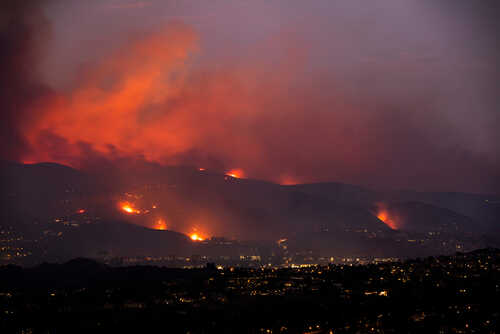
California’s leadership policies ignite controversy, as critics argue they fueled the wildfire crisis.
Story Highlights
- California’s policies under scrutiny for worsening wildfire conditions.
- Governor Newsom’s administration faces backlash over environmental management.
- Resilience efforts funded, but critics say it’s too little, too late.
- Wildfire prevention projects accelerated, sparking debate on their effectiveness.
Leadership Decisions Under Scrutiny
In recent years, California has experienced devastating wildfires, drawing criticism towards state leadership’s policy decisions. Critics, including forestry management analysts and state auditors, argue that Governor Gavin Newsom’s administration has struggled to address structural challenges in forest management, which they say have worsened wildfire conditions. They point to mismanagement and delayed action as significant factors that have compounded the problem, despite recent efforts to bolster wildfire resilience.
Policy and Investment Challenges
According to the California Wildfire and Forest Resilience Task Force (2025), the Newsom administration has allocated approximately $2.5 billion toward wildfire prevention since 2020, targeting vegetation management, prescribed burns, and community hardening projects across roughly 2 million acres. However, several policy analysts, including Michael Wara, Director of the Climate and Energy Policy Program at Stanford, have cautioned that these investments may not be sufficient to offset decades of accumulated wildfire fuel and infrastructure vulnerability.
Environmental advocates, such as the Center for Biological Diversity, have raised concerns that expedited wildfire prevention projects could bypass essential environmental reviews, potentially affecting wildlife habitats and long-term ecosystem health. While some appreciate the urgency, others worry about the potential consequences on California’s diverse ecosystems and the sustainability of such measures.
Looking Ahead: Balancing Action and Impact
As California moves forward with its wildfire prevention strategies, the debate continues over the most effective approaches to mitigate risks and enhance community resilience. The state’s initiatives to streamline permitting for vegetation treatment and enhance community fire resilience have been welcomed by local governments, but experts, including CAL FIRE spokesperson Daniel Berlant, stress that policy execution must balance urgency with ecological sustainability.
Right @GavinNewsom:
California has the most wildfires in the country due to your failed land management policies, AND you vetoed raises for the firefighters.
Completely Political.No water.
No building permits for Palisades.
No raises for Cal Fire.You must resign. pic.twitter.com/ySixTcQXfp
— WickedSon (@SoggyBottom22) October 7, 2025
Continued investment and policy reform are essential to truly safeguard California’s communities against future wildfires. The challenge remains to find a middle ground that satisfies safety concerns while preserving the unique environmental landscape that defines the state.
Sources:
California Doubles Down to Protect Communities from Wildfire with 25 Key Deliverables for 2025
California Wildfire and Forest Resilience Action Plan
Fast-Tracking Wildfire Prevention Projects
California Communities Can Reduce Wildfire Damage by Half – Here’s How