
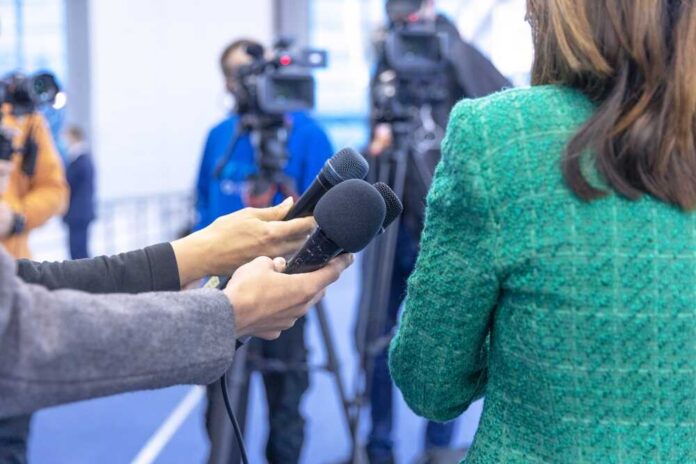
Seattle Mayor Katie Wilson’s staff abruptly shut down a media interview when a reporter dared to ask about gun violence and surveillance cameras following a shooting that forced the mayor herself into lockdown.
Story Snapshot
- Mayor Wilson’s staff cut off KOMO News reporter Chris Daniels mid-question about rising gun violence and surveillance policy
- The interview followed a shooting outside a community center event where Wilson was speaking, forcing her evacuation to safety
- The reporter challenged the interruption on camera, stating “It looks worse when you jump in like that”
- Wilson later addressed the surveillance question, citing concerns about federal authorities accessing camera data
Staff Shuts Down Public Safety Questions After Shooting
Mayor Katie Wilson’s spokesperson interrupted KOMO News reporter Chris Daniels during an interview Tuesday, moments after he began questioning the mayor about community concerns over gun violence and surveillance cameras. The staff member claimed the need to “keep it on topic” and stay “within the constraints of the event itself,” despite the questions directly relating to a shooting that had just occurred outside Wilson’s own event. The shooting forced Wilson to be rushed to safety and triggered a lockdown at the Yesler Community Center, making questions about public safety particularly relevant to the moment.
Reporter Challenges Attempt to Control the Narrative
Daniels immediately pushed back against the staff intervention, telling the spokesperson that cutting off legitimate questions about public concerns created a worse impression than allowing the mayor to respond. The exchange highlighted a familiar tension between political handlers attempting to manage messaging and journalists seeking accountability on issues affecting ordinary citizens. The interrupted questions addressed whether the shooting would change Wilson’s position on expanding surveillance cameras throughout Seattle, a policy debate that has divided residents between those prioritizing security and those concerned about privacy and government overreach.
Mayor’s Surveillance Position Reveals Federal Data Concerns
Wilson eventually addressed the surveillance question after the initial interruption, providing a response that acknowledged both sides of the debate. She stated that CCTV cameras have an important role in public safety systems but emphasized the need for careful data protection practices. Notably, Wilson specifically cited concerns about federal immigration enforcement and other actors potentially accessing surveillance data, a position that reflects broader anxieties about government power and data misuse. The city is currently conducting a data and privacy audit before moving forward with any expansion of CCTV surveillance, Wilson explained.
Wilson’s careful threading of this issue demonstrates the political tightrope facing local officials in 2026. On one hand, residents in neighborhoods experiencing gun violence have expressed support for surveillance cameras as a crime deterrent. On the other hand, concerns about federal authorities gaining access to local surveillance systems resonate with citizens across the political spectrum who question whether expanded government monitoring serves the people or the powerful. The mayor’s commitment to a privacy audit before expansion suggests awareness that Seattle residents demand more than platitudes about safety—they want assurance that security measures won’t become tools for federal overreach.
Pattern of Managed Access Raises Transparency Questions
The incident contributes to growing public frustration with government officials who appear more concerned with controlling narratives than addressing problems. When a mayor’s staff blocks questions about gun violence immediately after a shooting forces that same mayor into lockdown, it reinforces the perception that elected officials prioritize image management over substantive engagement with citizens’ legitimate concerns. This dynamic transcends traditional partisan divides, as both conservatives and progressives increasingly recognize that government institutions often serve their own interests rather than the people they claim to represent.
Seattle mayor's interview cut short as staff blocks questions on gun violence, surveillance https://t.co/YV60IFopOw
— ConservativeLibrarian (@ConserLibrarian) May 1, 2026
The Seattle incident reflects a broader pattern in which political handlers attempt to limit public discourse during moments when accountability matters most. Whether motivated by time constraints or deliberate topic avoidance, the decision to interrupt questioning about public safety policy following a violent incident demonstrates the gap between government rhetoric about transparency and actual practice. Seattle residents concerned about rising gun violence deserve direct answers about what their elected officials plan to do, not staff interventions designed to keep discussions within predetermined boundaries that serve political convenience rather than public understanding.
Sources:
Mayor Katie Wilson speaks out after shooting near community center event – KOMO News