
New border evidence shows cartel drugs not only pour into America but also move north through the United States toward Canada and even Europe, exposing a two-way threat our communities cannot ignore.
Story Highlights
- Federal and congressional records confirm massive inbound drug flows into the United States.
- Government analysts say most hard drugs enter at official border crossings, not between them.
- A northern-border review warns of outbound drug routes from the United States into Canada and onward to Europe.
- Officials also report guns and cartel cash flow south into Mexico, fueling violence.
Confirmed Inbound Pipeline: The United States Is the Primary Target Market
Department of Justice reporting says drug groups move several thousand tons of cocaine, meth, marijuana, heroin, and MDMA into the United States each year. It adds that overland smuggling with vehicles is the main method used by cartels. A Government Accountability Office review found tons of drugs continue to cross from Mexico into the United States even when enforcement help increases. These findings fit what families see at home: drugs flood in, overdoses rise, and local budgets strain.
Congressional researchers explain where most of this flow happens. They say intelligence points to official border crossings as the main entry for foreign-made cocaine, meth, heroin, and fentanyl. They also warn that no one has full data on total successful smuggling at or between crossings, since undetected loads are, by definition, not counted. That limits exact measures but still shows the key point: ports of entry remain the main gate cartels try to exploit.
Ports of Entry: Fentanyl’s Main Doorway and a Law-Enforcement Focus
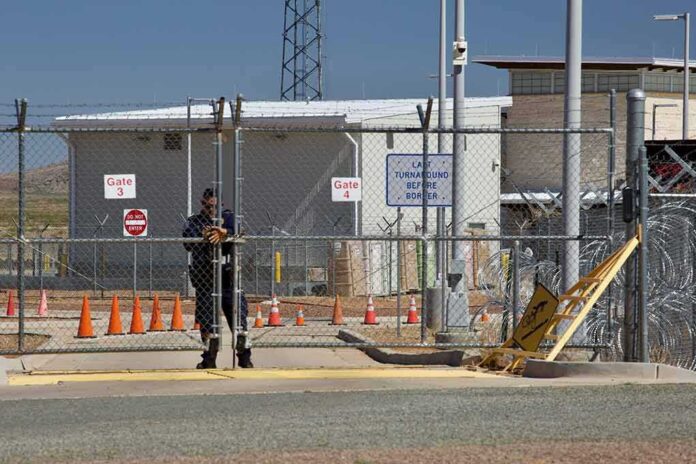
A widely cited fact sheet reports that the vast majority of fentanyl is smuggled through ports of entry and quotes Drug Enforcement Administration leadership saying the same. It adds that over 92 percent of fentanyl seizures from fiscal year 2018 through fiscal year 2024 occurred at ports or Border Patrol checkpoints. These facts back a common-sense approach: surge scanners, officers, and canine teams at crossings where the bulk of poison enters.
Data on the Southwest Border echo this strategy. Federal analysts describe the region as the top storage, transport, and transshipment hub for illegal drug loads aimed at markets across the United States. They also call it the principal arrival zone for most drugs smuggled into our country. For communities along the border, this confirms what sheriffs have warned for years: cartels treat our roads as their supply chain unless we stop them.
New Warning Up North: Bidirectional Flows and Onward Routes Abroad
A recent northern-border review by government watchdogs says drug movement there runs both ways. It flags a more pressing concern: drugs moving through the United States into Canada, with cartel-owned cocaine and other substances routed north for use and onward shipment to Europe. That picture challenges an old myth that the north is quiet. It shows cartels adapt fast, use our highways, and look for weak spots to move product out as well as in.
Officials also document a reverse flow tied to the same networks. Justice Department reporting states that a significant amount of illegal firearms and bulk cash move from the Southwest Border region into Mexico. That southbound traffic arms cartels, funds corruption, and sends violence back toward our border towns. It proves the border fight is not one lane. It is a full loop of poison in, money and guns out, and more danger for American families.
What This Means for Policy: Target the Known Chokepoints, Close the Gaps
Congressional researchers caution that perfect totals do not exist because undetected smuggling cannot be counted. But the known pattern is clear enough to act. Most hard drugs, including fentanyl, come through official crossings. The Southwest remains the main arrival zone. The northern border now shows outbound drug routes toward Canada and beyond. The solution lines up with conservative principles: enforce the law, harden ports, end catch-and-release loopholes, and hit cartels’ money and weapons pipelines.
Sources:
congress.gov, americanimmigrationcouncil.org, reuters.com, cfr.org, bea.gov