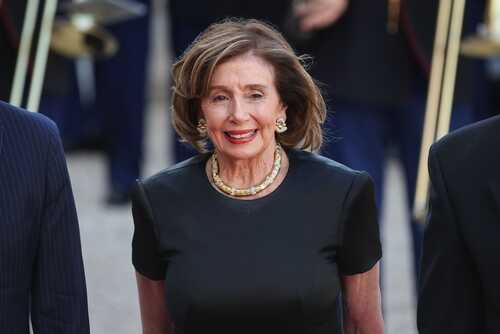
Nancy Pelosi’s retirement draws a sharp rebuke from President Trump, reigniting debate on the failures of past leftist leadership and the urgent need to defend conservative values in Washington.
Story Snapshot
- Nancy Pelosi, former House Democratic leader, announced her retirement from Congress, prompting public commentary from President Trump.
- Pelosi’s long career is being reviewed in the context of her support for progressive legislative policies.
- The Trump administration’s new direction focuses on constitutional protections, border security, and fiscal discipline.
- The retirement signals the end of a long political chapter marked by significant ideological conflict.
Pelosi’s Retirement: A Symbol of the End of a Controversial Era
Nancy Pelosi, the former House Democratic leader, has announced her retirement from Congress. Her departure concludes a decades-long career marked by her leadership in advancing progressive legislation. President Donald Trump publicly acknowledged her retirement with blunt and critical commentary, referring to Pelosi as an “evil woman.”
Pelosi’s political legacy is viewed through the lens of ideological division, with supporters highlighting her legislative achievements and critics pointing to her role in advancing policies that led to increased government spending and bureaucracy. Her exit is interpreted by many as signifying the close of a long chapter in Democratic leadership.
President Trump on Thursday called former House Speaker Nancy Pelosi an "evil woman" when asked to comment on her retirement announcement. https://t.co/3OjBHa1MW0
— ABC News (@ABC) November 6, 2025
Policy Focus and Administrative Reversals
The Trump administration has initiated significant policy changes since taking office. The administration has focused on reversing many of the policies implemented by the preceding administration and refocusing federal action on individual liberty, economic growth, and national security.
Major executive orders have been issued to restrict illegal immigration, streamline government operations, and prioritize American citizens in federal benefit programs. The administration’s decisive actions have included rolling back previous policy mandates, increasing scrutiny of federal spending, and reinforcing policies related to border security and fiscal responsibility. These steps are viewed as a direct repudiation of policies previously championed by Pelosi and her allies.
Constitutional Principles and Policy Alignment
The Trump administration’s actions are directed at reinforcing constitutional principles related to the balance of power and limited government. By directing federal agencies to review regulations that affect areas like the Second Amendment, the administration has reaffirmed its commitment to gun rights advocates. Judicial outcomes, including recent Supreme Court decisions, have supported the administration’s authority in areas such as stricter border enforcement.
The administration’s focus on economic stability, including reported high blue-collar wage growth and low unemployment rates, is presented as evidence of the benefits of fiscal conservatism. These policy objectives stand in direct contrast to the political priorities and legacy of spending characterized by much of Pelosi’s leadership era.
A Turning Point for the Nation’s Future
Pelosi’s retirement and the administration’s sweeping reforms highlight a significant shift in national political direction. The administration’s focus on border security, energy independence, and fiscal discipline has been met with strong political support. The continuation of policy reversals and the emphasis on judicial appointments that align with the administration’s interpretation of the Constitution indicate a commitment to reinforcing principles of limited government and individual rights in the coming years.